
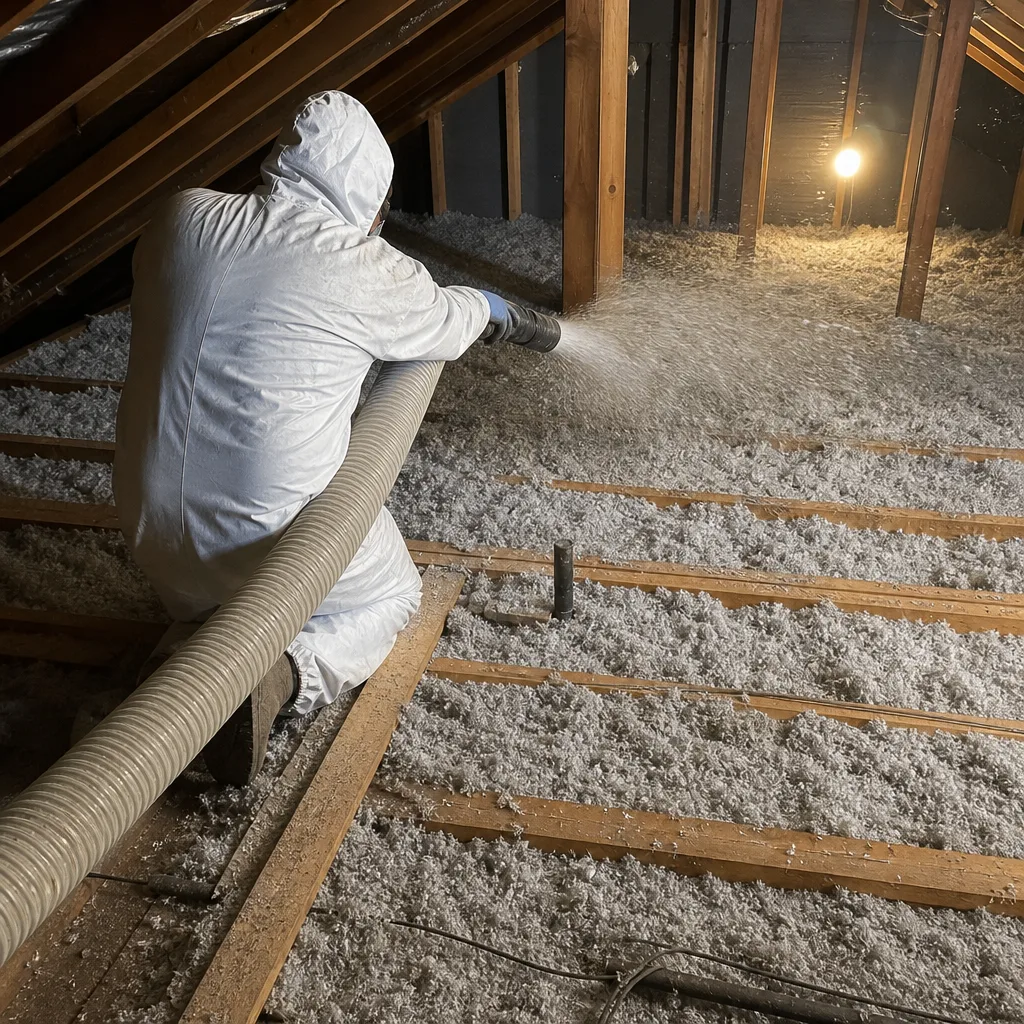
Insulation Company in Koreatown, CA
Blown in insulation is the most common request we handle in Koreatown, and for good reason: much of the housing stock here was built between the 1960s and 1980s with little or no insulation in the ceiling and wall cavities. Dense apartment blocks, stucco exteriors, and flat roofs mean heat builds up fast in summer, and top-floor units turn into ovens by mid-afternoon. Thermal Insulation Co has served Koreatown since 2012, and we know the difference between a building that needs an attic fill and one that needs a roof-deck solution. Call (855) 382-3451 for a free estimate based on your specific building.
Why Koreatown Homes Are Different
Koreatown is not a single-family-home market. It is one of the densest neighborhoods in Los Angeles, with a mix of 1960s-to-1980s stucco apartment blocks, post-war bungalows and duplexes, and newer mixed-use podium buildings along the Wilshire and Olympic corridors. Many of the older stucco buildings have no attic cavity at all – the ceiling is often concrete or knuckle-framed directly under a flat or low-slope roof. That changes the insulation conversation completely. Instead of filling a vented attic with blown-in fiberglass, the right job is often rigid board over the roof deck, or blowing loose-fill into the narrow space above a low-slope roof.
The climate in Koreatown is mild in winter and hot in summer, with cooling as the dominant energy load. West-facing walls and flat roofs absorb direct solar gain from late morning until sunset. Top-floor renters feel it first. But the complaint our technicians hear most often in Koreatown is not thermal – it is sound. Footsteps from the unit above, conversation bleeding through party walls, plumbing noise in shared chases. Because so many buildings are renter-occupied and landlord-managed, insulation here is often sold as a sound-transfer and habitability fix in a multifamily context, not a classic homeowner attic job. The work is different, the access is different, and the material choices are different. We plan for that from the first visit.
Our Main Koreatown Services
Most Koreatown calls come down to two jobs: attic insulation and spray foam. Here is how each one works in this specific neighborhood.
Attic Insulation in Koreatown
When a Koreatown building does have an attic – usually in the post-war bungalows and smaller duplexes – it is often shallow, poorly vented, and under-insulated by today’s standards. We assess the existing R-value, check for rodent or moisture damage, and then blow in loose-fill or install batts depending on the cavity depth and access. In buildings with no attic cavity, the roof deck itself becomes the insulation plane, and we plan accordingly. The goal is the same: stop solar gain from turning the top floor into a heat trap. See Attic Insulation in Koreatown for the full breakdown of how we handle this specific building type.
Spray Foam Insulation in Koreatown
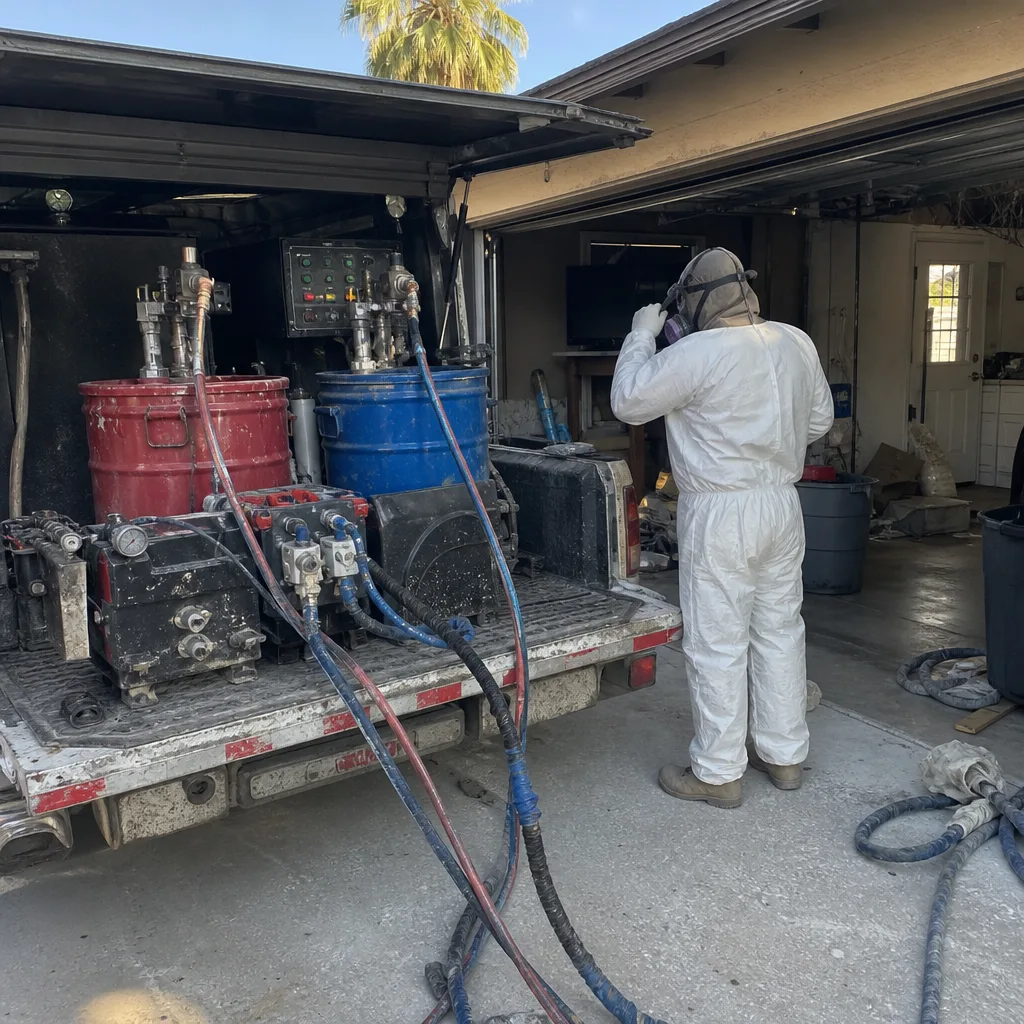
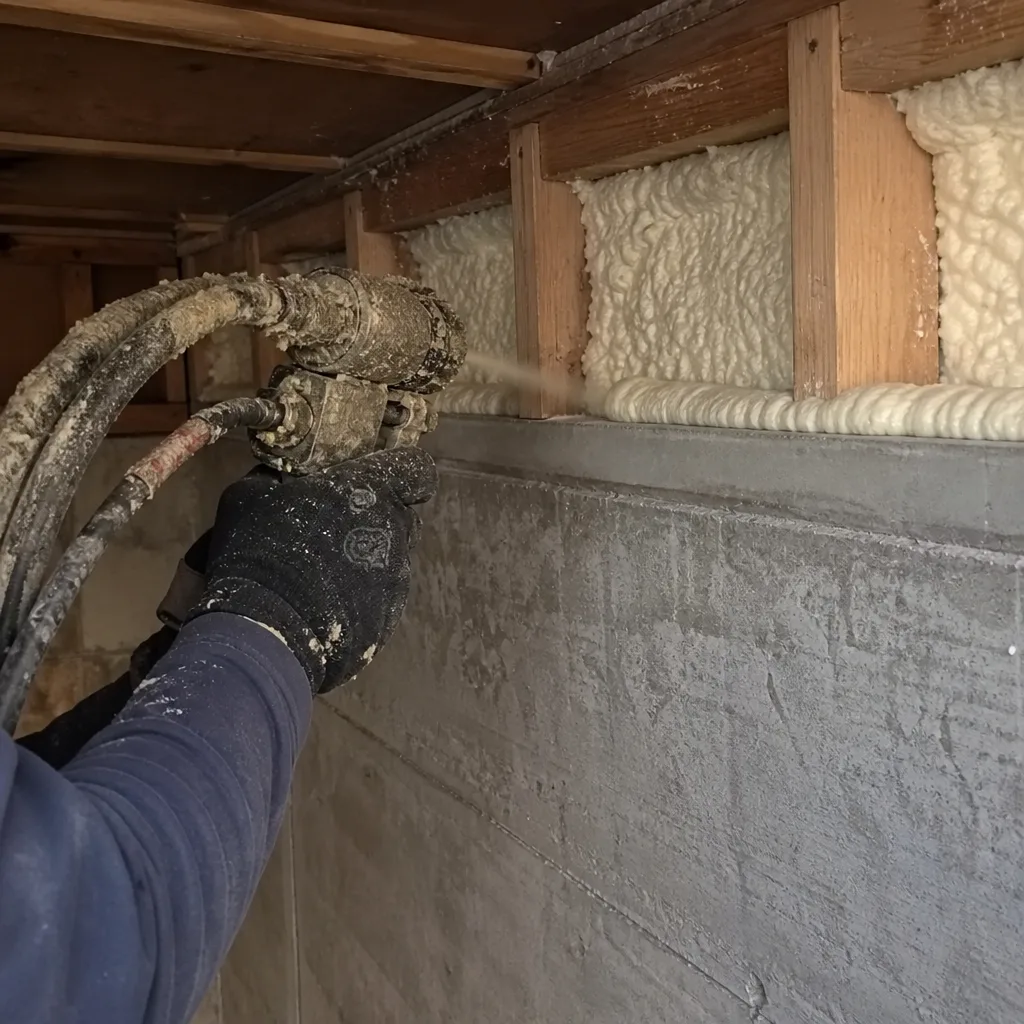
Spray foam earns its place in Koreatown because it does two jobs at once: it seals air leaks and insulates in a single pass. In older stucco apartment buildings with irregular framing, open-cell foam fills gaps and reduces sound transfer through walls and floor-ceiling assemblies. In mixed-use podium buildings with concrete decks, closed-cell foam adds thermal control and moisture resistance in a thin profile. The material also helps with the noisy pipe chases and shared-wall complaints that come with dense multifamily living. See Spray Foam Insulation in Koreatown for more on where foam makes sense and where it does not.
What happens when you call
- 1
A real person answersNo phone trees — you reach a local pro.
- 2
You get an upfront price rangeHonest numbers before anyone is dispatched.
- 3
A background-checked tech heads outLicensed & insured, dispatched right away.
- 4
You approve before work beginsNothing starts until you say go.
Blown In Insulation in Koreatown
Blown in insulation is the workhorse solution for Koreatown’s older apartment stock and post-war bungalows. When a building has an accessible attic or a low-slope roof cavity, blowing in loose-fill insulation is the fastest way to stop solar heat from baking the top-floor units and to dampen sound between stacked apartments. In Koreatown, we run into a lot of buildings where the original insulation – if any was ever installed – has settled to a thin, dusty layer that does almost nothing. Blown-in fiberglass and cellulose let us add R-value quickly without tearing out ceilings. We install Blown In Insulation using both traditional fiberglass and recycled cellulose, matched to the cavity depth and the building’s moisture profile.
Cellulose Insulation
Signs you need it
Rooms directly under a flat or low-slope roof stay hot well into the evening, or tenants report hearing conversation from the unit above through the ceiling.
What it costs in Koreatown
Cellulose insulation in Koreatown typically runs $1.80 to $3.50 per square foot installed, depending on cavity depth and access.
How we do it
We dense-pack or loose-fill the GreenFiber cellulose through access points using a calibrated blower, building to the specified R-value without disturbing the living space below.
Blown In Attic Insulation
Signs you need it
The attic feels dangerously hot in summer, ceiling surfaces read warm to the touch, or the top-floor unit runs the AC constantly without holding temperature.
What it costs in Koreatown
Blown-in attic insulation in Koreatown typically runs $1.50 to $3.50 per square foot of ceiling area, with most apartment and bungalow attics landing in the middle of that range.
How we do it
We air-seal visible bypasses, then blow Owens Corning fiberglass to the target R-value and document the final depth with photos.
Blown In Cellulose Insulation
Signs you need it
Old batt insulation has settled or gone missing in spots, leaving patchy thermal coverage across the attic floor.
What it costs in Koreatown
Blown-in cellulose in Koreatown costs $1.80 to $3.50 per square foot installed, which includes removal of any failed or compressed material from the target area.
How we do it
We pull failed material where it blocks airflow, then blow a continuous cellulose blanket to the building’s target R-value, paying special attention to the perimeter where heat enters first.
Blown In Fiberglass Insulation
Signs you need it
Existing fiberglass has compacted over decades to a fraction of its original thickness, leaving bare spots and reducing the whole attic’s thermal performance.
What it costs in Koreatown
Blown-in fiberglass in Koreatown costs $1.50 to $3.00 per square foot installed, the most economical per-R-value option we carry.
How we do it
We blow Johns Manville loose-fill fiberglass in lifts, checking density with a gauge as we go so the installed R-value matches the spec we quoted.
Loose Fill Insulation
Signs you need it
An older Koreatown building has shallow ceiling cavities or an irregular framing pattern that makes batt installation impractical.
What it costs in Koreatown
Loose fill insulation in Koreatown ranges from $1.50 to $3.50 per square foot, depending on whether the job is fiberglass or cellulose and the depth required.
How we do it
We use loose-fill where it belongs: filling irregular cavities and hard-to-reach spaces that batts simply cannot cover well.
What Blown In Insulation Costs in Koreatown
| Item | Typical range in Koreatown |
|---|---|
| Blown-in fiberglass (attic) | $1.50 – $3.00 per sq ft |
| Blown-in cellulose (attic) | $1.80 – $3.50 per sq ft |
| Loose-fill insulation (mixed access) | $1.50 – $3.50 per sq ft |
Is blown in insulation worth it for a top-floor Koreatown apartment?
Yes. Blown-in insulation cuts solar gain through the ceiling and roof deck, which is the main driver of top-floor overheating in Koreatown’s flat-roof buildings. It also reduces sound transfer between units. Call (855) 382-3451 for a quote specific to your building’s roof type.
How long does blown in insulation take in a Koreatown apartment building?
Most attic and roof-cavity jobs take one day, sometimes two if we are working around tenant schedules and access restrictions. We quote a firm schedule before work starts. Call (855) 382-3451 to schedule an assessment.
Brands We Service in Koreatown
We install GreenFiber cellulose, Owens Corning and Johns Manville fiberglass, and Knauf products across Koreatown, and we carry the right material for sound control, thermal performance, and moisture resistance. For a fuller look at our range, see our brands. Most material is available within one to two days for Koreatown jobs.
Pricing for Insulation Company in Koreatown, CA
| Service | Typical range in Koreatown |
|---|---|
| Blown-in fiberglass (attic) | $1.50 – $3.00 per sq ft |
| Blown-in cellulose (attic) | $1.80 – $3.50 per sq ft |
| Loose-fill insulation | $1.50 – $3.50 per sq ft |
| Wall cavity blown-in (dense-pack) | $2.00 – $4.00 per sq ft |
| Attic air sealing + blown-in package | $2.00 – $4.50 per sq ft |
| Batt insulation (new construction or exposed framing) | $1.20 – $3.00 per sq ft |
| Mineral wool batts (sound/fire applications) | $2.00 – $3.50 per sq ft |
| Spray foam (open-cell) | $2.50 – $5.50 per sq ft |
| Spray foam (closed-cell) | $3.50 – $7.00 per sq ft |
| Radiant barrier (under low-slope roof) | $1.50 – $3.00 per sq ft |
Two things push Koreatown prices up more than anything else: access and roof type. Flat and low-slope roofs without a real attic cavity require roof-deck work or dense packing from the interior, which takes longer than a standard vented-attic blow. We price every job upfront with a written quote, so the number we give you is the number you pay.
Neighborhoods We Serve in Koreatown
We work throughout Koreatown, from the apartment corridors near Wilshire and Olympic to the quieter residential blocks south of 3rd Street and east toward Normandy. Response time for estimates in Koreatown is usually within one to two business days, depending on access coordination with building managers. Areas we serve regularly include:
- Wilshire Center
- Harvard Heights
- Little Bangladesh
- Oxford Square
- Western Corridor
Service Area – Cities Near Koreatown
Thermal Insulation Co serves Koreatown and the surrounding Los Angeles basin. We also cover Los Angeles, CA, Echo Park, CA, Silver Lake, CA, and Hollywood, CA. If your building is outside Koreatown proper, call (855) 382-3451 and we will confirm coverage for your street.
Serving Koreatown, CA — Our Local Coverage Area
We’re based in the Koreatown area and know this community well. Use the map below to see our service coverage — if you’re nearby, we can almost certainly help.
FAQs About Insulation Company in Koreatown
For most Koreatown buildings, we can schedule an estimate within one to two business days and start work within one to two weeks, depending on material availability and building access. Emergency sound-sealing jobs for tenant complaints can sometimes be prioritized. Call (855) 382-3451 and we will give you a realistic schedule for your specific building.
In most cases, yes. For rental buildings and HOAs, the property owner or management company must approve the scope before we start. We can provide a written quote and material spec to help you get that approval quickly. For single-family homes, no permit is typically required for insulation work in Koreatown, though we always confirm before starting.
We can. We coordinate access with property managers, schedule work during quiet hours where required, and stage materials in designated areas. Our team has done enough multifamily work in Koreatown to know how to minimize disruption for tenants while getting the job done in one or two days. Call (855) 382-3451 to talk through your building’s constraints.
What happens when you call
- 1A real person answersNo phone trees — talk to a local insulation pro.
- 2You get an upfront price rangeHonest numbers before anyone is dispatched. No surprises.
- 3A background-checked tech heads outLicensed & insured, typically same-day.
- 4You approve before work beginsNothing starts until you say go.
What Koreatown Customers Say
"Handled the utility rebate paperwork, which knocked a real amount off the final cost."
— Chris Kowalski"Plastic laid from the front door to the attic hatch and they vacuumed the hallway afterward."
— Gabriela Rodriguez"Work is good and the house is noticeably more comfortable. There was insulation debris left in the hall closet under the attic access that I had to clean up."
— Maya Singh