
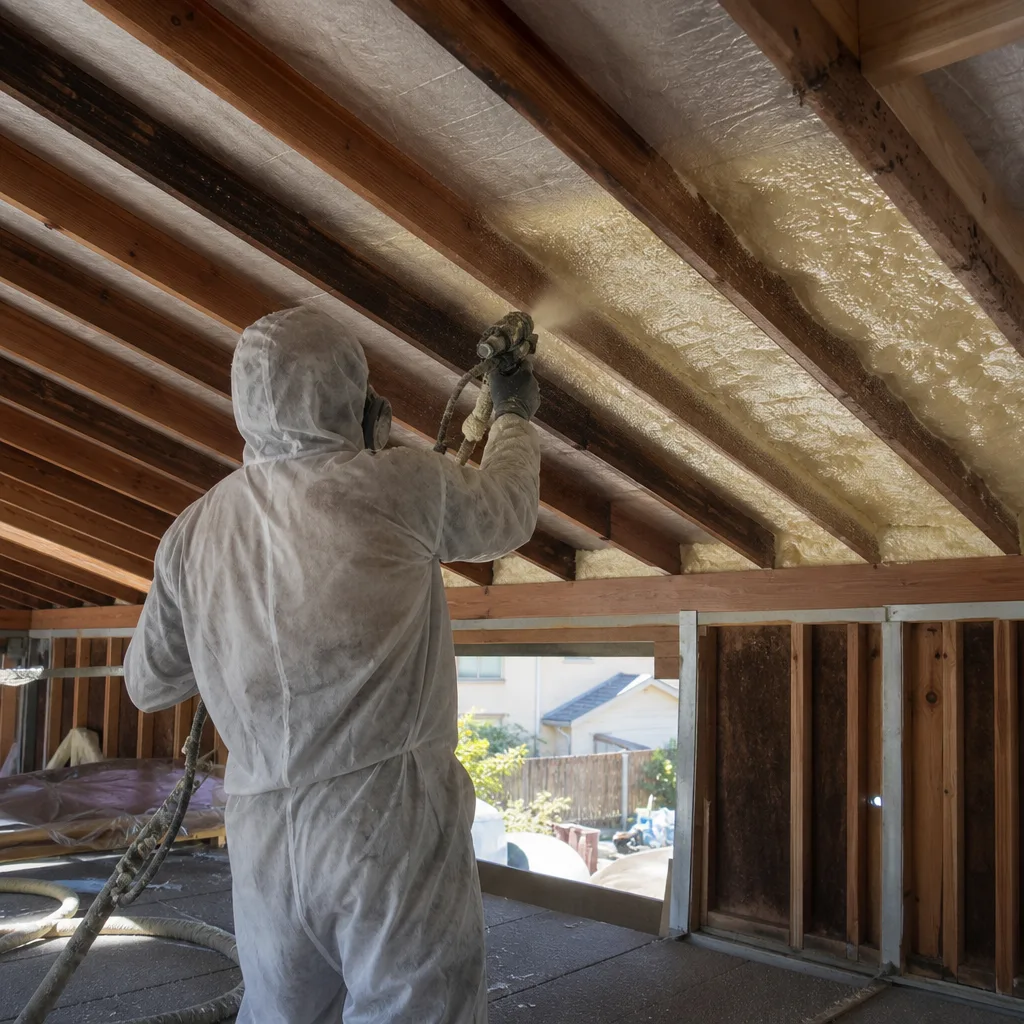
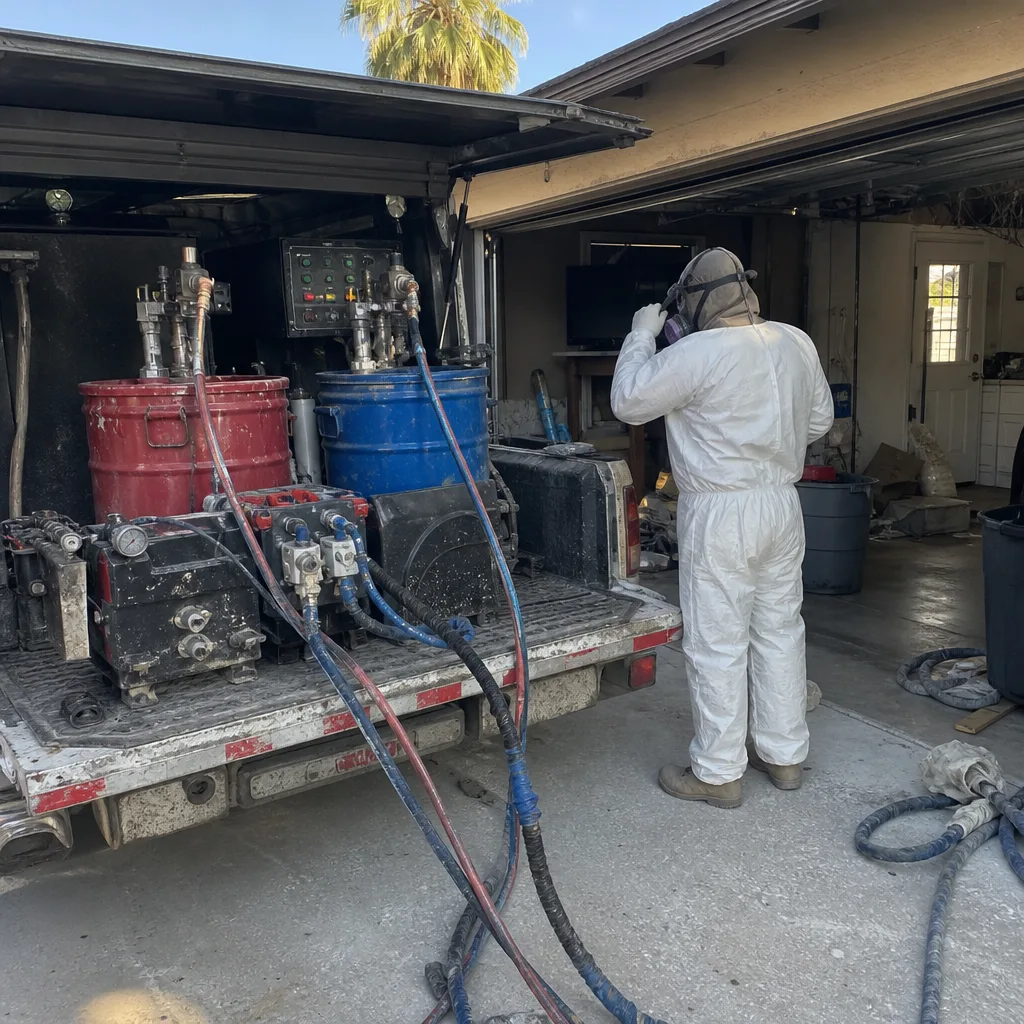
Fast, Reliable Spray Foam Insulation Across Garden Grove
Spray foam insulation in Garden Grove usually costs $3.50 to $7.25 per board foot for open-cell and $5.50 to $11.25 per board foot for closed-cell, with a typical garage conversion landing between $1,800 and $4,200. Our team reaches most jobs in Garden Grove within 24 to 48 hours, including the 92840, 92841, 92842, and 92843 zip codes. The work in this city is rarely a simple attic top-up. More often, it starts with a converted garage or enclosed patio that was framed and drywalled years ago with nothing behind the drywall. We’re the company that figures out where the heat is actually getting in, then foams that first.
Call (855) 382-3451 for a free estimate. Ruben Castellano leads our spray foam team, and he’ll tell you straight whether foam, blown-in, or a combination makes sense for your house.
Why Thermal Insulation Co Is Garden Grove’s Preferred Spray Foam Insulation Company
We’re a dedicated insulation contractor, not a generalist who happens to own a foam rig. Garden Grove’s housing stock demands that distinction. Most of the homes in the 92841 and 92843 tracts are 1950s-to-1970s single-story ranch builds, and a huge share of them have been remodeled at least once. Garage conversions, enclosed patios, add-on rooms, sometimes unpermitted, sometimes done with whatever the homeowner could afford at the time. The result is a patchwork of framing, venting, and air gaps that needs someone who knows how spray foam behaves in each cavity type.
Homeowners in Garden Grove regularly tell us the same thing: another company quoted them for attic blow-in without ever looking at the add-on. We don’t do that. Our Spray Foam Insulation team starts by identifying where the cooling loss is happening. In this climate, where Santa Ana winds push dry heat into walls and ceilings every fall, that usually means the room addition or garage conversion, not the original attic. Ruben Castallano and the crew know these ranch layouts because we’ve worked dozens of them across Garden Grove’s older neighborhoods and the newer infill around West Grove Park.
Because insulation is our only trade, we stock multiple foam systems. That means we don’t push one product line when another fits better. Open-cell Icynene for an interior knee wall. Closed-cell Demilec for a crawl space with moisture. The material follows the problem, not the other way around. Garden Grove residents get the same brand-agnostic recommendation every time, and our response time to most parts of the city runs one to two days.
Crawl Space Spray Foam Insulation in Garden Grove
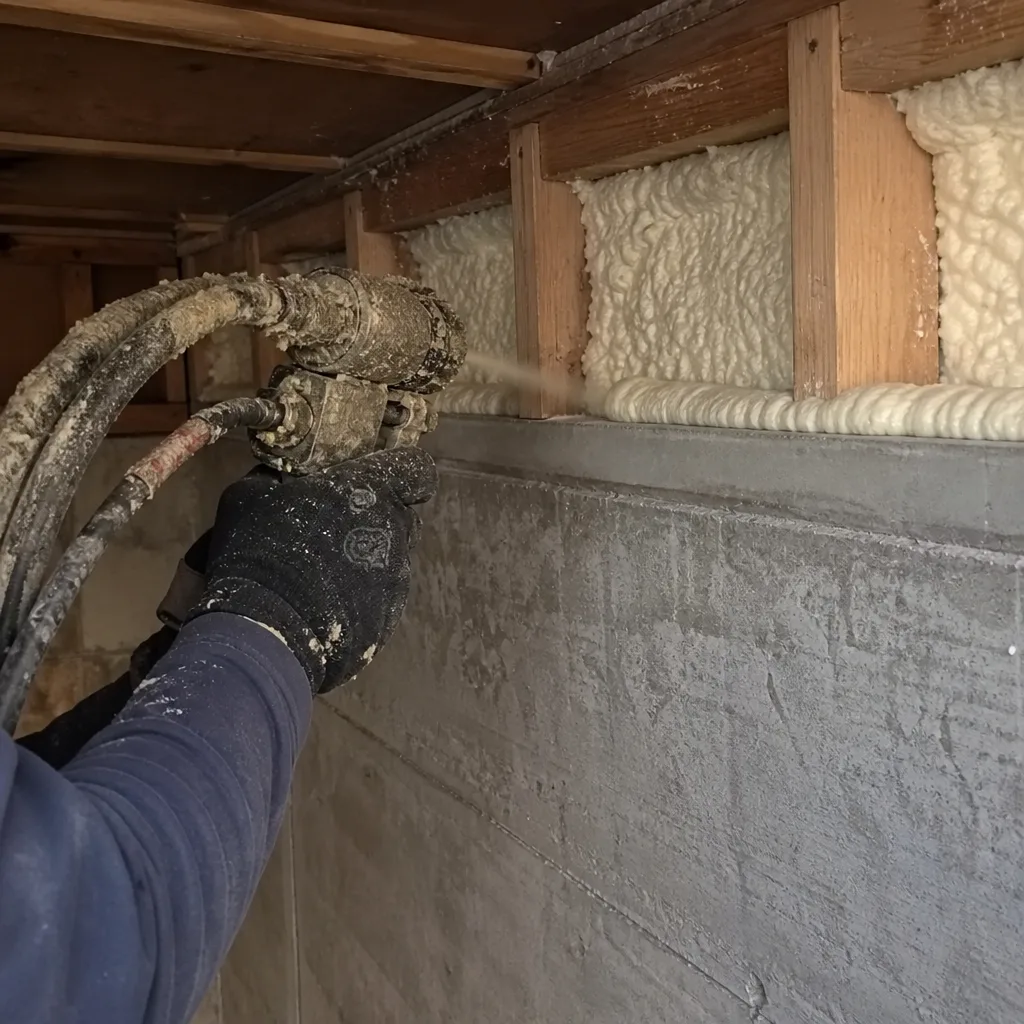
Crawl Space Spray Foam Insulation in Garden Grove means sealing the floor system of a 1950s-era ranch home against air movement from below, and in this city, it often involves a foundation stem wall that has settled and cracked over six or seven decades. The job involves cleaning the rim joist cavities, addressing any moisture or rodent damage, then spraying closed-cell foam to create an air and thermal barrier. A typical crawl space under a 1,200-square-foot Garden Grove ranch runs $2,800 to $5,600 for closed-cell application on the rim and band joists plus the subfloor. Homeowners notice the difference within one cooling season: the floors stop feeling warm in August and the indoor humidity drops noticeably.
Rim Joist and Band Joist Sealing
The rim joist is where the floor framing meets the foundation, and on older Garden Grove homes it leaks air constantly. Closed-cell foam works here because it adheres to the old concrete and the dimensional lumber, cutting the air exchange that pulls hot outside air into the living space. We’ve seen rim joists on 1950s ranches with gaps you could slide a yardstick through.
Moisture and Ventilation Checks First
Closed-cell foam in a crawl space needs dry conditions to bond. Under a Garden Grove home with poor grading or a sprinkler throwing water against the foundation, we inspect first and recommend drainage corrections before spraying. Foaming over active moisture traps it against the wood, and that’s how you end up with rot where the foam is hardest to remove.
Garage Spray Foam Insulation in Garden Grove
Garage Spray Foam Insulation in Garden Grove almost always starts with a conversion: a carport enclosed in the 1970s, a garage turned into a rental unit, a workshop with an old wooden overhead door that hasn’t sealed properly in years. The job involves air-sealing the garage-to-house boundary, foaming the ceiling plane, and treating the wall cavities, especially where an old door header now frames a wall instead. A converted single-car garage in Garden Grove typically runs $1,800 to $3,900 for open-cell on the walls and ceiling, while closed-cell for a detached workshop with moisture concerns runs $2,600 to $5,400. The goal isn’t just R-value; it’s making the converted space behave like a conditioned room instead of a sunbaked box.
Garage Ceiling and Header Sealing
The header above a replaced overhead door is a chronic leak point. We foam that cavity tight, then seal the ceiling plane to keep attic heat from radiating down into the space. On detached Garden Grove workshops, we also address the door itself: a heavy, sagging wooden door flexes the tracks and cracks any foam seal, so we suggest track adjustment before we spray.
Unpermitted Conversions and Add-Ons
In Garden Grove’s denser tracts, particularly 92841 and 92843, converted garages and patio enclosures were often built without permits. That doesn’t change the insulation requirements for your comfort. We can foam the space regardless of permit history; the foam goes in the same cavities, and the job is no different mechanically. We’ll tell you honestly what the building would need to be brought to code, but we won’t block the work over it.
Trusted Brands We Service in Garden Grove
We carry Rockwool for mineral wool applications where fire resistance matters, Owens Corning for fiberglass batt replacement in standard wall cavities, and Icynene and Demilec for open- and closed-cell spray foam. In Garden Grove, where garage conversions and patio enclosures create non-standard cavities, having multiple foam types in stock matters. We keep local inventory for Garden Grove jobs so we’re not waiting on a distributor when a project needs to start this week. Eight brands, three installation methods, one trade. That’s our whole model, and it fits this city’s mix of original 1950s ranches and ad-hoc additions better than a one-product shop ever could.
Common Spray Foam Insulation Problems We See in Garden Grove Homes
- Foamed add-ons with no venting plan: In the 92841 and 92843 tracts, we regularly find patio enclosures where someone sprayed closed-cell into a cavity that still communicates with the old vented attic. The closed-cell traps moisture against the original 1950s stucco framing, and we get called when the drywall starts staining. The fix is usually cutting back the foam and redoing the cavity with open-cell or a vented assembly.
- Sagging overhead doors breaking the air seal: Detached workshops off Chapman Avenue and Garden Grove Boulevard often have old, heavy wooden doors. The tracks flex, the door sags, and the foam at the header gets crushed or cracked, reopening the air gap the homeowner paid to close. We recommend track and roller adjustment before we spray the header, so the seal holds.
- Under-cured foam from hot-day one-part spray passes: Inland Orange County afternoons can hit the high 90s. Foam mixed and applied too fast on a hot day stays tacky, off-gasses, and never bonds to the dusty, sixty-year-old framing in these ranches. We schedule around the heat and stage our passes for proper cure, even if it means the job takes an extra half day.
- Zero insulation behind patio enclosure drywall: Garden Grove’s post-war building boom produced a lot of enclosed patios finished with bare drywall and nothing behind it. Homeowners find out when the room bakes every August. Spray foam is the right retrofit here because it fills the irregular framing cavities without opening every wall.
Pricing for Spray Foam Insulation in Garden Grove, CA
Open-cell foam in Garden Grove runs $3.50 to $7.25 per board foot installed. Closed-cell foam runs $5.50 to $11.25 per board foot. A typical garage conversion lands between $1,800 and $4,200. A crawl space rim and subfloor job runs $2,800 to $5,600. A full exterior wall retrofit on a 1,400-square-foot ranch with open-cell in the stud cavities runs $7,000 to $12,000. What moves your number within those ranges: cavity depth, access difficulty (knee walls and low-slope ceilings in 1950s ranches add labor), existing condition of the framing, and whether we’re also air-sealing the attic plane. Call (855) 382-3451 and Ruben will walk through your specific add-on or attic and give you an exact number. Estimates are free.
We Also Serve Cities Near Garden Grove
Thermal Insulation Co is based in Van Nuys but we run spray foam jobs across northern Orange County every week. In addition to Garden Grove, our service area includes Stanton, Westminster, Midway City, and Cypress. If your house sits near the 22 or the 405, we’re already familiar with the tract layouts and the typical add-on configurations. Call and we’ll route a truck your way.
Serving Garden Grove, CA — Our Local Coverage Area
We’re based in the Garden Grove area and know this community well. Use the map below to see our service coverage — if you’re nearby, we can almost certainly help.
FAQs About Spray Foam Insulation in Garden Grove
Because your converted garage is a single-story, often uninsulated room with its own ceiling and at least one exterior wall, and in Garden Grove’s climate it heats up faster than the original attic space above the main house. Foaming the garage conversion first returns comfort to the room you actually use, while the main attic loses heat more slowly through the original 1950s insulation. If you’re sleeping or working in that converted space, fix it first. Call (855) 382-3451 and we’ll confirm the order with a walkthrough.
Spray foam can seal the header and the framing around that door, but it cannot fix a door that sags or tracks that flex. On a detached Garden Grove workshop with an old wooden door, we adjust the tracks and rollers first, then foam the header cavity so the seal holds when the door opens and closes. Foam applied to a moving door panel rarely lasts.
Closed-cell foam needs a dry, clean substrate. Under a Garden Grove ranch, that means checking for foundation cracks, sprinkler overspray, and old termite damage before we spray. Any active moisture against the rim joist has to be corrected first, or the foam seals the moisture in. We’ll tell you during the estimate if your crawl space needs grading or drainage work.
Yes, because spray foam air-seals. Blow-in insulation slows conductive heat transfer, but Santa Ana winds drive hot, dry air through cracks in the building envelope, and that air bypasses the insulation entirely. Spray foam, especially closed-cell on rim joists and wall cavities, stops the air movement itself. On the worst Santa Ana afternoons, that’s the difference between a room that holds 78 degrees and one that climbs to 88.
Yes. The foam goes into the wall and ceiling cavities regardless of whether the structure was permitted, and the installation itself doesn’t trigger a code review. We can tell you what a compliance retrofit would involve, but we won’t hold your insulation job hostage over permit history. Many Garden Grove homeowners insulate these spaces first and address permits later, if at all.
Written by Ruben Castellano, Owner at Thermal Insulation Co, serving Garden Grove’s 1950s ranch tracts, garage conversions, and patio enclosures since our first Orange County foam job.