
Spray Foam Insulation in Azusa, CA: What It Costs and Why Ember Sealing Matters Here
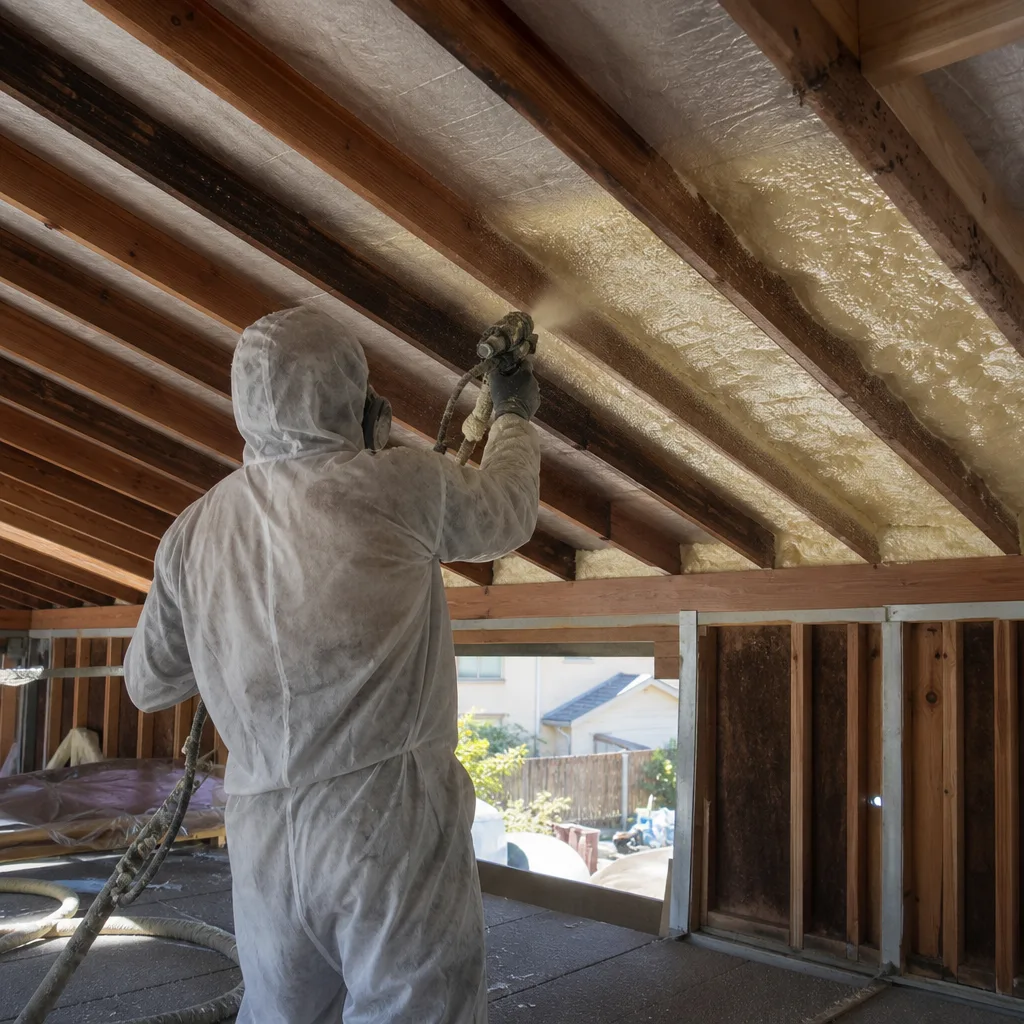
Spray foam insulation in Azusa typically costs $1.80 – $4.20 per board foot installed, meaning a 1,500-square-foot attic retrofit usually lands between $4,200 and $9,600 depending on foam type and prep work. That’s a real number, not a placeholder. For homes along Azusa’s northern canyon edge, the job often includes ember-resistant vent screening and eave sealing as part of the retrofit, because heat isn’t the only thing Santa Ana winds push into an attic.
We’re Thermal Insulation Co, and we’ve worked enough mid-century Azusa homes to know that insulation here isn’t a one-material decision. It’s a question of what your attic actually needs: open-cell foam for air sealing in a standard ceiling, closed-cell for a roof deck or crawl space with moisture exposure, or a hybrid approach that pairs spray foam with ember-blocking measures most insulation contractors never mention. Call Ruben and the team at (855) 382-3451 for a free estimate. We’ll tell you straight what your house needs, not what we happen to have on the truck.
Key Takeaways for Azusa Homeowners
- Azusa pricing: Open-cell spray foam runs $1.80 – $2.60 per board foot installed; closed-cell runs $2.60 – $4.20. Attic floor spray foam work in Azusa typically lands between $3,800 and $8,500 for a mid-century ranch.
- Canyon-edge homes need extra steps: North-side neighborhoods near the San Gabriel Canyon require ember-resistant vent screening as part of any attic spray foam job. Skipping this step means new insulation that still lets embers into the attic during Santa Ana events.
- We stock two foam brands: Icynene (open- and closed-cell) and Demilec (closed-cell for rim joists and roof decks). We choose based on the application, not inventory pressure.
- Same-week service in Azusa is normal: We schedule attic spray foam work in Azusa within 3 – 5 business days. Garage ceilings and rim joist jobs are often done in one day.
- Free estimates, always: Call (855) 382-3451 and we’ll come measure, inspect the existing insulation, and give you a written scope. No charge, no phone-tag.
Fast Spray Foam Insulation Service Across Azusa
We cover all of Azusa, from the 91702 neighborhoods north of Foothill Boulevard up toward the canyon mouth, to the older grid streets south of the 210 Freeway. When you call, you’re talking to a dedicated insulation contractor, not a generalist who also does roofing and drywall. Spray Foam Insulation is one of three methods we install, which means we don’t have to sell you foam if blown-in or batt makes more sense. That’s rare. Most companies that spray foam only spray foam.
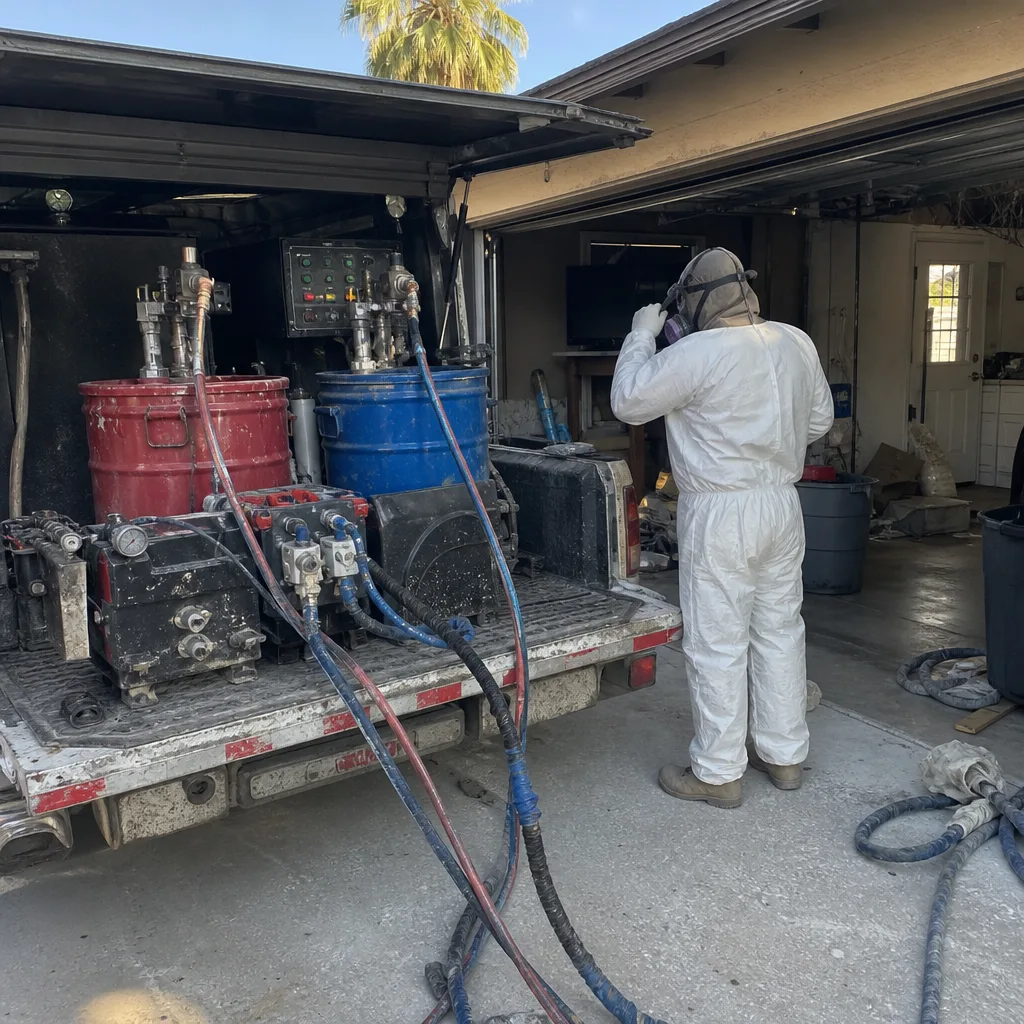
Our crews reach Azusa from our Van Nuys location in about 35 – 40 minutes on a normal morning, which means we can schedule around your workday and still be on time. For attic jobs, we usually start around 7:30 AM and finish before the heat really sets in. For emergency situations, like a Santa Ana event that’s exposed open eave gaps, call us. We’ve made same-day runs to Azusa more times than we can count.
Why Azusa Homeowners Choose Thermal Insulation Co
Azusa’s housing stock is mostly mid-century single-story stucco. Those homes were built before Title 24 insulation standards existed, and many still have the original thin fiberglass batts, or nothing at all. We know exactly what that means for energy loss and ember intrusion, because we see it weekly. Most insulation contractors will quote you a price for new insulation and leave it at that. We’ll point out that your gable vents are wide open and your eave gaps would draw embers during a wind event, then we’ll price the fix right alongside the insulation.
Ruben Castellano runs the company, and he’s the person who walks your attic before any foam is sprayed. We carry Icynene and Demilec spray foam, Owens Corning, Johns Manville, Knauf, and CertainTeed fiberglass, Rockwool mineral wool, and GreenFiber cellulose. That’s eight brands under one roof. We carry them because different Azusa homes genuinely need different materials. A 1958 ranch near North San Gabriel Canyon Road with open gable vents needs a different approach than a 1980s two-story south of the freeway. Carrying multiple brands means we pick what fits, not what’s left in the warehouse.
We’re a dedicated insulation contractor. Insulation is the entire trade, not a side service. Our installers have worked canyon-edge homes in Azusa, wind-exposed attics in Glendora, and everything between. That matters when the job involves sealing eave gaps against embers, not just filling cavities with foam.
Crawl Space Spray Foam Insulation in Azusa
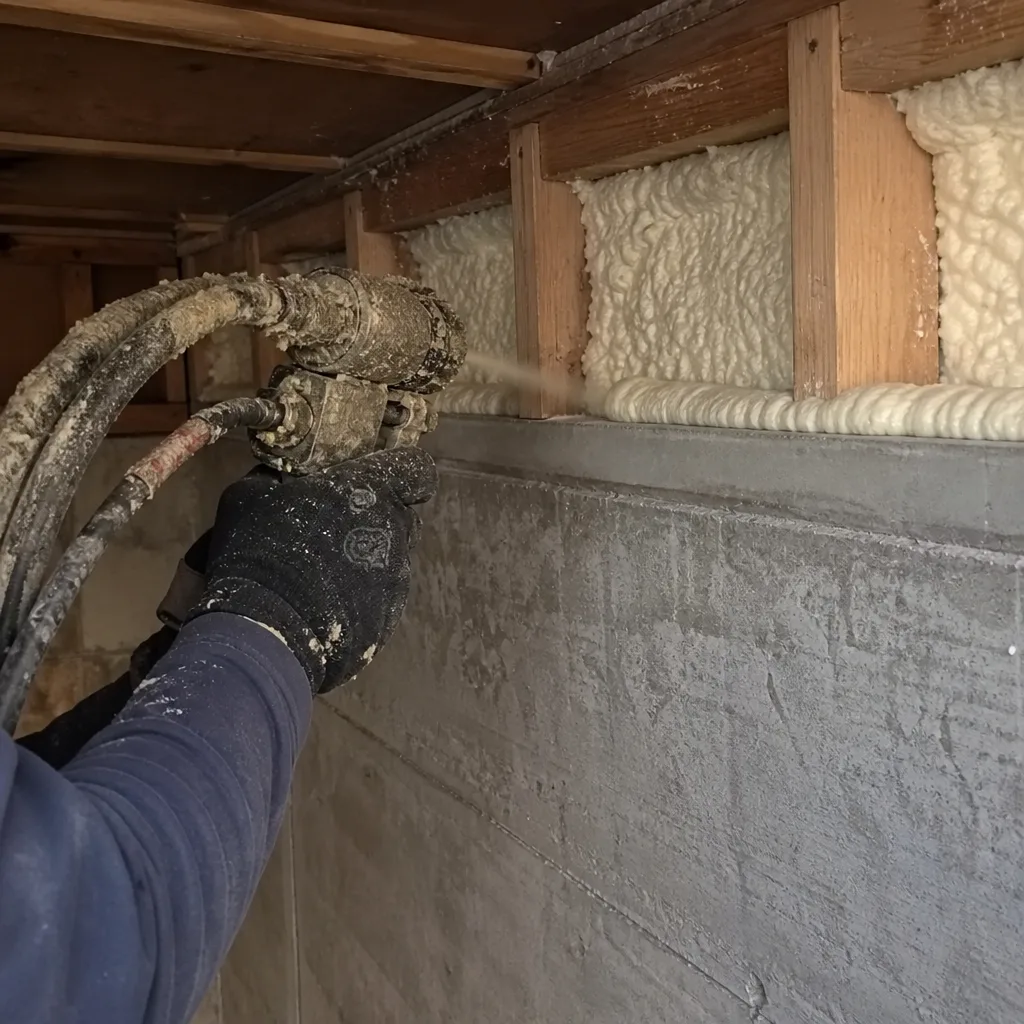
Crawl Space Spray Foam Insulation in Azusa is one of the most overlooked retrofits we do, especially on the older pier-and-beam homes scattered through the neighborhoods off Foothill Boulevard. Azusa’s hot summers push heat up through floors, but winter nights at the canyon edge drop cool enough that an uninsulated floor makes rooms feel drafty year-round. We spray closed-cell foam directly onto the crawl space ceiling or band joists. It air-seals, insulates, and stops the moisture that rises from the soil beneath older Azusa homes. A typical crawl space insulation job in Azusa runs $1,900 – $4,800 for a 900 – 1,400 square foot home, depending on access and whether we’re also treating the rim joists.
When Your Azusa Crawl Space Needs Spray Foam
You’ll notice it most in winter. Cold floors, especially in the morning. You may also smell damp earth, or see condensation on ductwork in the crawl space. Both are signs that the crawl space is moving heat and moisture into the house. Spray foam stops this at the source.
Why Not Just Use Batts in the Crawl Space
Fiberglass batts in a crawl space absorb moisture from the ground, sag, and stop working within a few years. Closed-cell spray foam resists moisture and adheres to the subfloor. It’s the right material for the job, and it’s why we recommend it for older Azusa homes where crawl spaces weren’t ventilated well to begin with.
Garage Spray Foam Insulation in Azusa
Garage Spray Foam Insulation in Azusa matters more than people realize, because so many mid-century homes here have attached garages with no insulation at all in the ceiling. The garage bakes during summer, heating the rooms above it or the interior wall it shares with the house. We spray open-cell foam onto the garage ceiling in these homes, which is faster and cleaner than any other method. For garages with no attic above, we can spray directly onto the underside of the roof deck. In some cases, a homeowner wants the garage converted to a living space or workshop, and that’s where closed-cell foam on the ceiling and walls makes the space genuinely usable. Typical garage ceiling spray foam in Azusa runs $1,200 – $3,400 for a standard two-car garage.
Uninsulated Garage Ceilings Are Common in 1950s – 1970s Azusa Homes
Original construction rarely included garage insulation. The builder assumed a garage was just for cars. But when the garage shares a wall with the kitchen or a bedroom, that uninsulated space works against your AC all day. Spray foam fills odd cavities and gaps around door tracks and plumbing penetrations that batts can’t.
Garage-to-Workshop Conversions Need Closed-Cell
Homeowners in Azusa who work on cars, do woodworking, or want a home gym need a garage that holds temperature. Closed-cell spray foam on the walls and ceiling creates an air seal that open-cell can’t match in an unconditioned space. The difference between a 98°F garage and one that holds 80°F is notable. It’s also the only way to keep Santa Ana dust out of a workspace.
Trusted Brands We Service in Azusa
We install and service two spray foam lines for Azusa homes: Icynene, which we use for most open-cell attic and wall applications, and Demilec, which we use for closed-cell rim joists, roof decks, and crawl space ceilings where moisture resistance matters. We also carry Owens Corning, Johns Manville, Knauf, CertainTeed, Rockwool, and GreenFiber for cases where a customer’s home calls for fiberglass, mineral wool, or recycled cellulose instead of spray foam. If you already have a spray foam job that’s failing, we’ll tell you honestly whether it can be repaired with Reflectix repair in Azusa or should be removed and replaced.
Common Spray Foam Insulation Problems We See in Azusa Homes
- Failed original fiberglass batts in mid-century attics. Homes in the 1950s – 1970s tract developments along Foothill and Sierra Madre Avenues often still have the original insulation, now compressed to R-5 or less. Santa Ana winds force hot air through the gaps, and the attic becomes an oven.
- Open gable vents and eave gaps at the canyon edge. The north-side streets near the San Gabriel Canyon sit directly in the wind path. We regularly find open eave gaps that would draw embers during a wind event, bypassing any insulation below.
- Spray foam applied over an unsealed attic floor. If the attic has gaps around plumbing stacks, electrical penetrations, or the access hatch, foam over the top doesn’t fix the air movement. Air sealing is half the job.
- Uninsulated garage ceilings heating living spaces. This is the most common complaint we hear from Azusa homeowners in July and August. The garage gets hot, the wall or room above it stays hot, and the AC runs all day.
Pricing for Spray Foam Insulation in Azusa, CA
Here’s what you can expect to pay in Azusa. Open-cell spray foam runs $1.80 – $2.60 per board foot installed. Closed-cell runs $2.60 – $4.20 per board foot. A standard attic floor retrofit in a 1,200 – 1,500 square foot Azusa home is typically $4,200 – $7,800 for open-cell. If we’re doing the garage ceiling too, add $1,200 – $3,400. Crawl space work on an older home runs $1,900 – $4,800. The variables are access, whether the job requires ember-resistant vent screening and eave sealing, and whether there’s existing insulation to remove. Every estimate we give in Azusa includes the full scope: what we remove, what we seal, what foam we spray, and what it costs. Free. Call (855) 382-3451 for an exact quote.
Why Ember-Resistant Sealing Is Not Optional on Azusa’s North Side
Azusa sits at the foot of the San Gabriel Mountains, where Santa Ana winds funnel heat and embers down canyon mouths toward the city’s older single-story homes. The streets near the canyon, particularly along North San Gabriel Canyon Road and the neighborhoods that climb toward Mountain Cove, face a risk profile that lower, wind-sheltered parts of the San Gabriel Valley do not. Embers don’t need a flame to ignite an attic. They just need an opening: a gable vent, an eave gap, a vented soffit. And the same wind that carries embers also drives hot air into the attic, compounding the heat load on the insulation.
For these homes, spray foam alone is incomplete. The retrofits we do on Azusa’s north side pair foam with ember-resistant vent screening and eave sealing. We close the pathways first, then spray the foam. That’s the difference between a home that is insulated and a home that is actually protected.
Recently, on a 1950s stucco ranch off North San Gabriel Canyon Road, we found the original fiberglass batts collapsed and the gable vents wide open. We removed the failed batts, sealed the eave gaps with ember-resistant mesh, and sprayed Icynene onto the attic floor and garage ceiling. The homeowner later told us the house stayed cooler during a 102°F Santa Ana day and the attic no longer smelled of smoke after nearby brush fires. That’s the standard we build to here.
Canyon-Edge Retrofits: The Step Generic Spray Foam Guides Miss
If you read a generic guide to spray foam insulation, it will tell you about R-value and air sealing. It will not tell you that a home in Azusa near the canyon needs ember-resistant vent screening as part of the same job. This page does, because we’ve actually done the work. Spray foam applied over open eave gaps does nothing to block wind-driven embers, and in a Santa Ana event, those embers can enter the attic regardless of how thick the foam is. The correct sequence for canyon-edge homes is: seal eave gaps, screen gable vents, then spray. If a contractor skips the first two steps, the insulation is incomplete.
Homes south of the 210 in Azusa don’t face the same ember pressure. Wind-blocked streets and slightly lower temperatures mean the job is closer to standard. That’s why we look at exactly where your house sits before we recommend anything.
We Also Serve Cities Near Azusa
We do regular work in Azusa and the surrounding communities. Our crews also serve Citrus, Irwindale, Covina, and Glendora, with the same scheduling and the same material range. If you’re a property manager with units in multiple San Gabriel Valley cities, we can handle the full job from one estimate.
Serving Azusa, CA — Our Local Coverage Area
We’re based in the Azusa area and know this community well. Use the map below to see our service coverage — if you’re nearby, we can almost certainly help.
FAQs About Spray Foam Insulation in Azusa
Yes. Homes on Azusa’s north side near the canyon should have eave gaps sealed and gable vents screened with ember-resistant mesh before or during the spray foam installation. Without this step, wind-driven embers can enter the attic through open vents and bypass the insulation entirely. Our standard canyon-edge estimate includes this scope. Call (855) 382-3451 and we’ll assess your attic’s exposure during the free estimate.
Yes. Most mid-century Azusa homes were built with uninsulated garage ceilings, and we spray foam them regularly. Open-cell foam on an attached garage ceiling typically runs $1,200 – $3,400 for a two-car garage, and the job is usually done in a few hours. If the garage has living space above it, the difference in room temperature is immediate.
We use Icynene for most open-cell applications and Demilec for closed-cell rim joists, roof decks, and crawl space ceilings. Both are established spray foam lines with consistent performance data. We choose between them based on the application, not brand loyalty.
Spray foam reduces heat gain by air-sealing and insulating the attic, which is the largest source of thermal transfer in a mid-century Azusa home. For wildfire risk, the key is what we do around the foam: sealing eave gaps and screening gable vents so embers can’t enter the attic during Santa Ana events. The foam itself is part of the solution; the ember sealing is the part most contractors skip.
Yes, for pier-and-beam homes that sit low to the ground. Closed-cell spray foam on the crawl space ceiling air-seals the floor, insulates against cold winter nights near the canyon, and blocks moisture rising from the soil. A typical Azusa crawl space job runs $1,900 – $4,800. Call (855) 382-3451 for a free crawl space inspection and written estimate.
Call Thermal Insulation Co for Spray Foam in Azusa
If you live in Azusa, the 91702, and your attic is baking or your garage isn’t insulated, call us at (855) 382-3451. We’ll schedule a free estimate, inspect your attic and crawl space, and give you a written scope. Ruben runs every estimate personally. We’ll tell you what needs ember sealing, what needs foam, and what doesn’t need anything. That’s how we’d want it done on our own houses.
Written by Ruben Castellano, Owner at Thermal Insulation Co, serving Azusa and the San Gabriel Valley with spray foam, blown-in, and attic insulation.