
Fast, Reliable Attic Insulation Across Temecula
Attic insulation in Temecula is the single highest-impact upgrade you can make to a home built before 2010. We’re Thermal Insulation Co, a dedicated insulation contractor based in Van Nuys, and our crews work in Temecula every week because this city’s housing stock has a specific, well-documented problem: attics with original R-19 fiberglass that has settled and compressed far below what this semi-arid climate demands. If your upstairs runs 10 – 15°F hotter than your downstairs every summer, your attic is likely the culprit. Call (855) 382-3451 for a free attic assessment, and we’ll tell you exactly what’s going on up there.
Why Thermal Insulation Co Is Temecula’s Preferred Attic Insulation Company
Most general contractors in Riverside County do insulation as a side job between remodels. We don’t. Attic insulation, blown-in, and spray foam are our entire trade, and we carry eight material brands so the right product can be matched to the right Temecula house, not the other way around.
We’re in Temecula neighborhoods like Redhawk, Wolf Creek, and communities along Butterfield Stage Road at least twice a week. That frequency means our team understands the housing stock here in a way a Murrieta or Fallbrook crew might not. We know that a 2003 stucco two-story in 92592 likely has duct runs through a 150°F attic with no radiant barrier. We know that 1990s production homes in 92591 often still carry their original can lights, which leak air into the attic and undo half the work of adding new insulation. This is local knowledge, not guesswork.
Ruben Castellano founded and leads Thermal Insulation Co. He’s built the company around one principle: recommend the insulation method and material that fits the house, the climate, and the homeowner’s actual goals. That’s why we stock Owens Corning, Johns Manville, and Knauf fiberglass alongside Rockwool mineral wool and GreenFiber recycled cellulose. It’s also why we install both open-cell and closed-cell spray foam from Icynene and Demilec. Few insulation companies in the Inland Empire can honestly offer that range.
How Attic Insulation Works in Temecula’s Climate
Temecula’s inland valley location creates a temperature swing that most insulation advice ignores. Summer attic temperatures routinely hit 150°F or higher. But winter mornings here often dip below freezing, especially in the lower elevations near Murrieta Hot Springs and along Rainbow Canyon Road. That combination means your attic needs to do two jobs at once: block extreme radiant heat in summer and hold interior warmth on cold winter nights. A thin layer of R-19 fiberglass does neither.
The U.S. Department of Energy places Temecula in climate zone 3B, which calls for attic insulation between R-38 and R-49 for most homes. Most of the original attics we open in 92592 and 92593 measure closer to R-13 to R-15 once settling and compression are accounted for. That gap is why so many Temecula homeowners run their air conditioning from May through October and still have bedrooms that won’t cool below 80°F.
Key takeaways for Temecula homeowners:
- Homes built before 2010 in 92590, 92591, 92592, and 92593 typically have R-19 or less in the attic.
- Settled R-19 measures around R-13 to R-15 once compressed by age, heat, and foot traffic from tradespeople.
- Target R-value for Temecula attics is R-38 to R-49, depending on the home’s layout and duct placement.
- Attic air sealing (hatch, knee walls, can lights, top plates) is as important as adding insulation. New insulation over leaky penetrations is money wasted.
Attic Ventilation in Temecula
Attic Ventilation is the first thing we check on any Temecula attic job, and for good reason: a 150°F attic with poor airflow will negate half the value of new insulation. In Redhawk and Wolf Creek homes built between 1995 and 2005, we often find ridge vents that were undersized for the roof’s square footage, or soffit vents painted over during a stucco refresh, or no intake ventilation at all. Temecula’s strong afternoon winds can also pressurize one side of a roof cavity and trap heat on the leeward side if ridge and soffit venting isn’t balanced.
Attic Baffles and Soffit Intake
Attic baffles keep blown-in insulation from blocking your soffit vents. Without them, insulation settles into the eaves, chokes off the intake path, and turns your attic into an oven. In Temecula’s tract housing, we typically install baffles in every rafter bay during a blow-in job, then verify airflow with a simple smoke test before sealing anything up.
Ventilation Upgrades for Older Roofs
A 1998 home in Wolf Creek with the original ridge vent may be moving only 30 – 40% of the air it should. Adding baffles, a powered attic fan, or supplementary passive vents is often part of our recommendation, not an upsell. In Temecula’s heat, a properly vented attic can run 20 – 30°F cooler than an unventilated one, which extends the life of your shingles and reduces what your AC has to overcome. Attic ventilation work in Temecula typically runs $350 – $950 depending on the number of baffles, vent types, and roof accessibility.
Radiant Barrier in Temecula
Radiant Barrier is a product we recommend more often in Temecula than almost anywhere else we work, because this city’s summer sun is brutal and unrelenting. A radiant barrier is a reflective foil material installed under your roof deck that bounces radiated heat back out instead of letting it soak into the attic air. In an inland valley like Temecula, where attic temperatures climb past 150°F on sunny July afternoons, that reflection can cut attic heat gain by 20 – 30°F.
Does Every Temecula Home Need One?
No. If your attic already has R-44 or better insulation with sealed air paths, a radiant barrier adds marginal benefit. But in the 1990s and 2000s tract homes across 92592, where attics are big, ducts run through the heat, and insulation is thin, a radiant barrier is often the cheapest way to dramatically reduce cooling loads. We install it in both new construction and retrofit applications, usually in combination with Attic Insulation top-up work.
What Radiant Barrier Costs in Temecula
Radiant barrier installation in Temecula typically runs $1,200 – $2,800 depending on the attic’s square footage, roof pitch, and access. In a two-story Redhawk home with a large attic footprint, expect the upper end of that range. In a smaller single-story in 92590, you’ll likely land near the lower end. We’ll give you a firm number before any work begins.
Common Attic Insulation Problems We See in Temecula Homes
- Settled R-19 in 1990s tract homes: In 92592 and 92593, original R-19 batts have compressed to R-13 or less. The result is a second floor that bakes in summer and a heating bill that spikes every winter morning.
- Unsealed attic hatches and knee walls: Two-story homes in Redhawk and Wolf Creek often have knee walls over the garage or bonus room that were never air sealed. Hot attic air pours through these gaps and into bedrooms, overwhelming the AC even when the unit is correctly sized.
- Duct leakage in superheated attics: Homes built before 2005 in Temecula often run supply ducts through uninsulated attic space. At 150°F, duct leakage can cost 15 – 25% of your cooling output before air even reaches the register.
- Original can lights that leak air: Production housing from the late 1990s and early 2000s used non-IC-rated can lights that draft air directly into the attic. These are minor to fix but major energy drains when left unaddressed.
Pricing for Attic Insulation in Temecula, CA
Attic insulation work in Temecula runs $1,800 – $5,500 for a typical 1,500 – 2,500 square foot home, depending on the method, material, and current attic condition. A blown-in cellulose or fiberglass top-up over existing insulation typically costs $1,800 – $3,200. Full attic insulation replacement with air sealing and baffles runs $3,000 – $5,500. Adding radiant barrier is typically $1,200 – $2,800. Adding ventilation upgrades like baffles and a ridge vent adjustment runs $350 – $950. These are Temecula market ranges: labor costs here run slightly higher than Riverside proper due to travel and the complexity of two-story master-planned homes. Call (855) 382-3451 for a free, itemized estimate. We’ll walk the attic with you if you want to see what we’re seeing.
Trusted Brands We Service in Temecula
We carry GreenFiber, Owens Corning, Johns Manville, and Knauf, and we choose which one to recommend based on what your Temecula attic actually needs. GreenFiber is a recycled-content cellulose that we blow in when a homeowner wants sustainability plus excellent air-sealing properties. Owens Corning and Johns Manville fiberglass are our go-to for cost-effective R-value in straightforward attics. Knauf gives us a high-density batt option when we’re working around tricky framing or need a specific R-value in a confined space. Because we stock these brands locally and dispatch crews to Temecula weekly, we don’t have the lead-time delays that plague single-brand shops. If we diagnose your attic on Tuesday, we can usually insulate it by Friday.
We Also Serve Cities Near Temecula
Our Temecula crews also cover Attic Insulation in Temecula neighbors regularly: Murrieta Hot Springs, Murrieta, Rainbow, and Wildomar. If you’re in a rural property along Rainbow Canyon Road or a newer build in Wildomar, the same team and pricing structure applies. We batch our routes through the 92591 and 92562 corridors to keep turnaround fast.
Serving Temecula, CA — Our Local Coverage Area
We’re based in the Temecula area and know this community well. Use the map below to see our service coverage — if you’re nearby, we can almost certainly help.
FAQs About Attic Insulation in Temecula
Yes, and it’s the first thing we’d check. Homes built in Redhawk during the late 1990s typically have original R-19 fiberglass batts that have settled to R-13 or lower, plus unsealed knee walls and attic hatches. The upstairs rooms over the garage are especially prone to this because they have three exposed surfaces: the roof, the knee wall, and the floor over unconditioned space. We would assess the attic, air-seal the penetrations, and bring the insulation up to R-38 or R-44. Call (855) 382-3451 to schedule an assessment.
If your blown-in insulation is already at R-38 or R-49 and your attic hatch is sealed, a radiant barrier adds modest value. If your insulation is thin, if your ducts run through the attic, or if your attic is large with a dark shingle roof, the radiant barrier becomes a high-priority upgrade. In Temecula’s 100°F+ summer afternoons, reflecting radiant heat before it enters the attic air is often the single most effective cooling improvement per dollar. We’ll give you an honest recommendation either way.
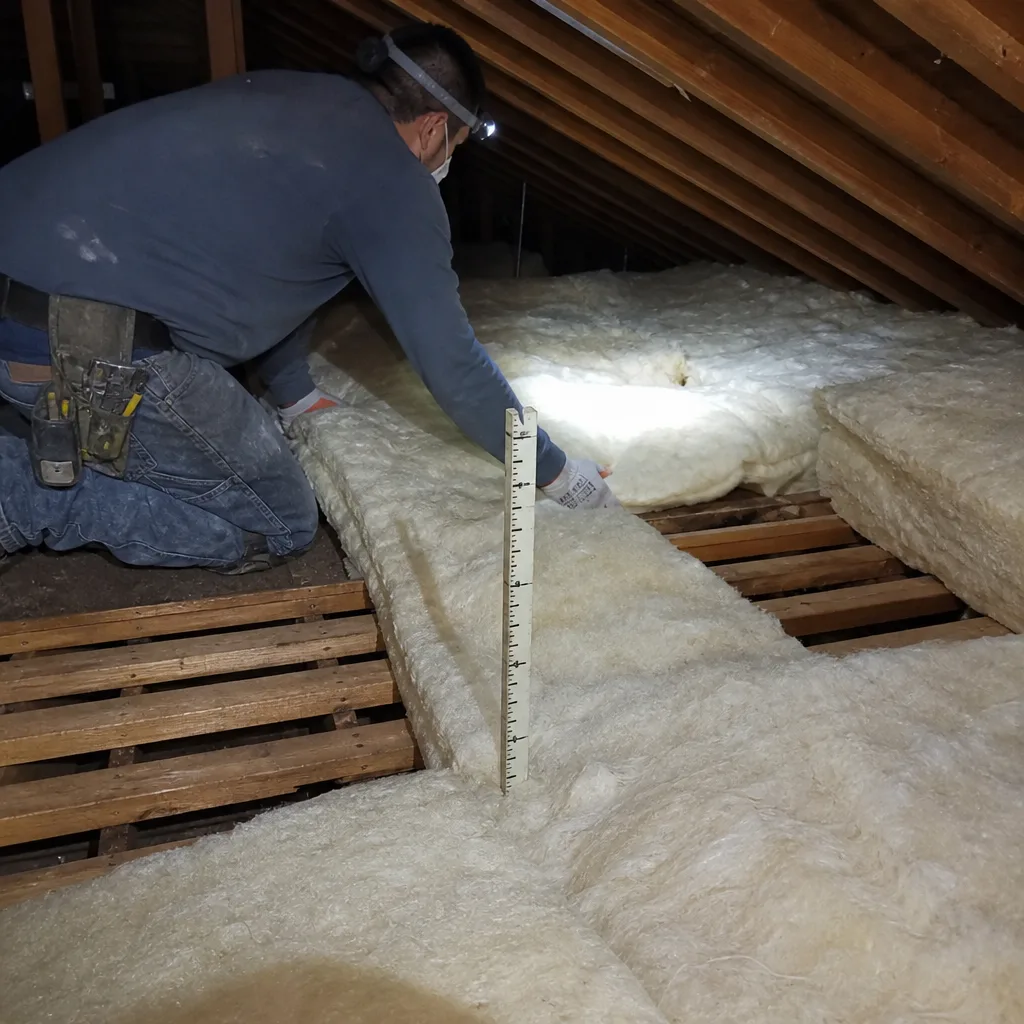
Measure the depth. R-19 fiberglass is roughly 6 inches deep when installed. In a Wolf Creek home from 1998 or 2000, we often find it compressed to 4 inches or less, especially under foot traffic areas or where roof leaks have matted it down. If your attic floor is uneven, dusty, and showing the tops of the joists, the insulation has lost significant R-value. We offer free insulation measurements and will show you the depth reading before recommending any work.
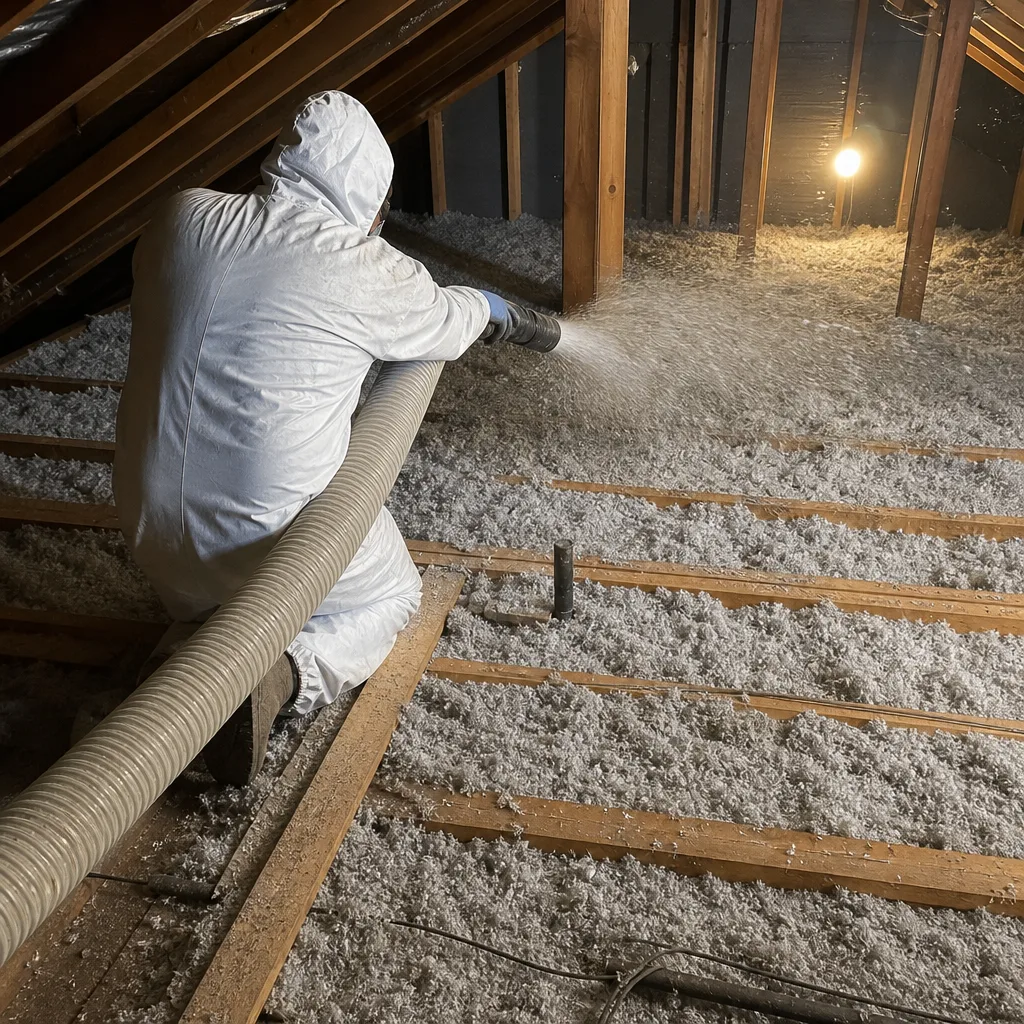
In most cases, yes. If the old fiberglass batts are dry, free of mold, and not heavily compressed, we can blow cellulose or fiberglass over the top to reach your target R-value. This is often the most cost-effective path for Temecula homes. If the old material is wet, rodent-damaged, or full of dust from years of duct leakage, we’ll recommend removal and replacement. We’ll show you what we found and explain the tradeoff before you spend a dollar.
R-38 to R-49 for most homes in Temecula, depending on the home’s size, roof color, and duct placement. For a two-story 1990s tract home in 92592 with dark shingles and ducts in the attic, we typically aim for R-44 to R-49. For a single-story home that already has a radiant barrier, R-38 is often sufficient. We’ll give you a specific target when we inspect your attic. Call (855) 382-3451 for a free assessment and a straight answer.
Written by Ruben Castellano, Owner at Thermal Insulation Co, serving Temecula since the company’s founding.