
Fast, Reliable Attic Insulation Across Stanton
Attic insulation in Stanton is almost always a retrofit job on a home built between 1950 and 1970, and the fix usually comes down to one of three things: blown-in loose-fill, new batts, or spray foam plus a proper vent path. Stanton’s three square miles pack roughly 38,000 people into tight postwar tracts where attics sit close enough to a neighbor’s roofline that radiant heat bounces between houses. We’re Thermal Insulation Co, a dedicated insulation contractor out of Van Nuys, and we work in Stanton regularly. Call Ruben at (855) 382-3451 for a free estimate.
Why Thermal Insulation Co Is Stanton’s Preferred Attic Insulation Company
Stanton homeowners call us because we show up with more than one product line and actually explain which one fits. A lot of insulation crews carry one brand and push it on every house. We install eight: Owens Corning, Johns Manville, Knauf, Rockwool, CertainTeed, Icynene, Demilec, and GreenFiber. In a 1958 stucco tract home on Beach Boulevard, we’ll often recommend GreenFiber blown-in because it fills odd cavities and over old batts cleanly. In a low-rise apartment building near Cerritos Avenue, closed-cell Demilec spray foam makes more sense for air sealing and moisture control.
Ruben Castellano built this company as an insulation-only shop, not a general contractor who does insulation on the side. That matters when you’re dealing with 60-year-old attic framing, knob-and-tube remnants, and soffit vents that haven’t breathed since the Eisenhower administration. We send a real technician who measures the attic, checks the vent math, and tells you what’s actually wrong.
Response time to Stanton from our Van Nuys yard is typically same-week, and we keep local parts inventory for the material swaps Stanton homes need most: R-38 loose-fill, R-30 batts, baffles, and ridge vent components. No waiting on a distributor in Texas.
Insulation Contractors in Stanton
Insulation Contractors in Stanton do a different kind of work than their counterparts in Cypress or Westminster, where you still find some 1990s and 2000s construction with deeper attics and newer framing. Here, the housing stock is overwhelmingly 1950s and 1960s single-story stucco, low-rise apartments, and small duplexes on 5,000-square-foot lots. That means cramped access hatches, shallow truss bays, and original wiring that sometimes still has cloth sheathing. A typical attic insulation job in Stanton runs $1,800 to $4,200 depending on square footage, access difficulty, and whether old material needs to be pulled first.
Retrofit Batt and Loose-Fill Work
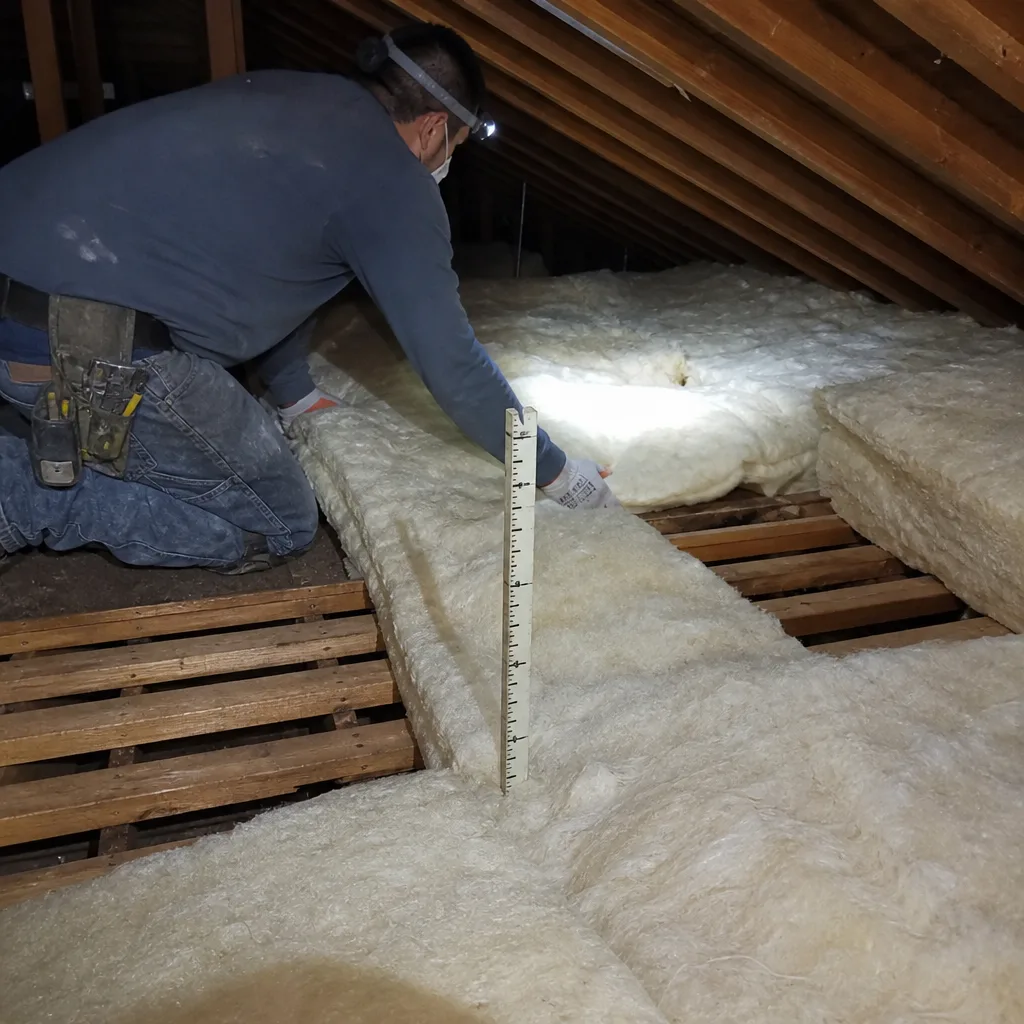
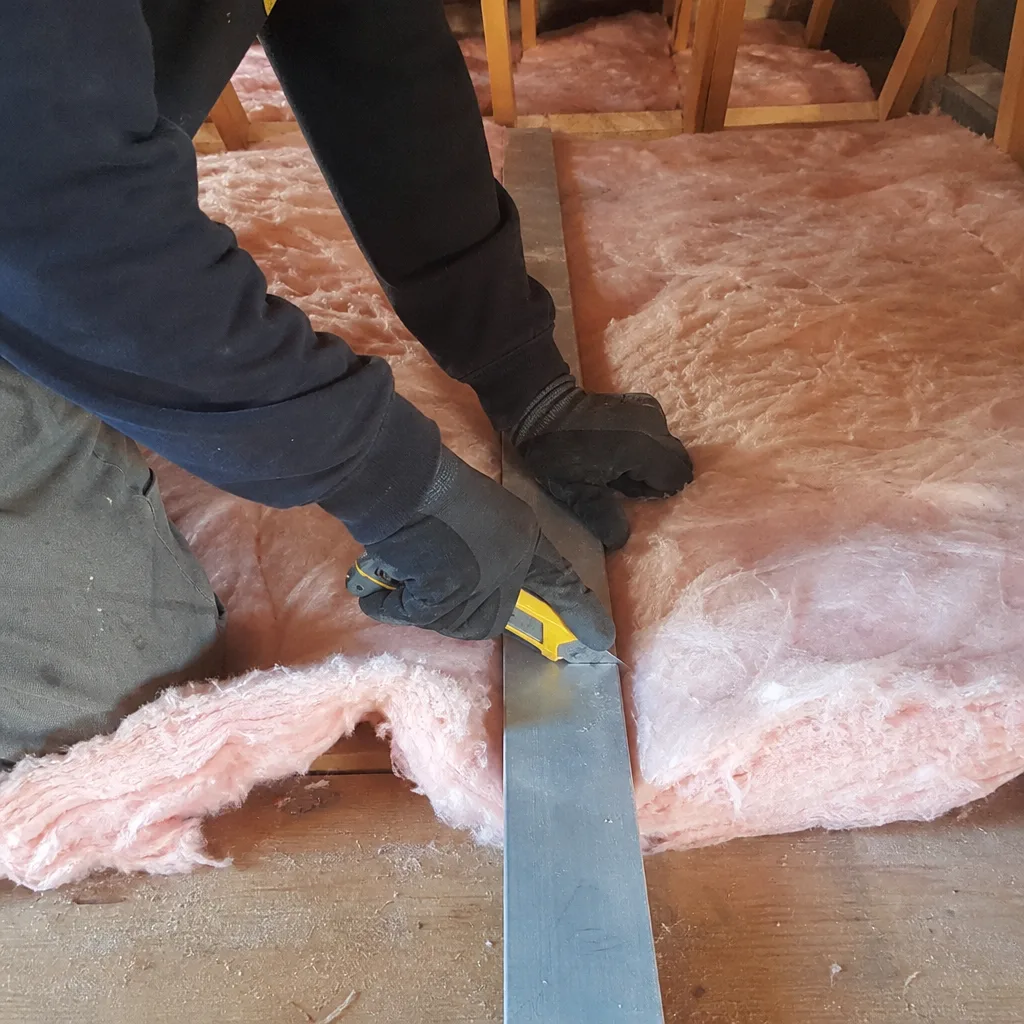
Most Stanton attics have original fiberglass batts that have sagged, compressed, or drifted over 60 years. We pull the dead material, air-seal the ceiling plane where feasible, and either re-batt with Owens Corning or Knauf or blow in GreenFiber to the depth the home needs. The choice depends on the attic’s shape, not on what’s sitting on our truck.
Top-Up and Replacement
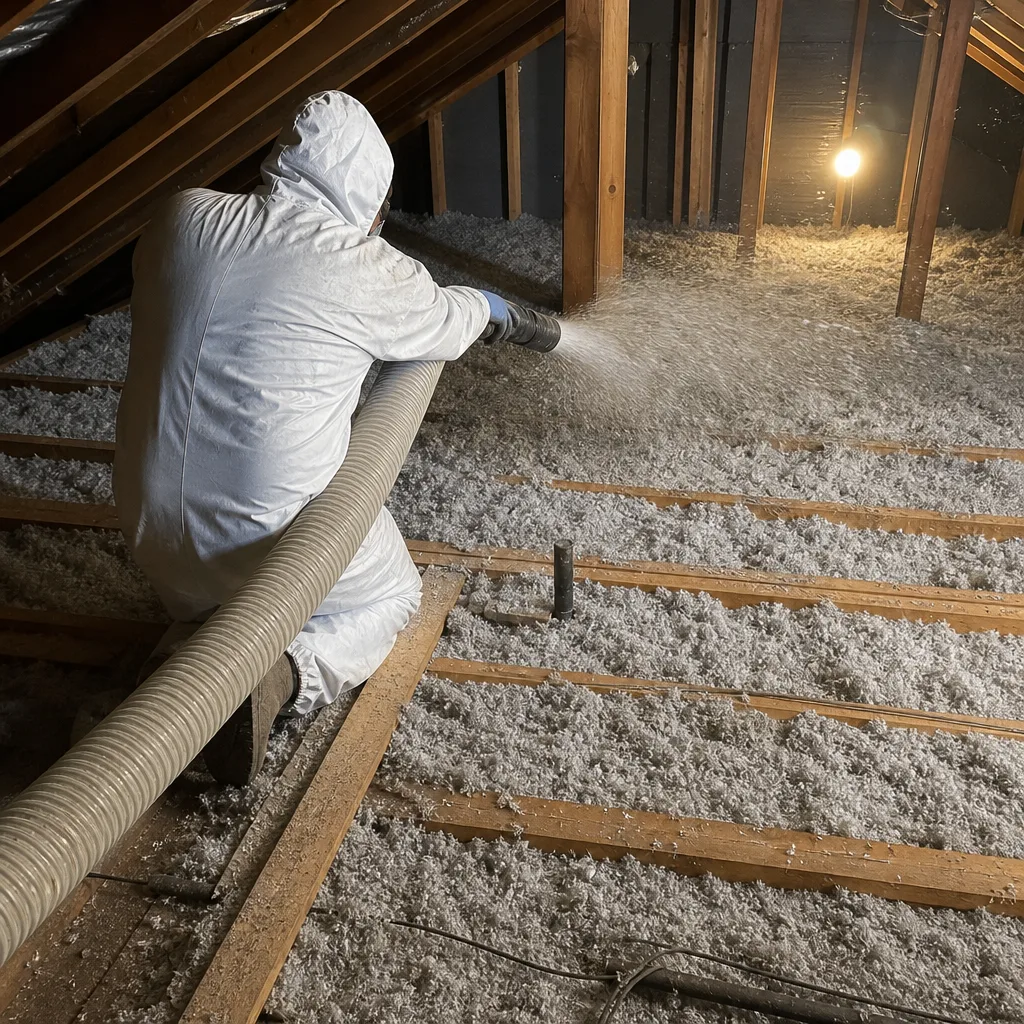
If the existing insulation is dry, intact, and just thin, a top-up makes sense. We blow loose-fill over it and bring the attic to current recommended depth. If the material is matted, rodent-soiled, or water-stained, replacement is the only honest call. We don’t top up over compromised material.
Attic Ventilation in Stanton
Attic Ventilation in Stanton is the half of the job most insulation-only crews skip, and it’s the half that determines whether the new insulation actually performs. The dense lot lines and tight side-yard clearances across Stanton’s postwar tracts mean eave and ridge venting often runs right up against a neighboring roofline. A vent that looks correct on paper may be pulling hot air from the neighbor’s roof or dumping into a dead pocket with no cross-flow.
Soffit Intake and Ridge Exhaust
Our first move on a Stanton attic is always the same: check whether the soffit intakes are open. In tract homes from the 1950s, original batts frequently drifted over the eave vents and choked them. We clear the intakes, install baffles if needed, and verify the ridge or gable path before adding any insulation.
Radiant Heat and Shared Rooflines
Stanton sits in the coastal-influenced Orange County flatlands, but the summer sun still turns a 1950s stucco roof into a heat battery. Radiant heat gain through shallow attics is the main comfort problem. In houses with a neighbor’s roof only a few feet away, we often add a radiant barrier or seal a west-facing gable wall before blowing in more material. Insulation alone won’t fix a shared-roofline heat trap.
Trusted Brands We Service in Stanton
We carry GreenFiber because Stanton retrofit attics frequently need loose-fill that can be blown over existing framing and around old vent pipes without leaving gaps. We carry Owens Corning and Knauf because some attics are better served by fresh batts with a clean, measurable R-value per layer. And we carry Johns Manville for jobs where the homeowner wants a specific fiberglass formulation that matches what the original builder used. Stanton customers get honest brand selection based on the attic’s condition and the home’s vent layout, not on whatever single product line happens to be in stock that week. Parts and materials for Stanton jobs are staged at our Van Nuys yard, so turnaround is measured in days, not weeks.
Common Attic Insulation Problems We See in Stanton Homes
- Collapsed 1950s fiberglass. Original batts in postwar Stanton tracts sag and compress until they lose most of their R-value and slide over the soffit vents. The attic stops breathing and the insulation stops insulating.
- Vent conflicts on tight lots. With roughly 38,000 people packed into about three square miles, many Stanton attics sit within a few feet of a neighbor’s roofline. Ridge vents and eave intakes that should exchange air instead recirculate hot air between two houses.
- Shallow truss bays with old wiring. Postwar framing often leaves only a few inches of clearance, and cloth-sheathed wiring from the knob-and-tube era means spray foam or blown-in work has to be planned carefully around electrical runs. This isn’t a generic suburban attic.
- West-facing stucco heat gain. Unshaded 1950s stucco roofs on the western half of Stanton heat up hard in summer. Without a radiant barrier or added venting, even fresh insulation can’t keep the upstairs comfortable in August.
Pricing for Attic Insulation in Stanton, CA
Here’s what Stanton homeowners can expect to budget. A basic blown-in top-up over existing material in a 1,000-square-foot attic runs $1,200 to $2,400. A full removal and replacement with batts or loose-fill runs $2,200 to $4,200. Adding a radiant barrier typically adds $800 to $1,800 depending on attic shape and access. Spray foam in a Stanton retrofit is the high end, usually $3,800 to $7,500, but it solves air sealing and moisture issues in one pass, which matters in older duplexes and apartments near the Anaheim line. Exact numbers depend on square footage, access difficulty, and vent work. Estimates are free, and we give you a written line-item quote before any work starts. Call (855) 382-3451 to schedule a look.
We Also Serve Cities Near Stanton
Our crews work throughout the 90680 zip code and the surrounding area. You’ll find us regularly in Garden Grove, Cypress, Westminster, and Midway City handling the same kinds of postwar retrofit attics we see in Stanton. If you’re a few minutes outside the city line, count us in.
Serving Stanton, CA — Our Local Coverage Area
We’re based in the Stanton area and know this community well. Use the map below to see our service coverage — if you’re nearby, we can almost certainly help.
FAQs About Attic Insulation in Stanton
If it’s a 1950s or early 1960s Stanton tract home and no one has touched the attic since, the material is almost certainly original. We can confirm it in about ten minutes: original batts in Stanton homes of that era are usually 2- to 3-inch fiberglass that’s now dark, matted, or drifted away from the eave vents. Call (855) 382-3451 and we’ll take a look.
Yes, and in many Stanton tract homes it’s the single most effective addition after insulation. When your attic sits a few feet from a neighbor’s roofline, you’re absorbing heat from two roof surfaces, not one. A radiant barrier stapled to the underside of the rafters cuts that radiant transfer before it reaches the insulation. Ruben often specifies it on west-facing Stanton homes where the afternoon sun is worst.
Coastal influence keeps Stanton’s air temperatures moderate, but the roof still bakes. Orange County flatland sun on a 1950s stucco tile or composition roof produces surface temperatures well above ambient, and a shallow attic with poor venting traps that heat. The coastal breeze doesn’t enter a closed attic. That’s why the fix is venting plus insulation, not one or the other.
Yes. Tight side-yard clearances are the norm across Stanton’s postwar tracts, and our techs plan vent paths around adjacent rooflines before installing anything. We were called to a 1958 single-story stucco home on Beach Boulevard near the Garden Grove line where the original batts had collapsed and were blocking the eave vents. Our tech pulled the matted material, cleared the soffit intakes, and blew in GreenFiber loose-fill, then added a ridge-to-soffit ventilation path that accounted for the neighbor’s roofline running right up against the property line. The back bedroom cooled noticeably within the first hot week.
We install products from eight manufacturers: Owens Corning, Johns Manville, Knauf, Rockwool, CertainTeed, Icynene, Demilec, and GreenFiber. For most Stanton retrofit attics, we recommend GreenFiber blown-in or Owens Corning batts depending on attic shape, with Rockwool specified where fire resistance or moisture resistance is a priority. Call (855) 382-3451 for a material recommendation based on your specific attic.
Written by Ruben Castellano, Owner at Thermal Insulation Co, serving Stanton and Orange County since the company’s founding.