
Fast, Reliable Attic Insulation Across Orange
Attic insulation in Orange costs $1,800 – $5,400 for a typical 1,200 – 1,800 sq ft home, depending on material and method. That’s the number most Orange homeowners ask us about first, and it’s a fair range for the houses we see here: mid-century tracts with settled batts, Old Towne bungalows with plaster and knob-and-tube wiring, and foothill-adjacent properties that bake under the Santa Ana sun. We’re Thermal Insulation Co, and insulation is our only trade. Our Attic Insulation crews run calls into Orange from Villa Park to the 55 every week. Call (855) 382-3451 for a free estimate, and we’ll tell you what your attic actually needs rather than what we happen to have on the truck.
Why Thermal Insulation Co Is Orange’s Preferred Attic Insulation Company
Ruben Castellano built Thermal Insulation Co around one idea: a contractor who only does insulation makes better decisions than one who lists it as a side service. That focus shows up in Orange attics daily. A homeowner near El Modena calls because their upstairs hits 85 degrees by 3 p.m. A landlord near the Orange Circle wants a code-compliant top-up before a tenant move-in. A family near Peters Canyon needs the ember-vulnerable vents addressed before fire season. Each gets a different answer because each house asks a different question.
We carry eight material brands: Owens Corning, Johns Manville, Knauf, CertainTeed, plus Rockwool mineral wool, Icynene and Demilec spray foam, and GreenFiber cellulose. Most single-trade shops stock one or two lines and bend every job toward whatever’s in the warehouse. We stock competing brands so the home drives the recommendation. That means a 1958 tract home off Tustin Avenue gets a different approach than a 1925 craftsman in Old Towne, and we can explain why at the kitchen table, not in a brochure.
Our crews know Orange’s streets, and more importantly, they know what’s above Orange’s ceilings. We work in zips 92859, 92862, 92863, and 92864. We’ve pulled apart attics near Orange High where the original 1960s baffles had blown loose years ago. We’ve dense-packed Old Towne walls where plaster and lath made batts useless. That’s the type of Orange field knowledge you don’t get from a distant call center.
Attic Insulation Removal in Orange
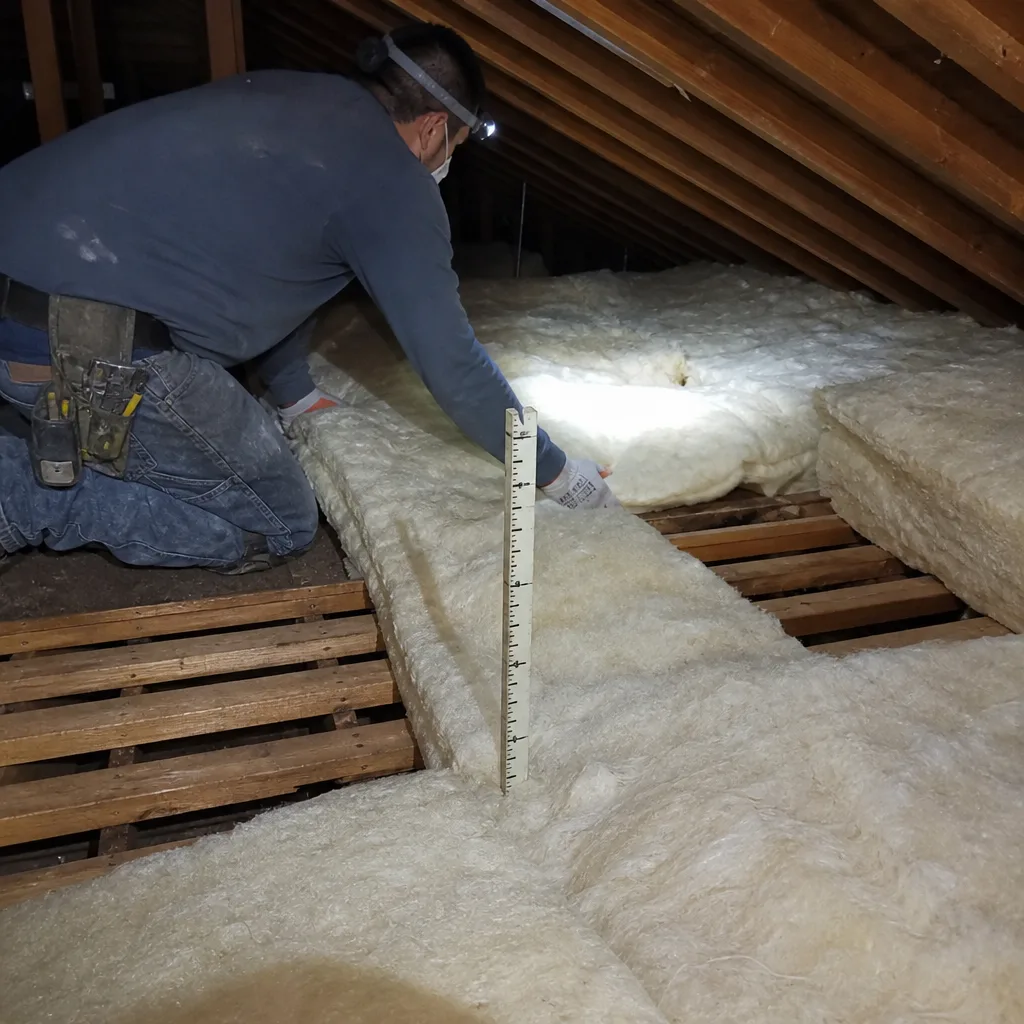
Attic Insulation Removal in Orange is what we recommend when existing material is compressed, contaminated, or no longer performing, and adding more on top would just bury the problem. We see this a lot in Orange’s 1950s and 1960s tract housing, where original fiberglass batts have been walked on by decades of electricians, cable installers, and HVAC techs. Once insulation loses loft, it loses R-value, and no top-up fixes that. Removal is also the right call when rodent waste or water damage has soiled the material, which happens when leaky roof penetrations go unnoticed under Orange’s occasional winter downpours.
Removal in Orange typically runs $1.20 – $2.00 per square foot, so a 1,500 sq ft attic lands between $1,800 and $3,000. We bring in commercial vacuums, bag everything on site, and haul it away the same day. Then we can air-seal properly: top plates, wire penetrations, and recessed can gaps are all accessible once the old material is gone. Homeowners who skip removal and just blow more cellulose over rodent-damaged batts end up paying twice.
Full Removal and Replacement
We remove everything down to the drywall or plaster ceiling, then address the air-sealing opportunities that were hidden under the old material. The new install gets a clean start, whether that’s blown-in fiberglass, cellulose, or batts. On a recent 1962 ranch tract home off Chapman Avenue near the hills, our crew found baffles clogged with wind-driven dust and roof-deck insulation compressed to half depth, with a hot-spot reading over the west-facing slope. We air-sealed the top plates, installed new baffles, and blew in Owens Corning fiberglass to consistent depth. The homeowner told us the upstairs stopped baking by mid-afternoon, even during a fall Santa Ana.
Removal Before Rodent or Water Remediation
If you’ve had rats or squirrels in the attic, the insulation is the last place you want to leave their waste. We remove it, sanitize the deck area, and coordinate with your pest or roofing contractor before the new material goes in. Orange’s older homes near the arroyos and open space see more rodent pressure than newer subdivisions, so this comes up more than homeowners expect.
Insulation Contractors in Orange
Insulation Contractors in Orange don’t all do the same kind of work. Some are HVAC shops that add insulation as an upsell. Some are handymen who’ll blow in whatever big-box store bags are cheapest. We’re different by structure: Thermal Insulation Co exists to make attics perform, and that includes removal, air-sealing, ventilation corrections, and installation. When you hire us, you’re not getting a contractor who happens to do insulation. You’re getting an insulation contractor, period.
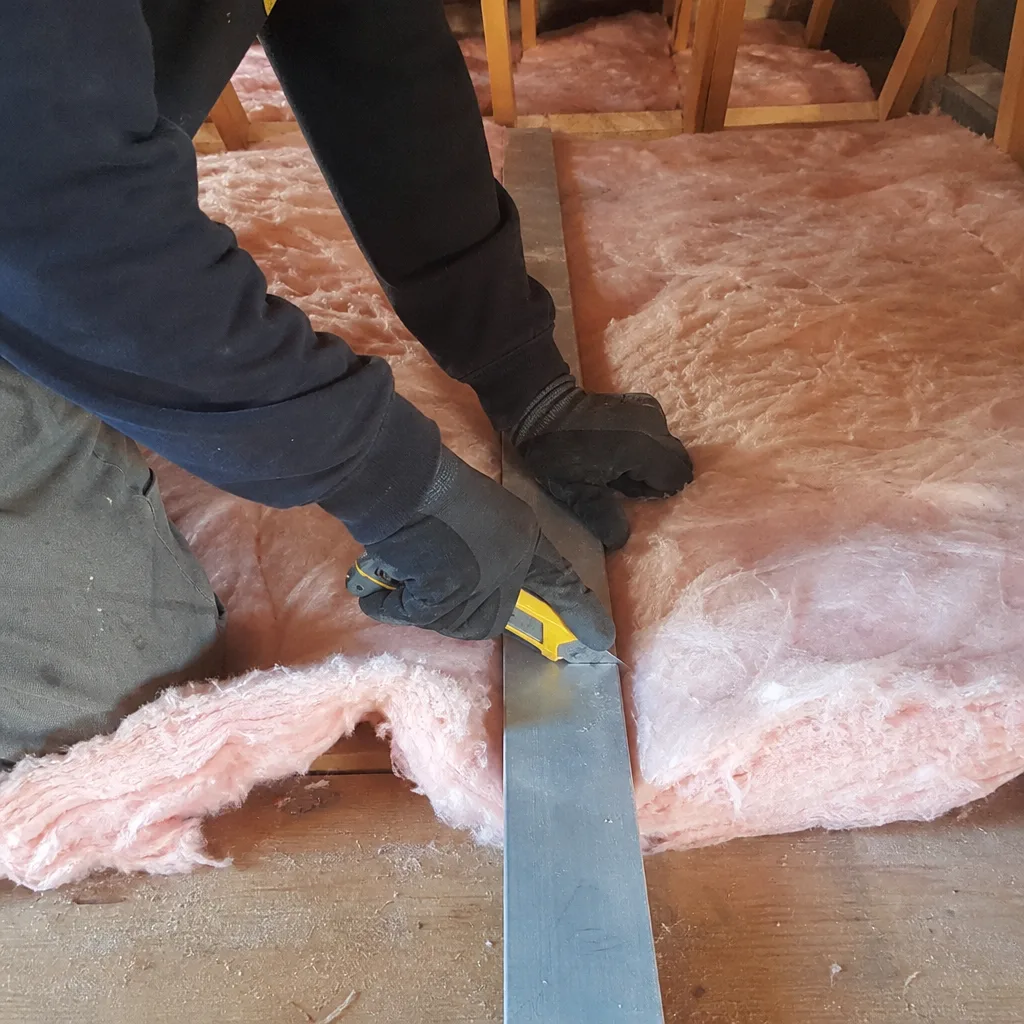
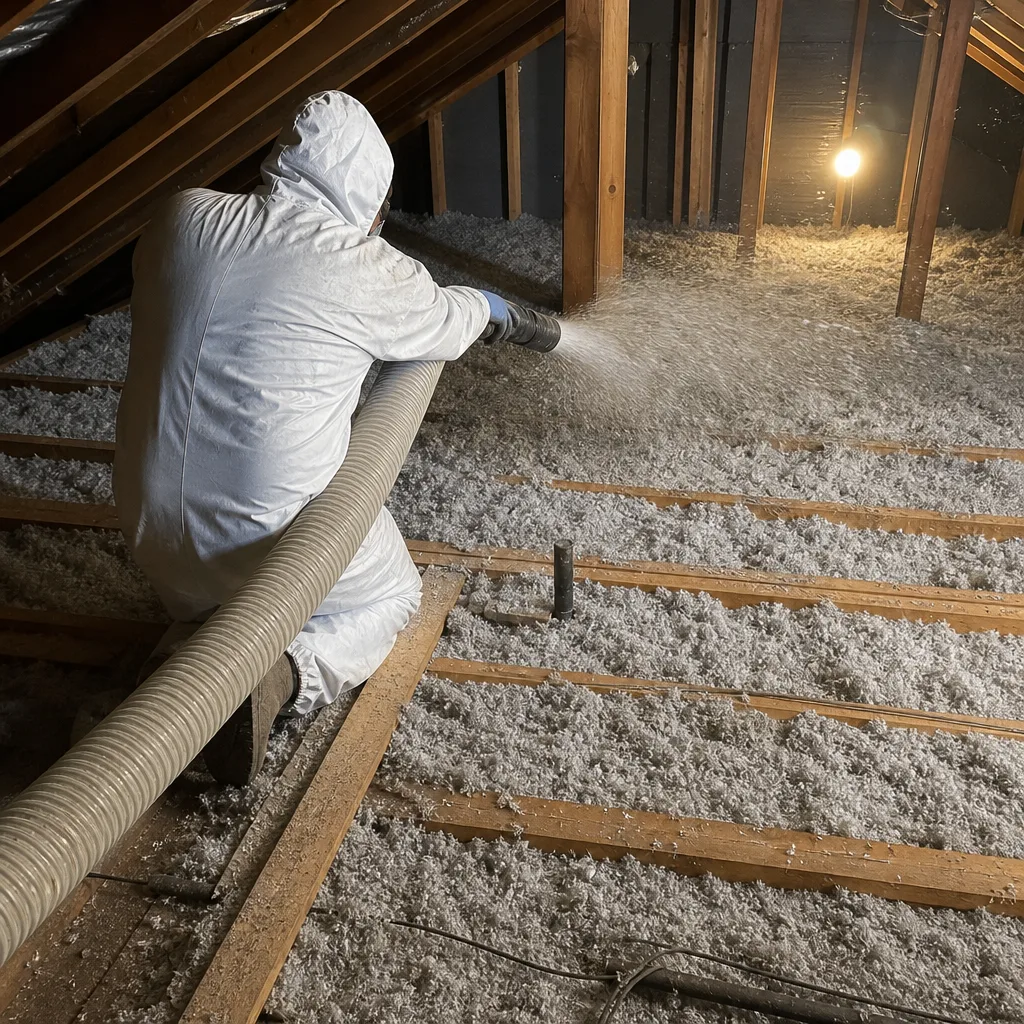
Our work in Orange spans three installation methods: attic batts and blankets, blown-in loose-fill, and spray foam (open-cell and closed-cell). Each exists for a reason. Batts make sense in accessible attics with predictable joist spacing. Blown-in works in awkward cavities and older framing. Spray foam earns its cost when you need an air barrier as much as an R-value boost, especially in hard-to-reach areas where air leakage drives most of the discomfort. We’ll tell you which one fits your house and why, and we won’t pitch foam to a house that only needs a top-up.
Method Selection Based on the House, Not Inventory
Because we stock fiberglass from Owens Corning, Johns Manville, and Knauf side by side with Rockwool and two spray foam lines, we don’t have a vested interest in selling you one thing. A ranch home off Chapman with a leaky attic floor might get air-sealing plus blown-in fiberglass. A historic Old Towne home with plaster walls might get dense-pack cellulose. The house decides. We explain the reasoning in plain English.
Air-Sealing as Part of Every Job
In Orange, a bag of insulation without air-sealing is half a job. Santa Ana winds push hot, dry air and fine ember-borne debris through gaps around recessed cans, top plates, and attic access hatches. We seal those first, then insulate. Skipping this step is the number one reason mid-century tract attics still feel hot in fall even after a new layer of fiberglass was blown in.
Trusted Brands We Service in Orange
We carry Owens Corning because their fiberglass holds loft well and comes in a range of R-values that suit Orange’s hot-summer, cool-winter inland climate. We carry Rockwool because mineral wool resists moisture and adds fire resistance, which matters when your attic sits against fire-prone foothill open space. And we carry GreenFiber cellulose for Old Towne homeowners who want a recycled-content option that dense-packs well behind plaster and lath. Those are three honest reasons, not a sales pitch. We keep material staged for Orange jobs and can typically schedule installation within a week for standard attic work. Need a specific brand to match an existing installation? Let us know, and we’ll confirm what’s available before we arrive.
Common Attic Insulation Problems We See in Orange Homes
- Clogged or dislodged baffles from Santa Ana winds. Orange’s original 1950s through 1970s attic vents were sized for mild coastal air, not the dry, gusting winds that blow down through the foothills each fall. Wind-driven dust plugs the baffles, insulation compresses, and the roof deck heats up like a griddle. We see it on nearly every older tract home we open.
- Missing air-sealing around top plates and recessed cans. Builders in the 1960s didn’t caulk or foam penetrations, so hot, dry air and fine debris funnel straight from the attic into the living space. Adding insulation without sealing these gaps just traps the problem. In foothill-adjacent neighborhoods, it also gives embers a path in during red flag days.
- Compressed batts behind knee walls on west-facing slopes. On a ranch home near Chapman Avenue, the west roof slope would read 15 degrees hotter than the east side every afternoon. The batts had settled to half depth behind the knee wall. A simple R-value check from the access hatch would have missed it. We had to open the knee wall door and look.
- Historic Old Towne homes with plaster and knob-and-tube-era construction. You can’t just cram fiberglass batts into a 1920s wall cavity and call it done. Plaster and lath, old wiring, and strict preservation review mean these jobs need dense-pack or exterior-adjacent approaches. We’ve done enough of them to know what the review board accepts and what it doesn’t.
Pricing for Attic Insulation in Orange, CA
Here’s what we quote in Orange, honestly. Attic insulation removal runs $1.20 – $2.00 per square foot. A blown-in top-up over existing, still-functional insulation runs $1,500 – $2,800 for a typical 1,200 – 1,500 sq ft attic. Full removal plus new blown-in fiberglass or cellulose lands at $1,800 – $4,200. Spray foam runs higher, typically $3,500 – $5,400 for the same footprint, because material cost and labor are both steeper. What moves the number: attic size, access difficulty, whether old material comes out first, and how much air-sealing the home needs. We quote after a walkthrough, not over the phone. Estimates are free, and the price we give is the price you pay. Call (855) 382-3451 to schedule a look.
We Also Serve Cities Near Orange
Our crews run daily from Orange into the surrounding communities. We’re in Villa Park and North Tustin for the larger ranch homes with sprawling attic footprints, Tustin for mid-century tracts much like what we see in central Orange, and Anaheim for everything from older flats to newer hillside builds. If you’re near the border and wondering if we cover your street, call (855) 382-3451 and ask. The answer is almost always yes.
Serving Orange, CA — Our Local Coverage Area
We’re based in the Orange area and know this community well. Use the map below to see our service coverage — if you’re nearby, we can almost certainly help.
FAQs About Attic Insulation in Orange
Yes. Santa Ana winds change how we approach every attic in Orange because they drive hot, dry air and fine dust through vents that were never designed for that kind of force. We inspect baffles first, replace any that are clogged or dislodged, and air-seal top plates before any new insulation goes in. The wind season is also when ember intrusion matters most, so we check that attic vents meet current hardening standards for homes near the foothill open space. Call (855) 382-3451 for an inspection.
Yes, and we’ve done it. These homes can’t receive standard fiberglass batts in the walls, so we typically dense-pack cellulose behind the plaster and lath. It fills the irregular cavities, adds R-value without tearing out the original walls, and satisfies the historic preservation requirements that govern much of Old Towne. Wiring needs to be assessed first, which we handle in the walkthrough.
Because the gaps leak conditioned air regardless of how much insulation sits on top of them. A 1963 ranch off Tustin Avenue might have two dozen top-plate penetrations, each one a small pipe for hot air and dust transfer between the attic and the living space. Insulation slows conduction. Air-sealing stops convection. In Orange’s inland climate, where summer attic temps regularly exceed 130 degrees, sealing matters as much as R-value.
Remove it when it’s compressed, wet, rodent-contaminated, or filled with decades of dust. Once fiberglass batts lose their loft, their R-value drops sharply, and blowing more material on top just adds weight without restoring performance. Water-damaged insulation grows mold and needs to come out completely. We’ll tell you honestly if your material can support a top-up or if removal is the smarter spend.
Yes. We work with Owens Corning, Johns Manville, Knauf, Rockwool, CertainTeed, Icynene, Demilec, and GreenFiber, so matching an existing installation is straightforward. If your attic has an older or discontinued line, we’ll recommend the closest current equivalent and explain the difference. The goal is a complete thermal envelope, not brand consistency for its own sake.
Written by Ruben Castellano, Owner at Thermal Insulation Co, serving Orange since day one of our operations in Southern California.