
Insulation Company in Valley Glen, CA
Blown in insulation accounts for most of what we do in Valley Glen, and the reason is simple: the neighborhood’s housing stock was built before insulation was standard practice. Most homes here went up between the late 1940s and the 1960s, and many still have original batt that’s slumped, thinned, or was never installed to begin with. Add San Fernando Valley summers that routinely push past 100°F, and you have attics baking to 150°F while the living space below fights to stay cool. We’re a dedicated insulation contractor, not a generalist, and we match the material to the house. Call (855) 382-3451 for a free estimate.
Why Valley Glen Homes Are Different
Valley Glen is a postwar tract-home community, and that single fact shapes nearly every insulation job we do here. The housing stock is dominated by single-story stucco ranch homes on small lots, with 1960s and 70s dingbat-style apartments along the major boulevards like Victory and Burbank. These homes were framed and finished in an era when builders treated insulation as optional, especially in a region they assumed would stay mild. It doesn’t stay mild. Summer highs in the 91404 zip routinely exceed 100°F, and dry heat means the dominant problem is attic radiant heat, not moisture.
The retrofit reality matters. In Valley Glen, we’re rarely insulating new construction. We’re working around existing knob-and-tube or early Romex wiring, stucco exterior walls, and roof decks that have been cooked by decades of 150°F+ attic temperatures. Blown-in insulation solves the access problem because loose-fill material can be installed through small openings without tearing out ceilings or walls. Attic ventilation is often as much of the job as the insulation itself, because many of these ranches have inadequate eave and ridge venting. When a roof deck has been overheating for 60 years, you can’t just add R-value and walk away.
Our Main Valley Glen Services
Most Valley Glen homeowners call us first about two things: the attic and the walls. Here’s what each job involves in this neighborhood.
Attic Insulation in Valley Glen
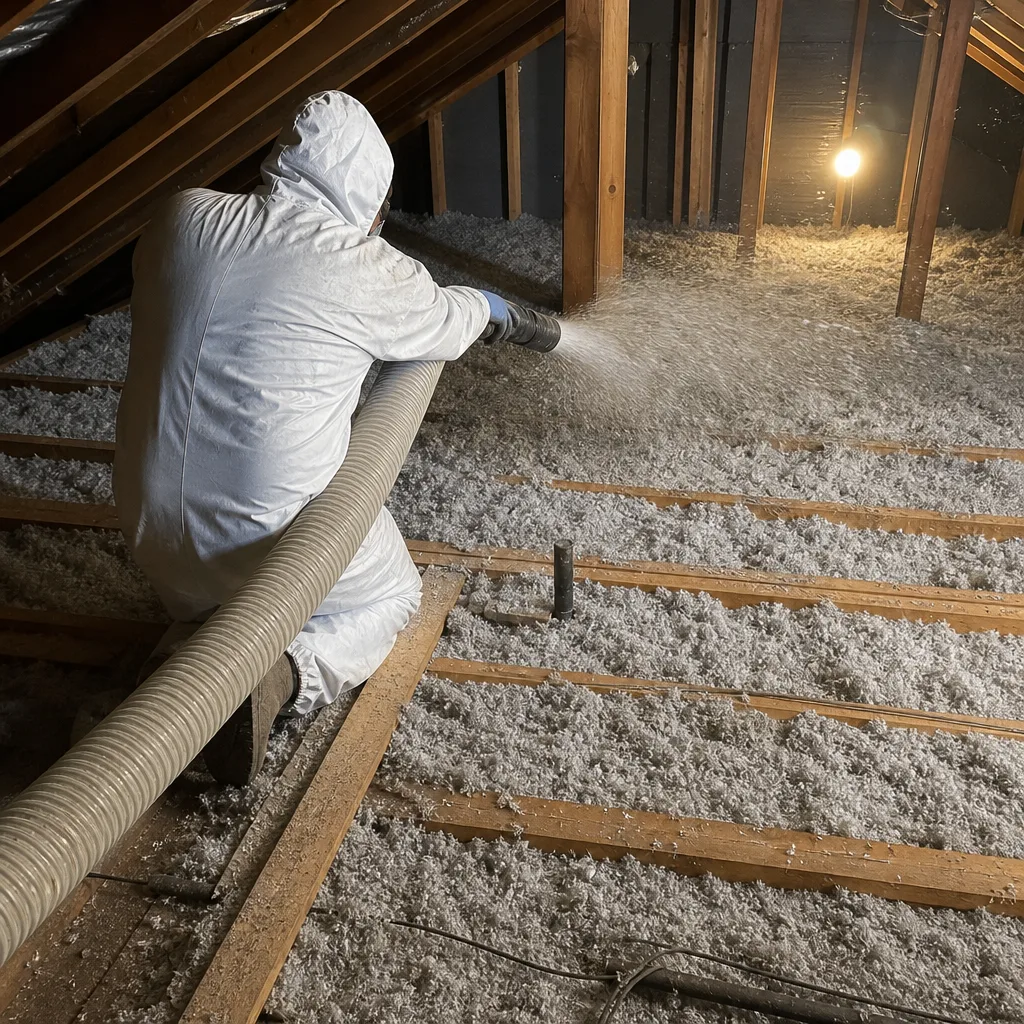
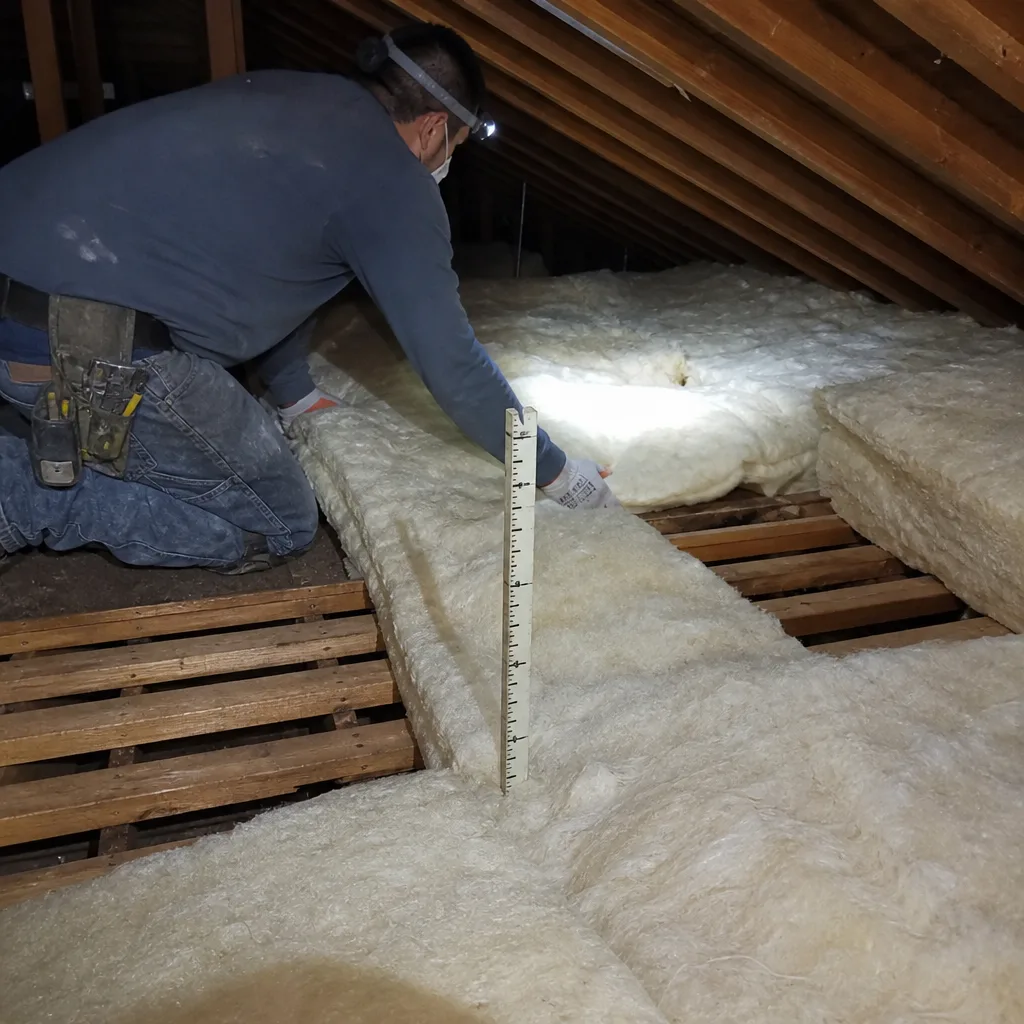
Attics in Valley Glen ranches are the biggest energy liability in the house. The typical job involves removing old, settled fiberglass batt that has separated at the eaves, air-sealing the attic floor penetrations, and then insulating to a level that actually matches the San Fernando Valley heat load. Because the attics here routinely hit 150°F in July, we also evaluate ventilation and recommend upgrades where the existing soffit or ridge venting can’t keep up. If your upstairs rooms run 10 degrees hotter than the rest of the house, the attic is usually the answer. Attic Insulation in Valley Glen covers the full scope of this work.
Spray Foam Insulation in Valley Glen
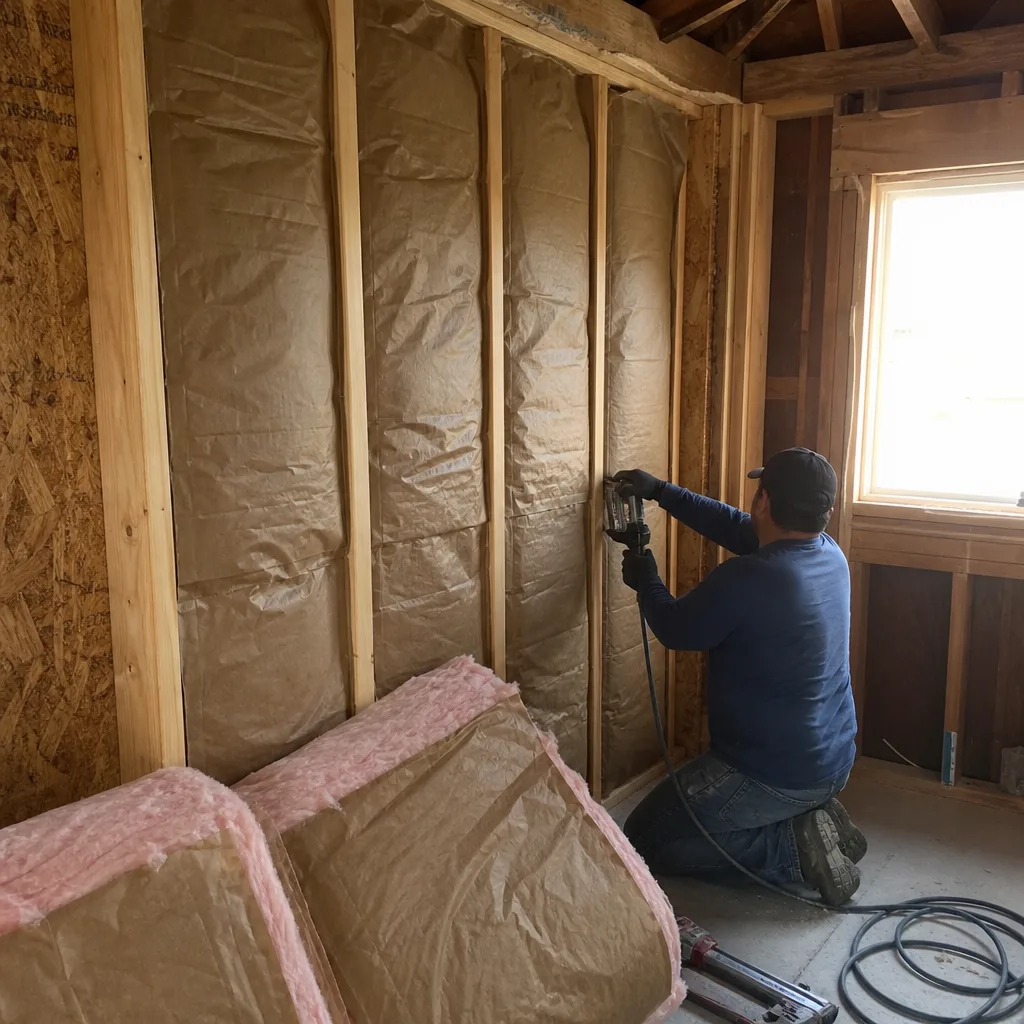
Spray foam plays a different role in Valley Glen than it does in cooler or wetter climates. Here it’s not mostly about moisture control, though it does help. The main reason homeowners choose spray foam in this neighborhood is that stucco walls and older framing leave gaps and air channels that batt and loose-fill can’t fully seal. Open-cell foam is well suited to interior wall and ceiling cavities where sound dampening matters, and closed-cell is the right call for limited-depth applications or areas where an air barrier is the priority. Many dingbat-style apartment buildings in Valley Glen benefit from foam around the rim joists and under flat roofs. Spray Foam Insulation in Valley Glen goes into more detail on material selection.
What happens when you call
- 1
A real person answersNo phone trees — you reach a local pro.
- 2
You get an upfront price rangeHonest numbers before anyone is dispatched.
- 3
A background-checked tech heads outLicensed & insured, dispatched right away.
- 4
You approve before work beginsNothing starts until you say go.
Blown In Insulation in Valley Glen
Blown in insulation is the workhorse of Valley Glen retrofits because it adapts to old framing, minimal access, and uneven cavities better than any other method. The postwar stucco ranch homes here were rarely insulated when built, and when they were, it was often a thin layer of batt that has since settled or been disturbed by rewiring and plumbing work. Blowing in cellulose or fiberglass lets us fill those cavities without opening the walls. For a deeper look at how this method works in general, see our Blown In Insulation page.
Cellulose Insulation
Signs you need it
You feel drafts near baseboards or exterior walls in winter, or rooms on the west side of your Valley Glen home heat up noticeably by mid-afternoon.
What it costs in Valley Glen
Blown-in cellulose in Valley Glen typically runs $1.20 to $2.30 per square foot installed, depending on depth and access.
How we do it
We drill small access holes at each stud bay or use the attic hatch, then blow dense-packed cellulose into the cavity to the specified R-value and patch cleanly.
Blown In Attic Insulation
Signs you need it
Your attic floor insulation is patchy, compressed, or barely visible above the joists, and your air conditioner runs constantly on 100°F days.
What it costs in Valley Glen
Blown-in attic insulation in Valley Glen generally costs $1.50 to $3.05 per square foot removed and reinstalled, with standalone installation running $0.85 to $2.55 per square foot.
How we do it
We remove degraded existing material if present, air-seal the attic floor, then blow loose-fill insulation to a uniform depth across the entire attic plane, including over the eaves.
Blown In Cellulose Insulation
Signs you need it
Your energy bills climb every summer and your walls feel warm to the touch in the afternoon despite the AC running.
What it costs in Valley Glen
Expect to pay $1.20 to $2.30 per square foot for blown-in cellulose in Valley Glen, with wall retrofits typically at the higher end.
How we do it
We use GreenFiber recycled cellulose where sustainability is a priority, blowing it through small access holes to dense-pack wall cavities or loose-fill the attic floor.
Loose Fill Insulation
Signs you need it
Your attic has uneven insulation coverage with visible gaps and bare spots, especially near the eaves where heat enters most aggressively.
What it costs in Valley Glen
Loose fill insulation for a typical Valley Glen attic falls between $0.85 and $2.55 per square foot installed.
How we do it
Using a calibrated blowing machine, we apply loose-fill material in measured passes to achieve consistent depth and R-value, paying special attention to perimeter bays.
What Blown In Insulation Costs in Valley Glen
| Item | Typical range in Valley Glen |
|---|---|
| Blown-in attic insulation (installed) | $0.85 – $2.55 per sq ft |
| Blown-in attic insulation (removal + reinstall) | $1.50 – $3.05 per sq ft |
| Blown-in wall insulation (cellulose or fiberglass) | $1.20 – $2.30 per sq ft |
Can you blow insulation into walls without removing the stucco?
Yes. Stucco exterior walls don’t need to come down. We drill small access holes through the interior drywall or exterior sheathing, blow the material into each stud bay, and patch the holes. The stucco stays intact, which is the standard retrofit approach in Valley Glen. Call (855) 382-3451 for an exact quote.
How long does blown-in insulation last in a Valley Glen attic?
Cellulose and fiberglass loose-fill both last the life of the home if they stay dry and undisturbed. In Valley Glen’s dry climate, moisture is rarely the problem. The bigger issue is settling over decades, which reduces depth and R-value. A re-blow every 20 to 30 years is common. We can inspect your attic and tell you whether your current material still meets today’s standards.
Brands We Service in Valley Glen
We carry Owens Corning and Johns Manville fiberglass, Rockwool mineral wool, and GreenFiber recycled cellulose, with materials stocked for fast turnaround in Valley Glen. Each product has a specific purpose here, and we’ll walk you through why one fits your home better than another. See our brands for the full lineup.
Pricing for Insulation Company in Valley Glen, CA
| Service | Typical range in Valley Glen |
|---|---|
| Attic insulation (blown-in or batt, installed) | $0.85 – $3.05 per sq ft |
| Attic insulation removal + reinstall | $1.50 – $3.05 per sq ft |
| Blown-in wall insulation | $1.20 – $2.30 per sq ft |
| Spray foam insulation (open-cell) | $0.75 – $2.35 per sq ft |
| Spray foam insulation (closed-cell) | $1.20 – $3.25 per sq ft |
| Spray foam removal | $2.50 – $5.55 per sq ft |
| Batt insulation (fiberglass or mineral wool) | $0.55 – $2.46 per sq ft |
| Air sealing | $350 – $950 per project |
| Attic cleaning / sanitization | $550 – $1,500 per project |
| Radiant barrier | $0.90 – $2.05 per sq ft |
Prices in Valley Glen tend to climb when attics have decades of debris and degraded material that must be removed first, or when access is tight and wiring runs through every cavity. You’ll always get upfront pricing from us with no surprise line items added after the work starts. Estimates are free, so you know the number before you commit.
Neighborhoods We Serve in Valley Glen
We work across all of Valley Glen, from the residential streets off Vanowen and Victory to the complexes along Burbank and Coldwater Canyon. Most jobs in this area are scheduled within a few days, and we handle everything from single ranches to multi-unit dingbat apartments.
- Valley Glen proper (91404)
- Areas around Valley College
- Neighborhoods east of the 170 along Burbank Blvd
- Streets adjacent to North Hollywood and Van Nuys borders
Service Area – Cities Near Valley Glen
Thermal Insulation Co is based in Van Nuys and serves Valley Glen alongside the surrounding San Fernando Valley communities. If you’re in Van Nuys, CA, Sherman Oaks, CA, Encino, CA, or North Hills, CA, we cover your area as well. The housing stock and climate challenges are similar across these neighborhoods, and our approach carries over directly.
Serving Valley Glen, CA — Our Local Coverage Area
We’re based in the Valley Glen area and know this community well. Use the map below to see our service coverage — if you’re nearby, we can almost certainly help.
FAQs About Insulation Company in Valley Glen
Most Valley Glen jobs can be scheduled within two to five business days, and we keep common materials stocked for the area. Emergency situations, like a complete attic insulation failure during a heat wave, can often be pushed up. Call (855) 382-3451 and we’ll give you the soonest available date.
Most retrofit insulation work in Valley Glen does not require a permit. Replacing existing insulation or adding new material to an existing attic or wall cavity falls under standard maintenance. If your project involves structural or electrical changes, we’ll tell you before we start what the city requires. We handle the paperwork side so you don’t have to guess.
Yes. Dingbat-style apartments from the 60s and 70s are a significant part of Valley Glen’s housing stock, and we insulate both individual units and entire buildings. Rim joist and attic work in these structures typically delivers the fastest comfort improvement for tenants. Call us and we’ll assess the building’s specific layout.
If your Valley Glen home is fighting the San Fernando Valley heat with thin or missing insulation, we’re ready to look at the house and tell you honestly what it needs. Eight brands, three methods, one specialty. Call (855) 382-3451 for a free estimate.
What happens when you call
- 1A real person answersNo phone trees — talk to a local insulation pro.
- 2You get an upfront price rangeHonest numbers before anyone is dispatched. No surprises.
- 3A background-checked tech heads outLicensed & insured, typically same-day.
- 4You approve before work beginsNothing starts until you say go.
What Valley Glen Customers Say
"Plastic laid from the front door to the attic hatch and they vacuumed the hallway afterward."
— Gabriela Rodriguez"Work is good and the house is noticeably more comfortable. There was insulation debris left in the hall closet under the attic access that I had to clean up."
— Maya Singh"Attic was at maybe R-11 from the 1970s and blown in over the top would have just buried the problem. They removed the old material, air sealed the top plates and penetrations first, then blew in to R-49. The upstairs is a completely different house in August."
— Christine Park