
Fast, Reliable Attic Insulation Across La Palma
Attic insulation in La Palma is really about one thing: fixing what the 1960s builders left undone. Most homes here were framed with thin R-11 fiberglass batts, and nearly all of them were built without air-sealing at the top plates, around recessed lights, or at bath-fan chases. That combination means the attic heats up fast during hot summer afternoons, and the marine air that rolls in after sundown pulls conditioned air right back out through the same gaps. We fix that with proper air-sealing first, then insulation matched to the home. Call us at (855) 382-3451 for a free estimate in La Palma, and we’ll tell you what’s actually in your attic and what it should be.
Why Thermal Insulation Co Is La Palma’s Preferred Attic Insulation Company
Thermal Insulation Co is a dedicated insulation contractor, and that distinction matters in La Palma. We’re not a generalist who happens to blow some fiberglass once a month. Insulation is our sole trade, and we work across three installation methods: attic batts and blankets, blown-in loose-fill, and spray foam, both open-cell and closed-cell. That lets us match the method to the house instead of forcing one product into every attic. La Palma homeowners tend to appreciate that, because many of these tract homes share the same issues but no two attics are identical once you get past the framing.
We carry eight material brands across the categories: Owens Corning, Johns Manville, Knauf, CertainTeed, Rockwool, Icynene, Demilec, and GreenFiber. Most single-trade contractors stock one or two product lines. We stock competing brands because the recommendation should come from the home’s needs: R-value targets, moisture conditions, space constraints, and whether the homeowner wants a recycled-content option. Ruben Castellano leads the company with that principle: figure out the right material and method for the specific attic, then explain it clearly.
Our crews know the tract layouts in La Palma, from the low-pitch roofs that make attic access tight to the stucco-on-wood-frame construction that typifies the neighborhoods off the 90623 zip. Response time to La Palma is typically same-week for estimates and scheduling, with removal and re-blow jobs often completed in a single day.
Attic Insulation Removal in La Palma
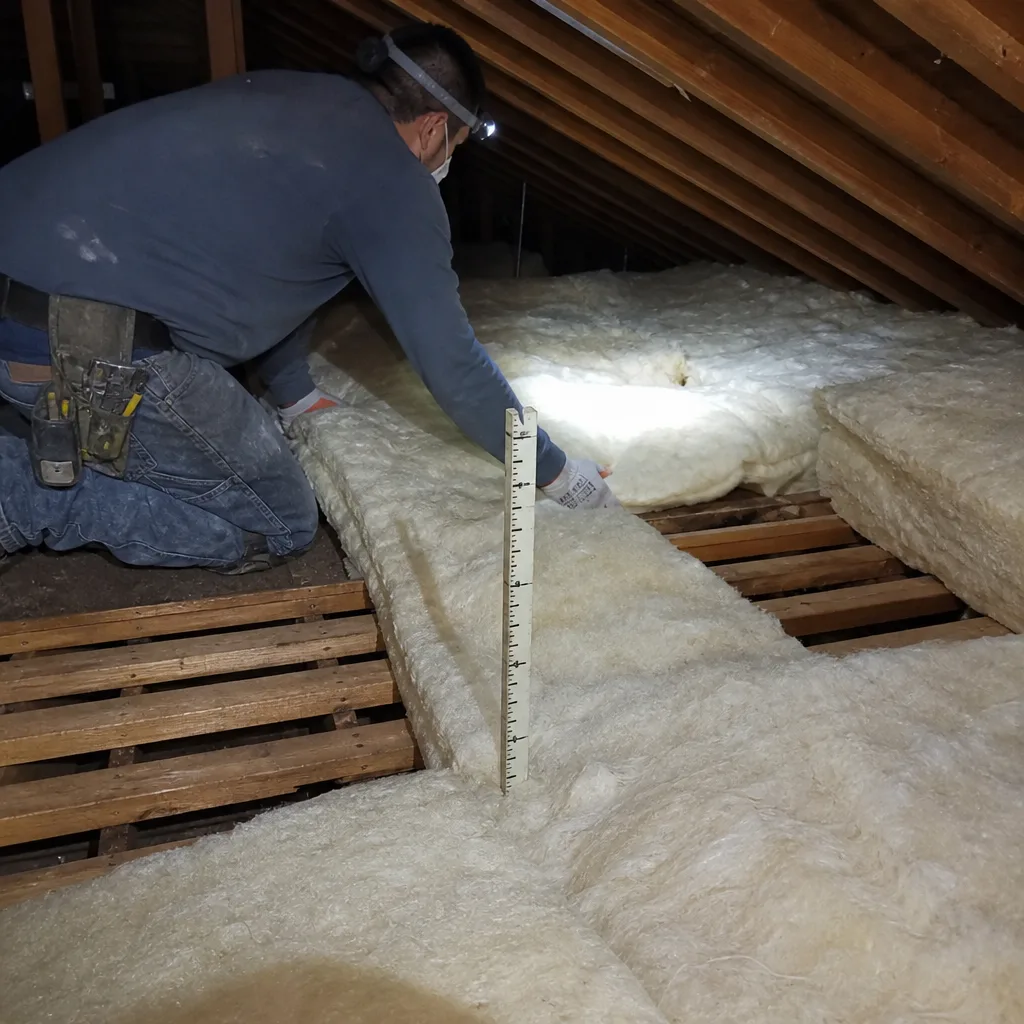
Attic Insulation Removal in La Palma usually means pulling out the original 1960s rock wool or loose-fill that has settled, compacted, and left bare spots across the ceiling plane. The first sentence is the honest truth: most of these homes still have whatever the builder stapled or blew in sixty years ago, and that material has lost most of its effective R-value. Technicians routinely find ceiling areas over living rooms and hallways where a past owner cut in a recessed light and never restored the fill around it. That bare spot becomes a thermal hole, and in La Palma’s hot-summer, cool-dusk climate, it moves heat both directions: solar gain comes down in the afternoon, and conditioned air escapes up at night.
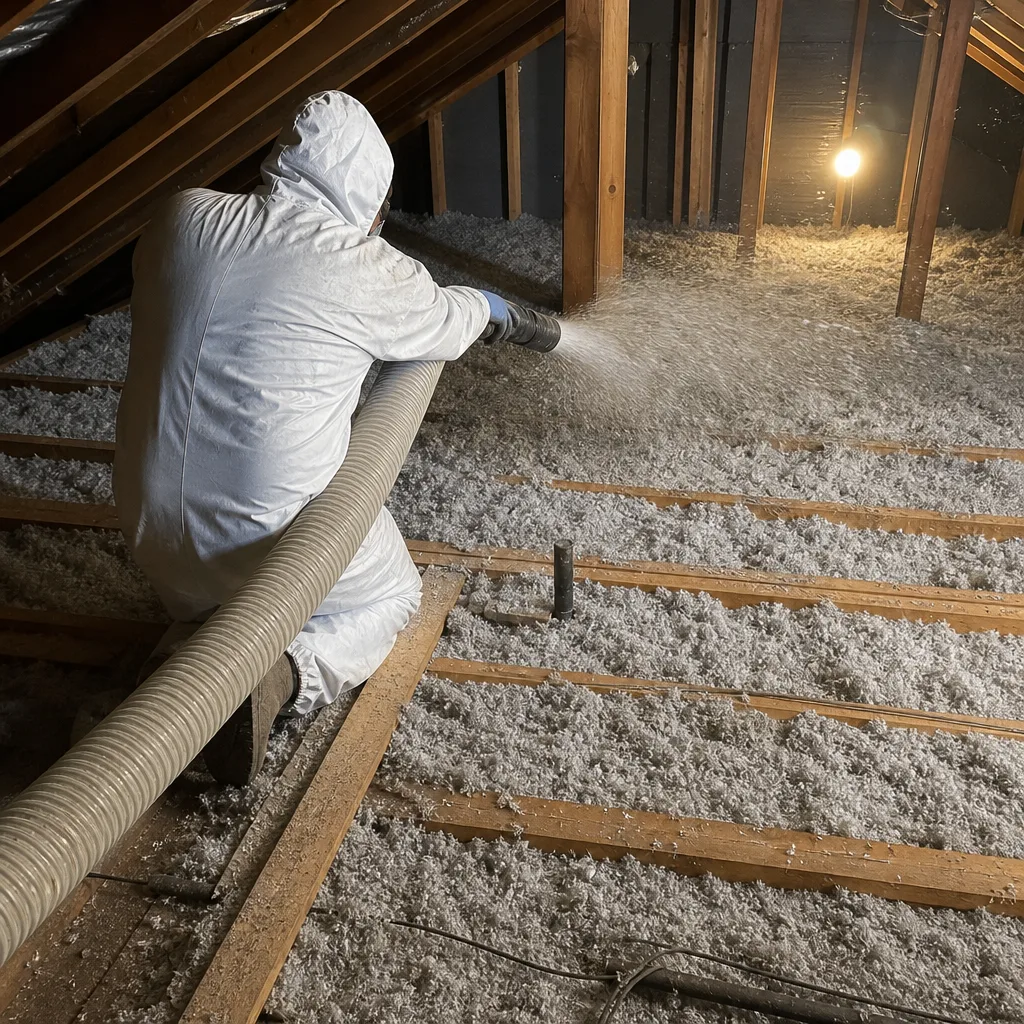
Removal in La Palma typically runs $1,400 to $2,600 for the attic of a standard 1,100 to 1,500 square-foot single-story tract home. The range covers removing the old material, bagging and disposing of it, and prepping the attic floor for new insulation. Tight side yards and low-pitch roofs are common here, so we bring portable vacuum equipment and run hoses through gable vents or small access hatches rather than trying to maneuver large machinery through narrow side gates.
What We Remove
Most La Palma attics contain rock wool or fiberglass loose-fill from the original build, often mixed with rodent droppings, old roof debris, and the occasional mystery from a past remodel. We remove all of it, then inspect the ceiling plane for gaps around recessed lights, bath-fan housings, and top plates before any new material goes in.
When Removal Is Necessary
You don’t always need full removal. But if the existing material is settled below the joist tops, if there’s evidence of pest activity, or if you’re seeing temperature differences between rooms, pulling it out and starting clean is usually the right call. In La Palma’s tract homes, we typically recommend removal when the existing insulation dates from the original build.
Insulation Contractors in La Palma
Insulation Contractors in La Palma come in two types: generalists who can run a crew for a day, and specialists who work exclusively in attics and walls. We’re the second type. When you hire Thermal Insulation Co for an attic job in La Palma, you’re getting a crew that has worked in dozens of these 1960s and early-’70s tract homes and already knows the framing patterns, the common bypass points, and where the old insulation fails first. That field knowledge means fewer surprises on install day, and it means the recommendation you get is based on what this specific house needs, not a template.
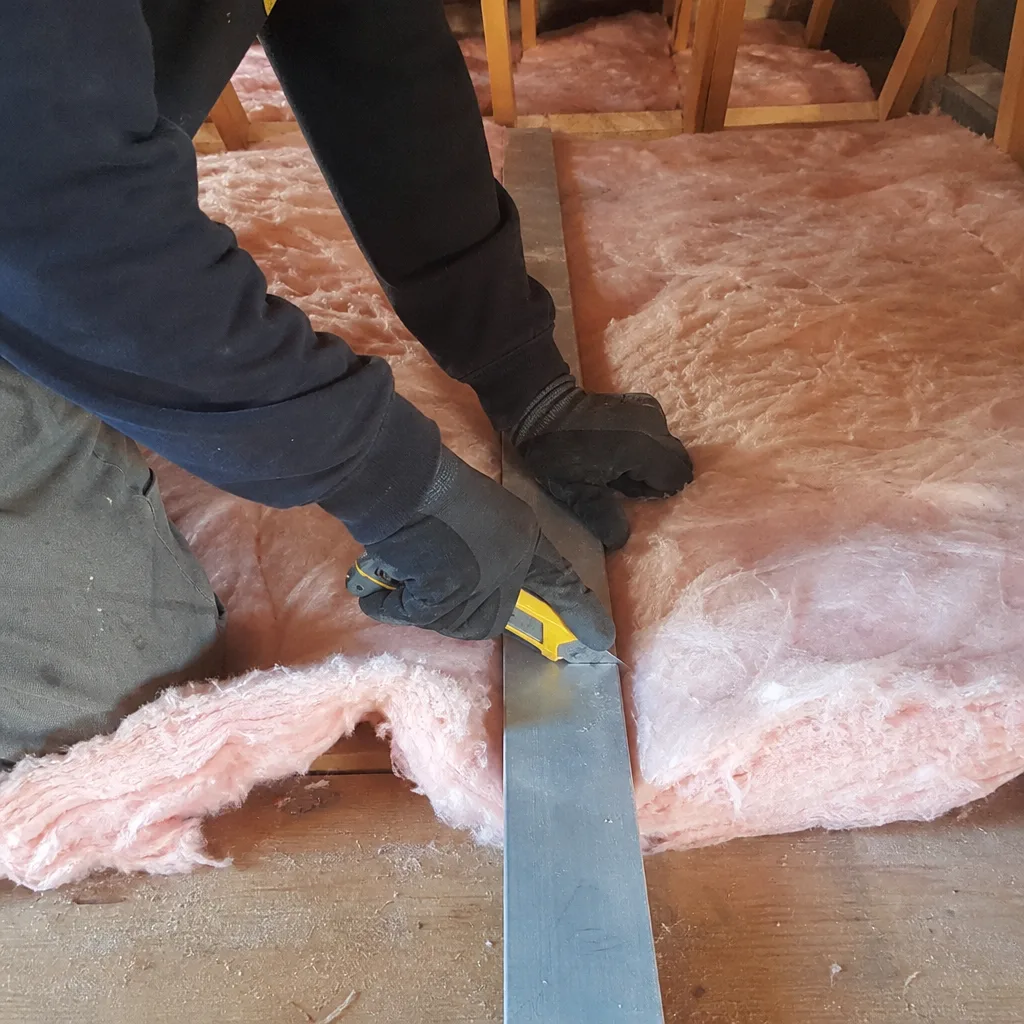
For a top-up in La Palma where the existing material is in decent shape, expect $900 to $1,600 for blowing additional insulation to R-38 over the current layer, assuming no air-sealing work is needed. When air-sealing is added, which it should be in most of these homes, budget $2,200 to $4,000 for a complete job including sealing, new baffles, and a full re-blow. A full replacement with removal typically falls in the $2,800 to $4,500 range for a standard tract home, pending attic size and access.
Attic Baffles and Ventilation Prep
Low-pitch roofs on La Palma tract homes leave less room for attic ventilation, so we install baffles at every eave before blowing new material. That keeps the soffit vents clear and gives the attic a fighting chance to shed the 140°F-plus heat that builds on summer afternoons. Without baffles, the new insulation blocks the vents, and the attic cooks.
Attic Insulation Top-Up
A top-up makes sense when the existing material is in decent shape but just too thin. In La Palma, that usually means a home built with R-11 batts or a thin layer of loose-fill that has settled over time. We blow new insulation directly over the top, but only after checking the ceiling plane for gaps and verifying the existing material is dry and free of mold.
Trusted Brands We Service in La Palma
We carry Owens Corning and Johns Manville fiberglass because both make proven batt and blown-in products that hold up in the hot, dry attic conditions common here. We stock GreenFiber cellulose for La Palma homeowners who want a recycled-content option with good thermal performance and sound-dampening, and we work with Demilec spray foam for attics where air-sealing and R-value have to go in as one step. Because we keep material on hand for these product lines, La Palma customers aren’t waiting on special orders for standard installations.
Common Attic Insulation Problems We See in La Palma Homes
- Bare ceiling hotspots around recessed lights and bath fans. A 1960s homeowner added a light fixture, cut through the insulation, and never restored the fill. The result is a section of ceiling with almost no thermal barrier, and in La Palma’s coastal-dusk swing, it bleeds heat both directions.
- Unsealed attic bypasses and top plates. Most original tract homes here were framed without any air-sealing between the conditioned space and the attic. Hot air escapes through plumbing chases, wiring penetrations, and along interior wall top plates, which defeats the insulation before it can stabilize the house.
- Settled and compressed original insulation. The builders installed to late-1960s minimums, which was often R-11 or less. Sixty years of gravity, heat, and occasional foot traffic has squashed that material below the joist tops, cutting its effective R-value to the point where the ceiling is only nominally insulated.
- Trapped attic heat from low-pitch roofs and tight ventilation. La Palma’s tract homes don’t have steep roof stacks that shed heat naturally. Combined with minimal eave ventilation, this means the attic stays hot long after sunset, which cooks the insulation and shortens its life compared to an inland install with better airflow.
Pricing for Attic Insulation in La Palma, CA
A top-up over existing insulation in La Palma runs $900 to $1,600. Full removal and re-blow, including air-sealing, typically falls between $2,800 and $4,500 for a standard single-story tract home. An attic batt replacement with new R-38 batts and ventilation prep runs $1,800 to $3,200. What moves the price: ceiling square footage, how much old material has to come out, whether the attic is accessible or needs extra hose runs from a tight side yard, and how many bypasses need sealing. We give a written, line-item estimate before any work starts, and the estimate is free. Call (855) 382-3451 to schedule one.
We Also Serve Cities Near La Palma
Thermal Insulation Co serves La Palma and the surrounding communities, including Cerritos, Cypress, Buena Park, and Hawaiian Gardens. Our crews know this area’s tract-home stock well, and many of the same attic issues show up from one city to the next. Wherever you are in the 90623 area, our Attic Insulation team can schedule a free estimate and start the job quickly.
Serving La Palma, CA — Our Local Coverage Area
We’re based in the La Palma area and know this community well. Use the map below to see our service coverage — if you’re nearby, we can almost certainly help.
FAQs About Attic Insulation in La Palma
Two reasons: the old material is likely settled or missing around ceiling penetrations, and the attic was never air-sealed, so the heat finds the gaps no matter how much new insulation sits on top. Insulation slows heat transfer through the ceiling plane, but it doesn’t stop air movement through bypasses, and La Palma’s 1960s tract homes are full of bypasses. Call (855) 382-3451 for an evaluation that checks both.
Most original La Palma tract homes have R-11 fiberglass batts between the ceiling joists, often with a thin layer of settled loose-fill over the top. We commonly find old rock wool that has compacted to half its original depth, and bare spots around any fixture a past owner added. The only way to know what your attic actually has is to look, which we do as part of the free estimate.
No, if anything the opposite is true. La Palma’s marine air moves in every evening, and if your attic has unsealed bypasses, that air movement pulls conditioned air out of the living space as the temperature outside drops. Insulation without air-sealing doesn’t address that stack effect. In these tract homes, we recommend sealing top plates, plumbing chases, and fixture cans before any new blow-in.
For most La Palma homes with low-pitch roofs and minimal attic ventilation, a radiant barrier makes a measurable difference. It reflects the radiant heat from the roof sheathing back out, which keeps the attic cooler and reduces the temperature differential the insulation has to work against. During our 140°F-plus summer afternoons, pairing a radiant barrier with an R-38 blow-in and air-sealing gives the best performance for the cost. We can quote it as part of your estimate.
We run portable vacuum hoses through gable vents or the attic access hatch, so we don’t need wide side-yard clearance for large equipment. The old material is bagged and hauled out through whatever path is available, usually the same narrow side gate the homeowner uses. For very low-pitch roofs, our crews work with kneeboards and limited clearances, which is standard practice for tract homes in La Palma and the nearby cities.
On a low-pitch 1968 tract roof off Walker Street, our crew pulled out settled rock wool that had gone bare over the living-room ceiling where a past owner had cut in a recessed light and never restored the fill. After air-sealing the light can and bath-fan chase with foam and sheathing tape, we re-blew GreenFiber to R-38 and paired it with a radiant-barrier run to knock back the 140°F-plus afternoon attic peak. That’s the standard job in La Palma: find the bare spots, seal the bypasses, rebuild the thermal barrier.
Because La Palma’s original 1960s and ’70s tract homes were built with thin R-11 batts and rarely air-sealed, the marine air that rolls in most evenings escapes back out through the same attic bypasses the afternoon heat entered. So an insulation upgrade here only fixes the dusk temperature swing if air-sealing is done before the new R-38 blow-in. Skip that step and you’ll have a cooler midday house that still loses its comfort edge every evening. We’ve seen it in enough La Palma attics to state it plainly.
If your La Palma home still has its original attic insulation, or if you’re not sure what’s up there, give us a call. Thermal Insulation Co will inspect the attic, show you exactly what’s there, and give you a straight recommendation on material, method, and scope. Estimates are free, and we’ll come out on your schedule. Call (855) 382-3451.
Written by Ruben Castellano, Owner at Thermal Insulation Co, serving La Palma and surrounding communities.