
Fast, Reliable Attic Insulation Across La Habra Heights
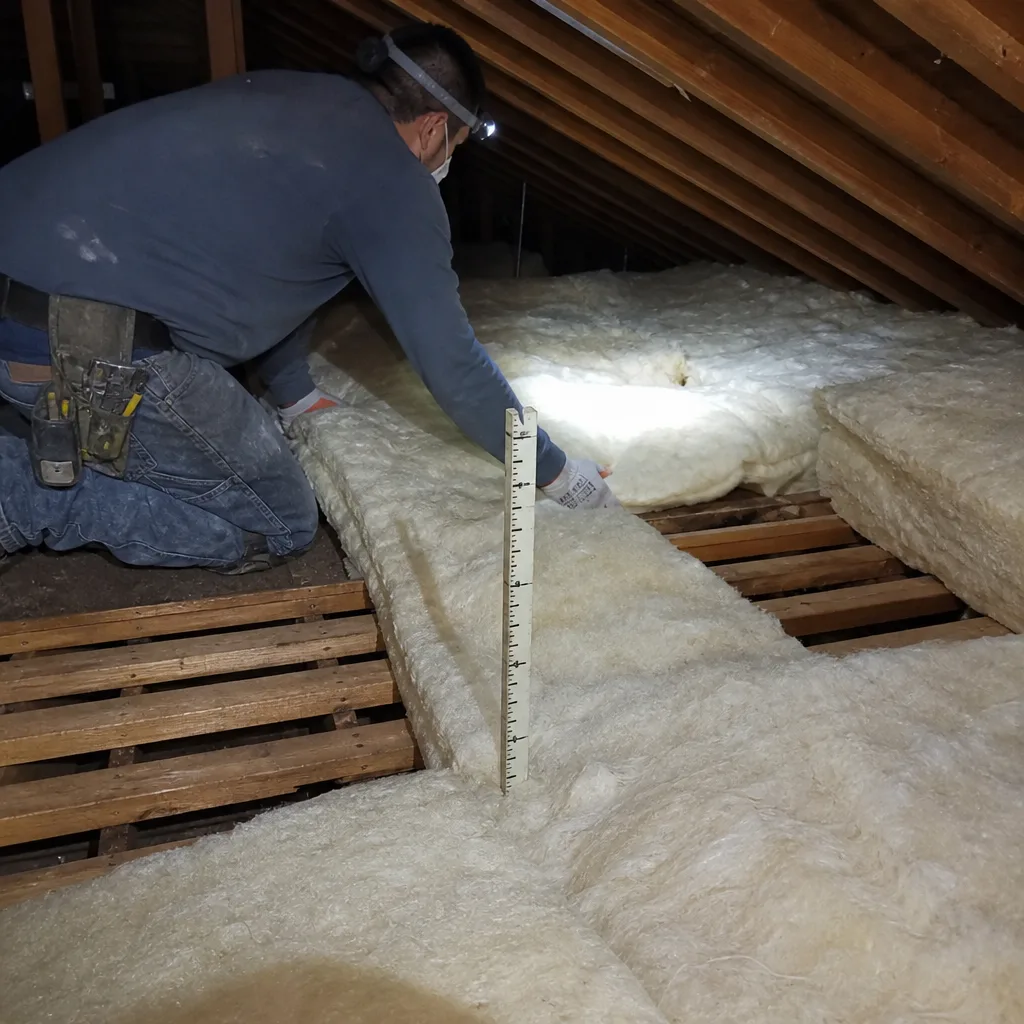
Attic insulation in La Habra Heights is rarely a straightforward roll-out job. Most homes here sit on acre-plus lots with custom or owner-built framing, exposed roof structures, and attic spaces that were never designed around standard venting. That’s why we approach every La Habra Heights project as a retrofit first: we assess what’s actually happening in your attic, add baffles where venting is missing, and then match the right material to the house. If you’re looking for a crew that knows what a hillside custom home in 90633 actually looks like inside the attic, call us at (855) 382-3451 for a free estimate.
We’re Thermal Insulation Co, a dedicated insulation contractor based in Van Nuys and serving La Habra Heights regularly. Insulation is all we do. That focus matters here, because homes off Hacienda Road, along East Road, and up in the Puente Hills don’t share the predictable geometry of tract housing. We’re used to navigating steep driveways, working around exposed framing, and handling detached workshops and barns alongside the main house. When you call, you get an insulation specialist – not a general contractor who happens to stock one brand of batt.
Why Thermal Insulation Co Is La Habra Heights’s Preferred Attic Insulation Company
Our Attic Insulation team has built a reputation in La Habra Heights by being honest about what a given attic actually needs. Homeowners here tend to be self-reliant and research-heavy. They don’t want a sales pitch for a single product. They want to understand why blown-in cellulose makes sense in one section while spray foam belongs in another. Ruben Castellano leads our team with exactly that approach: explain the building science, show the options, and let the homeowner make an informed call.
What sets us apart in La Habra Heights specifically is that we stock multiple material lines. Most insulation contractors in the area carry one or two brands. We carry eight, spanning fiberglass from Owens Corning and Johns Manville, mineral wool from Rockwool, open- and closed-cell spray foam from Icynene and Demilec, recycled cellulose from GreenFiber, and Reflectix repair in La Habra Heights for radiant barrier needs. That range means the recommendation you get is driven by what your house demands, not by what we happen to have on the truck.
We serve all of La Habra Heights, including the 90633 zip code, with quick scheduling for homeowners from La Mirada to Fullerton. Our team can typically assess and quote an attic insulation project in one visit, and because we know La Habra Heights’s housing stock, we arrive prepared for what’s actually up there.
Attic Mold Removal in La Habra Heights
Attic mold removal in La Habra Heights is a more common need than homeowners expect. The city’s location in the Puente Hills means cool canyon nights follow hot inland days, and that swing creates condensation inside attic spaces that lack proper ventilation. When we find mold during an insulation quote, it’s almost always tied to the same root cause: no eave vents, no baffles, and insulation that’s been packed against the roof deck trapping moisture. A typical mold removal and sanitation job in La Habra Heights runs $800 to $2,400 depending on the square footage involved and whether the affected insulation has to come out and be replaced.
When La Habra Heights Homes Need Attic Mold Removal
Most calls start with a smell. In older owner-built homes, especially Ranch-style properties built in the 1960s and 1970s, a musty odor in the upper rooms often points to mold growing in the attic. Black staining on the underside of the roof sheathing is the usual confirmation. If that’s what you’re seeing, call us at (855) 382-3451 before adding any new insulation. New insulation over active mold doesn’t fix it. It hides it while moisture keeps working in the wood.
Why Ventilation Matters Before Mold Cleanup
Here’s a detail that comes up on nearly every La Habra Heights mold job: the home has no usable eave vents to begin with. Custom-built properties often skipped that step entirely. Without airflow, moisture that rises from the living space has no exit. We address the mold first, then install baffles to create channels along the eaves so the attic can dry out. After that, new insulation goes in without repeating the same failure.
Attic Insulation Removal in La Habra Heights
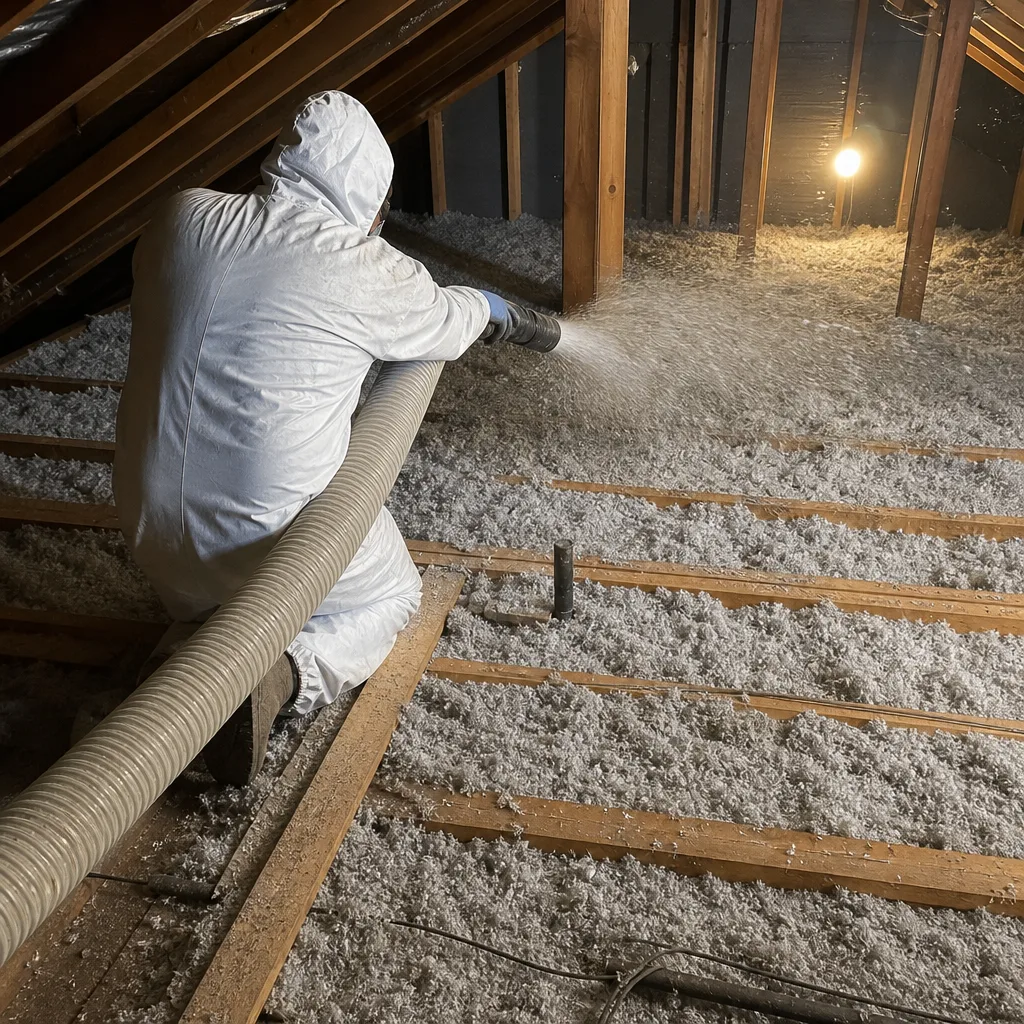
Attic insulation removal in La Habra Heights is often the starting point for homes that have been insulated before, just badly. We see it in older custom homes where fiberglass batts were laid decades ago and have since compressed, shifted, or been chewed through by rodents. We also see it after roof leaks or condensation problems have soaked whatever was up there. A full attic insulation removal in La Habra Heights – including vacuum extraction of old material, bagging, and disposal – typically runs $1,200 to $3,000 for a standard attic on a 2,000 to 3,000 square foot home. Larger attics with steep pitches or difficult access run higher.
Reasons La Habra Heights Homeowners Need Removal
The most common trigger we see is settled or uneven insulation. In attics with exposed, irregular framing – which is most of La Habra Heights – blown-in material drifts and settles into low spots, leaving the ridgeline and corners exposed. That creates the classic La Habra Heights problem: radiant heat gets in during hot July afternoons, and evening heat escapes the moment the canyon cools down. Removal is the reset. It clears the deck so we can fix venting and start fresh with the right material for the job.
What Happens After Insulation Is Removed
Once the old material is out, we inspect the attic properly. That means looking at top plates, checking for air gaps around chimneys and plumbing penetrations, and mapping the venting. In La Habra Heights, this step almost always leads to one recommendation: baffles. Without them, new insulation will eventually block what little venting exists. We add the baffles, seal the gaps, and then re-insulate with materials matched to the structure.
Trusted Brands We Service in La Habra Heights
We install insulation from manufacturers we trust across different applications, including GreenFiber for homeowners who prioritize recycled-content material, Owens Corning fiberglass for consistent, predictable R-value performance in standard attics, and Johns Manville where a cost-effective batt solution makes sense. Because we’re brand-agnostic, your La Habra Heights home gets the product that fits the actual conditions up there. If your attic has irregular framing and needs loose-fill to get full coverage, we’ll say so. If a detached workshop needs closed-cell spray foam to handle a metal roof, we’ll say that instead. We stock materials specific to La Habra Heights jobs and keep turnaround quick, so a project we quote on Monday doesn’t wait three weeks for a parts order.
Common Attic Insulation Problems We See in La Habra Heights Homes
- Missing eave venting. Most La Habra Heights homes were built without the vented soffit systems standard in tract developments. Without baffles to create airflow, blown insulation blocks what little venting exists and attics overheat.
- Uneven settling in irregular framing. Owner-built homes rarely have uniform rafter spacing. Blown-in material drifts into low spots, leaving gaps where heat enters and escapes. This is the single most common reason La Habra Heights attics underperform.
- Detached structures left uninsulated. Workshops, barns, and garages on acre-plus lots often have zero insulation. That creates a comfort gap and an energy leak that most contractors never address because it’s outside the main house.
- Condensation-triggered mold. The diurnal swing between hot inland days and cool canyon nights creates moisture inside poorly vented attics. We regularly find mold during routine insulation quotes, especially on older Ranch-style homes near the canyons.
Pricing for Attic Insulation in La Habra Heights, CA
What you’ll pay for attic insulation in La Habra Heights depends on the method and the condition of the space, but here are honest ranges for this market. Blown-in attic insulation on a standard 2,000 to 3,000 square foot custom home typically runs $1,800 to $3,500. Attic batt insulation for accessible attics runs $1,300 to $2,600. An attic insulation top-up over existing material runs $900 to $2,200. Full attic insulation replacement, including removal of old material, runs $2,800 to $6,000. For detached workshops or barns, expect $1,500 to $4,000 depending on size and method. Every quote is free, and we give you a written price before any work begins. Call (855) 382-3451 and we’ll schedule a site visit.
We Also Serve Cities Near La Habra Heights
Our territory covers communities along the 60 and through the Puente Hills, including La Habra, East La Mirada, Fullerton, and La Mirada. If you own a home in a neighboring city and need the same retrofit-focused service we bring to Attic Insulation in La Habra Heights, we’re already familiar with the housing styles and venting issues in your area. Call us and we’ll tell you what to expect on your property.
Serving La Habra Heights, CA — Our Local Coverage Area
We’re based in the La Habra Heights area and know this community well. Use the map below to see our service coverage — if you’re nearby, we can almost certainly help.
FAQs About Attic Insulation in La Habra Heights
Because most homes here were custom-built or owner-built without the eave venting that tract developments include as standard, and without baffles, blown insulation blocks the few vents that do exist, causing overheating and moisture buildup. We add baffles as a standard part of nearly every La Habra Heights attic insulation job. Call (855) 382-3451 and we’ll confirm what your attic actually has during the quote.
Yes. Detached workshops, barns, and garages are common on La Habra Heights’s acre-plus lots, and many have no insulation at all. We handle these as separate projects, using materials that match the structure – spray foam for metal roofs, blown-in for irregular framing, or batts for standard stud walls. Insulating an outbuilding usually runs $1,500 to $4,000 depending on size and method.
The big swing between 140°F-plus attics in July and cool canyon nights means insulation has to do two jobs at once: block radiant heat during the day and slow heat loss after sundown. That’s why many La Habra Heights attics benefit from a combination of higher R-value blown-in material plus radiant barrier or ventilation upgrades. We’ll show you the attic temperature readings we take during the quote.
We install products from eight manufacturers: Owens Corning, Johns Manville, Knauf, Rockwool, CertainTeed, Icynene, Demilec, and GreenFiber. For La Habra Heights specifically, Owens Corning fiberglass and GreenFiber cellulose are the two most common selections for blown-in attic work, while Icynene or Demilec spray foam often fits detached structures or tight attic spaces.
We find mold in roughly one out of every four or five La Habra Heights attics we quote, and it’s almost always the result of missing venting plus the local condensation cycle. If we find mold, we’ll tell you before any insulation goes in. Mold removal in La Habra Heights typically runs $800 to $2,400 depending on the affected area, and it has to happen before insulation can be installed properly.
One Trip, Done Right. Call Thermal Insulation Co
On a recent La Habra Heights job off West Road, we worked on a 1970s owner-built ranch with exposed framing and a detached workshop. The attic had zero eave venting, so we installed baffles before blowing Owens Corning fiberglass, then air-sealed the top plates. The homeowner called a week later and said the upstairs rooms were holding temperature noticeably better by evening. That’s the kind of result we aim for on every La Habra Heights project. If your attic needs a real look from someone who knows these hillside homes, call us at (855) 382-3451. Estimates are free, and we’ll tell you straight what your attic needs and what it doesn’t.
Written by Ruben Castellano, Owner at Thermal Insulation Co, serving La Habra Heights and the surrounding Puente Hills communities.