
Fast, Reliable Attic Insulation Across Hesperia
Attic insulation in Hesperia means dealing with a specific set of conditions: 100°F+ summers that cook shallow attics, winter nights that drop below freezing, and a housing stock full of 1980s and 1990s tract homes that left the builder with R-11 to R-19 of fiberglass and no radiant barrier. We work in Hesperia every week, and we know exactly what those attics look like when we open the hatch. Same-week scheduling is standard for most Hesperia jobs, and we answer the phone with a real person who can talk through what you’re dealing with. Call (855) 382-3451 for a free estimate, or read on to understand why your attic is fighting you.
Why Thermal Insulation Co Is Hesperia’s Preferred Attic Insulation Company
We’re a dedicated insulation contractor. That’s the whole business. We’re not a general handyman who occasionally blows in some fiberglass between other jobs. When a Hesperia homeowner calls us about a hot upstairs bedroom or a furnace that runs nonstop in January, we’re looking at the attic as a system: insulation depth, air sealing, ductwork, ventilation, and radiant heat. That’s why homeowners in the 92345, 92344, and 92340 ZIP codes keep our number.
Hesperia’s housing stock is specific. The tract subdivisions built during the high-desert population boom – the ones that line Bear Valley Road and spread through the 92345 neighborhoods – have shallow, low-slope attics that were insulated to minimum code at the time. The manufactured and mobile homes on larger lots often have even less. We’ve spent enough hours in those attics to know what we’ll find before we climb the ladder: settled fiberglass, unsealed top plates, and no radiant barrier. That local familiarity means we can give you an honest assessment faster and with less back-and-forth than a company driving up from down the hill.
Our Attic Insulation team carries three installation methods under one roof – batts, blown-in loose-fill, and spray foam – which means the recommendation you get matches your home, not our inventory. Ruben Castellano built this company around that principle: understand the house first, then pick the material and method.
Attic Mold Removal in Hesperia
Attic mold removal in Hesperia catches a lot of homeowners off guard, because the assumption is that a dry desert climate means mold can’t grow. That assumption is wrong, and we’ll explain why in a minute. First, let’s be direct about scope and cost. Attic mold remediation on a typical Hesperia tract home runs $1,500 to $4,500 depending on the affected square footage, the type of sheathing, and whether the mold is surface-level or has penetrated the wood. If the mold is concentrated around bathroom exhaust fans or plumbing vents, the job is smaller and lands on the low end of that range.
Why Desert Attics Grow Mold Anyway
Hesperia’s dry air is a fact. But mold doesn’t need ambient humidity; it needs a microclimate. When a bathroom fan or dryer vent terminates inside the attic instead of through the roof – which we find constantly in Hesperia’s older tract and manufactured homes – every shower and laundry cycle pumps warm, moist air straight into an enclosed space. At night, when the attic temp drops sharply, that moisture condenses on the underside of the roof sheathing. Repeat that cycle for a few winters and you get black staining, musty odors, and compromised wood. Wind-driven dust adds to the problem by giving mold spores a place to anchor.
What Removal Actually Involves
The process is removal first, prevention second. We remove and bag the contaminated insulation, treat the affected framing and sheathing, air-seal the source of the moisture, and correct the ventilation so the attic doesn’t recreate the same conditions. In many Hesperia homes we also find that the bathroom fans themselves were never properly ducted in the first place – a builder shortcut from the 1980s and 1990s that quietly causes thousands of dollars in damage decades later. Skipping the correction step means the mold returns, so we don’t skip it.
Attic Insulation Removal in Hesperia
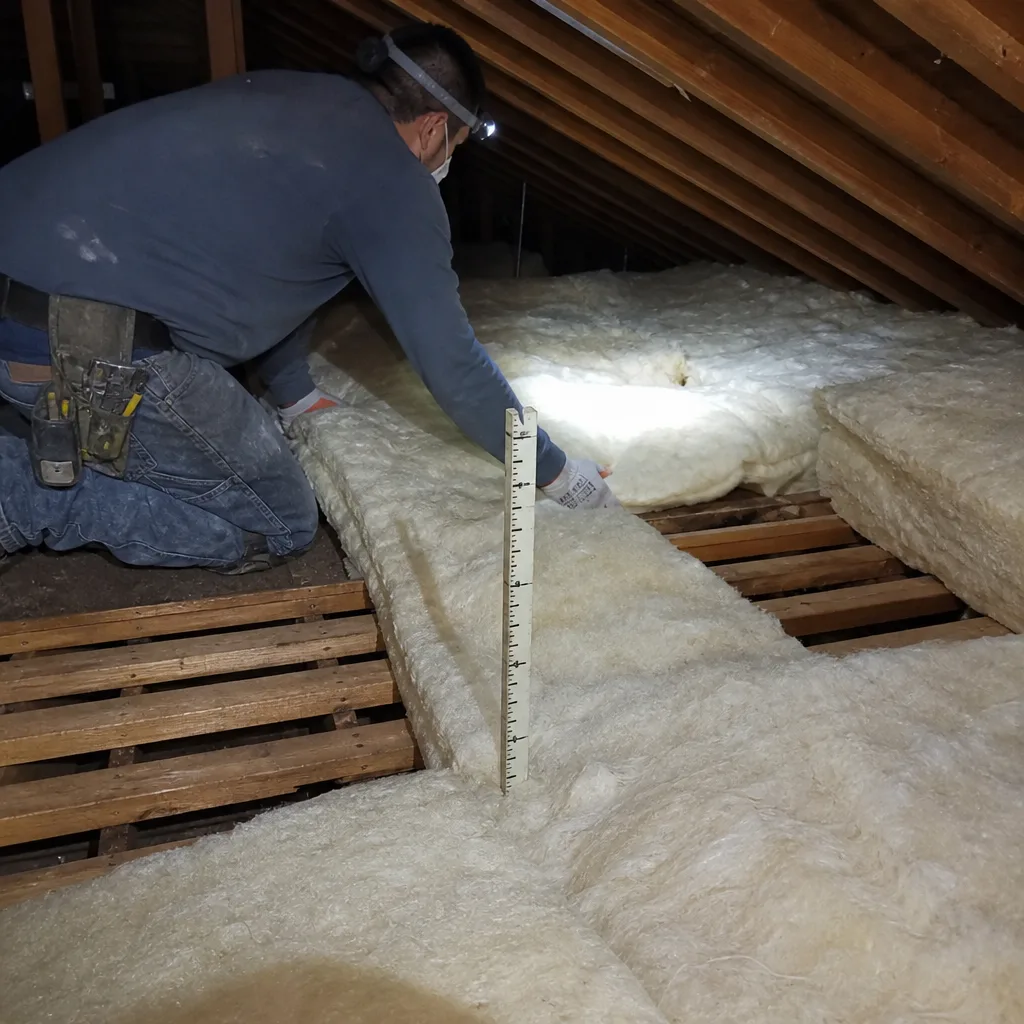
Attic insulation removal in Hesperia is something we recommend more often here than in most cities, and the reason is specific to this housing stock. The original R-11 to R-19 fiberglass in 1980s and 1990s tract homes has been settling for 30 to 40 years. In many attics we open, it’s down to 2 or 3 inches in the center and bare ceiling at the edges – effectively no insulation at the top plate, which is exactly where the ceiling plane loses the most heat. Removal typically runs $1 to $2 per square foot in Hesperia, so a standard 1,800-square-foot attic lands between $1,800 and $3,600.
When Removal Beats Adding More
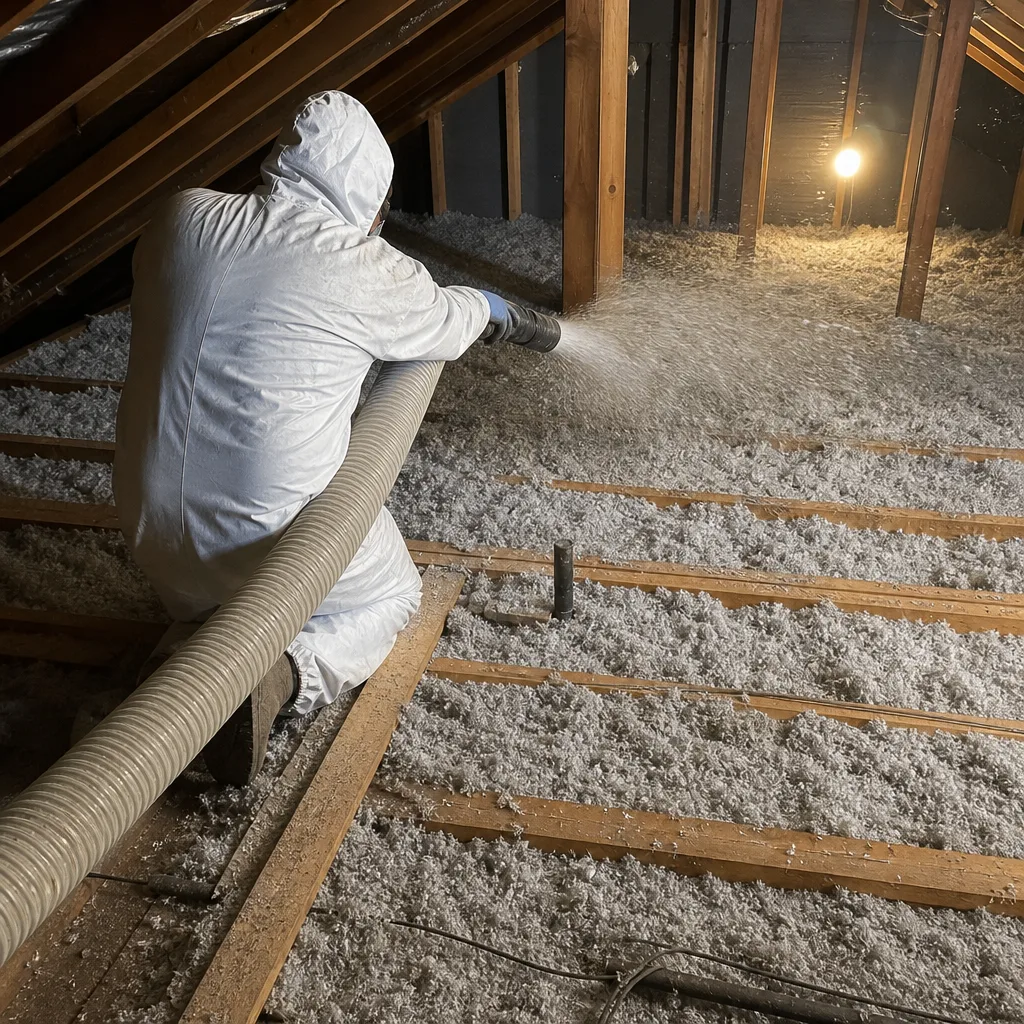
If the existing fiberglass is dry, uncontaminated, and just thin, blowing new insulation over the top of it is sometimes the right call. But Hesperia has a specific failure mode that changes the math. When the old insulation is packed with wind-driven dust, contaminated by rodent activity, or compressed from decades of service techs crawling through it, adding new material on top creates a false sense of improvement. You’re stacking R-38 over a layer that no longer performs and may be holding moisture against the drywall. In those attics, removal and a fresh start is the honest answer, not an upsell.
Removal as Part of a Bigger Fix
Removal also makes sense when the attic needs air sealing. In Hesperia’s manufactured homes and low-slope tract attics, the top plates, wire penetrations, and plumbing chases are all leak points that let cold air pour in during winter and dust blow through during the wind season. You can’t air-seal those properly if they’re buried under 30 years of settled fiberglass. When we remove, we seal, and then we install the right material for the space. That sequence is the difference between an attic that performs and an attic that just looks full.
Trusted Brands We Service in Hesperia
We’re authorized to install products from eight nationally recognized insulation manufacturers, which means we’re not locked into whatever single brand a distributor happens to have in stock this month. For Hesperia attics, we frequently spec Owens Corning fiberglass for standard batt retrofits, GreenFiber cellulose for blown-in applications where air-sealing and dust resistance matter, and Knauf for budget-conscious top-offs that still need to hit modern R-value targets. We carry GreenFiber because its recycled-content cellulose settles less than fiberglass in shallow high-desert attics and does a better job slowing wind-driven air movement through the insulation itself. When your attic needs a different solution, we’ll tell you that too. The point is fit-to-application, not brand loyalty.
Common Attic Insulation Problems We See in Hesperia Homes
- Settled R-11 to R-19 fiberglass below the top plate. In shallow 1980s tract attics, we routinely find original insulation that has settled 50% or more, leaving the ceiling plane effectively uninsulated at the edges. The center of the attic looks okay from the hatch, but the thermal boundary is gone where it matters most.
- Missing radiant barriers on high-desert roofs. Without a radiant barrier, attic temperatures in Hesperia spike past 140°F in July and August. That heat bakes the insulation, degrades it faster, and radiates down through the ceiling into living spaces, making AC units run constantly.
- Furnace ductwork baking in the same attic space. This is the one we see block after block in the 92345 subdivisions. Ducts in a 140°F attic are losing cooled air in summer and warmed air in winter. Insulating the attic without addressing the ducts wastes a significant portion of the improvement.
- Wind-driven dust and unsealed penetrations. Hesperia’s sustained desert winds push fine dust into attics through soffit gaps, plumbing chases, and electrical penetrations. The dust loads into the insulation, reducing its performance, and the unsealed openings let heated air escape on below-freezing winter nights.
Pricing for Attic Insulation in Hesperia, CA
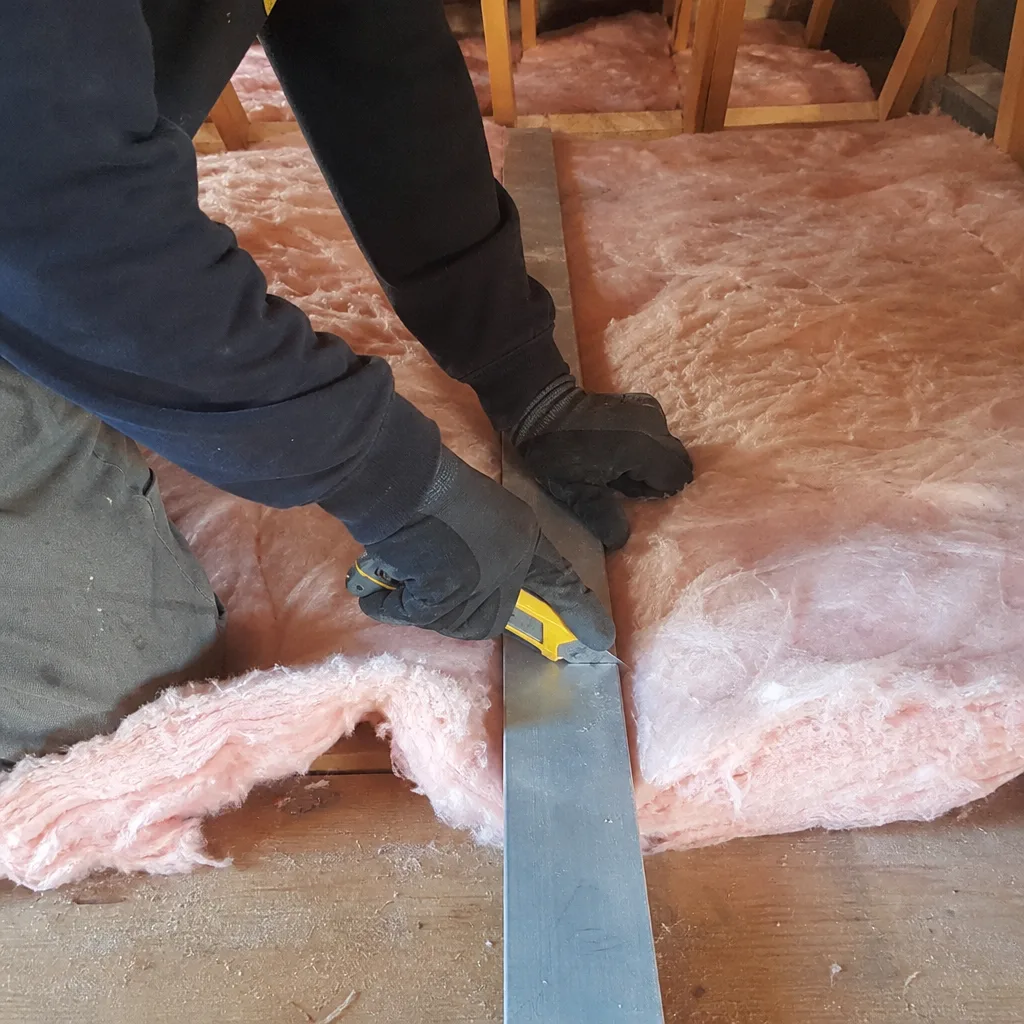
A typical attic insulation top-up in Hesperia – blowing R-38 over settled R-11 or R-19 in a standard 1,500 to 2,000-square-foot attic – runs $1,200 to $2,600. Full removal and re-insulation runs $2,500 to $5,500 depending on attic accessibility, the condition of existing ductwork, and whether we’re also air-sealing and adding a radiant barrier. Attic batt insulation replacement in Hesperia’s shallower tract attics runs $1.50 to $3 per square foot installed, while spray foam in low-slope manufactured home attics runs higher, typically $3 to $6 per square foot, because access is tighter and surface prep matters more. Every estimate is free, and we give you a written number before any work starts. Call (855) 382-3451 for an exact quote on your attic.
We Also Serve Cities Near Hesperia
Our crews run routes through the entire High Desert corridor. Along with our Hesperia service area, we handle attic insulation jobs in Oak Hills, Mountain View Acres, Spring Valley Lake, and Victorville. If you’re on the edge of the 92345 or 92344 ZIP boundaries, call and we’ll confirm coverage. Same-week scheduling is usually available across all these areas.
Serving Hesperia, CA — Our Local Coverage Area
We’re based in the Hesperia area and know this community well. Use the map below to see our service coverage — if you’re nearby, we can almost certainly help.
FAQs About Attic Insulation in Hesperia
Sometimes yes, but only if the existing fiberglass is dry, uncontaminated, and not compressed. If it’s been packed down by decades of foot traffic or loaded with wind-driven dust, adding new material on top doesn’t fix the thermal problem. We’ll inspect before recommending either a top-off or full removal. Call (855) 382-3451 and we’ll tell you what your attic actually needs.
In Hesperia’s climate, a radiant barrier is one of the highest-impact upgrades you can make, because it directly reduces summer attic temperatures that routinely exceed 140°F in homes without one. R-value alone slows conductive heat transfer, but it does not stop radiant heat from the roof deck. In high-desert conditions, the two work together, and most Hesperia attics we see have neither working properly.
Yes, and we see it regularly, almost always tied to bathroom fans or dryer vents that terminate inside the attic rather than through the roof. The mold grows in the condensation microclimate those vents create, not from ambient desert humidity. If your attic smells musty after a shower, call for an inspection.
Yes, but the method usually differs from a standard tract home. Low-slope manufactured home attics often don’t have room for deep blown-in insulation, so we’ll typically spec closed-cell spray foam or a thinner batt profile with a radiant barrier. The access is tighter and the job takes more prep, but it’s work we do regularly across Hesperia’s manufactured home communities and larger-lot parcels.
It depends on the condition, but in Hesperia specifically, removal is more often justified than in coastal climates because of the dust load. Wind-driven dust settles into old fiberglass and reduces its performance over time. If your existing insulation is 30+ years old, packed with dust, and settled below the top plate, removal and fresh installation is the better long-term investment. We’ll show you what’s up there and let you decide with straight numbers.
Written by Ruben Castellano, Owner at Thermal Insulation Co, serving Hesperia and the High Desert with dedicated insulation expertise.