
Fast, Reliable Attic Insulation Across Grand Terrace
Attic insulation in Grand Terrace starts with a simple fact: most homes here were built in the 1960s and 1970s with R-11 fiberglass batts that were barely adequate when electricity cost a fraction of what it does now. Add 100°F-plus summer afternoons, hillside wind, and attics that regularly hit 140°F, and you get ceilings that radiate heat into living spaces well past midnight. We fix that. Thermal Insulation Co has worked on ranch homes and tract houses throughout Grand Terrace for years, and we know exactly what these attics need to actually hold back inland heat. Call (855) 382-3451 and we’ll have a technician out to your home, usually same week.
Why Thermal Insulation Co Is Grand Terrace’s Preferred Attic Insulation Company
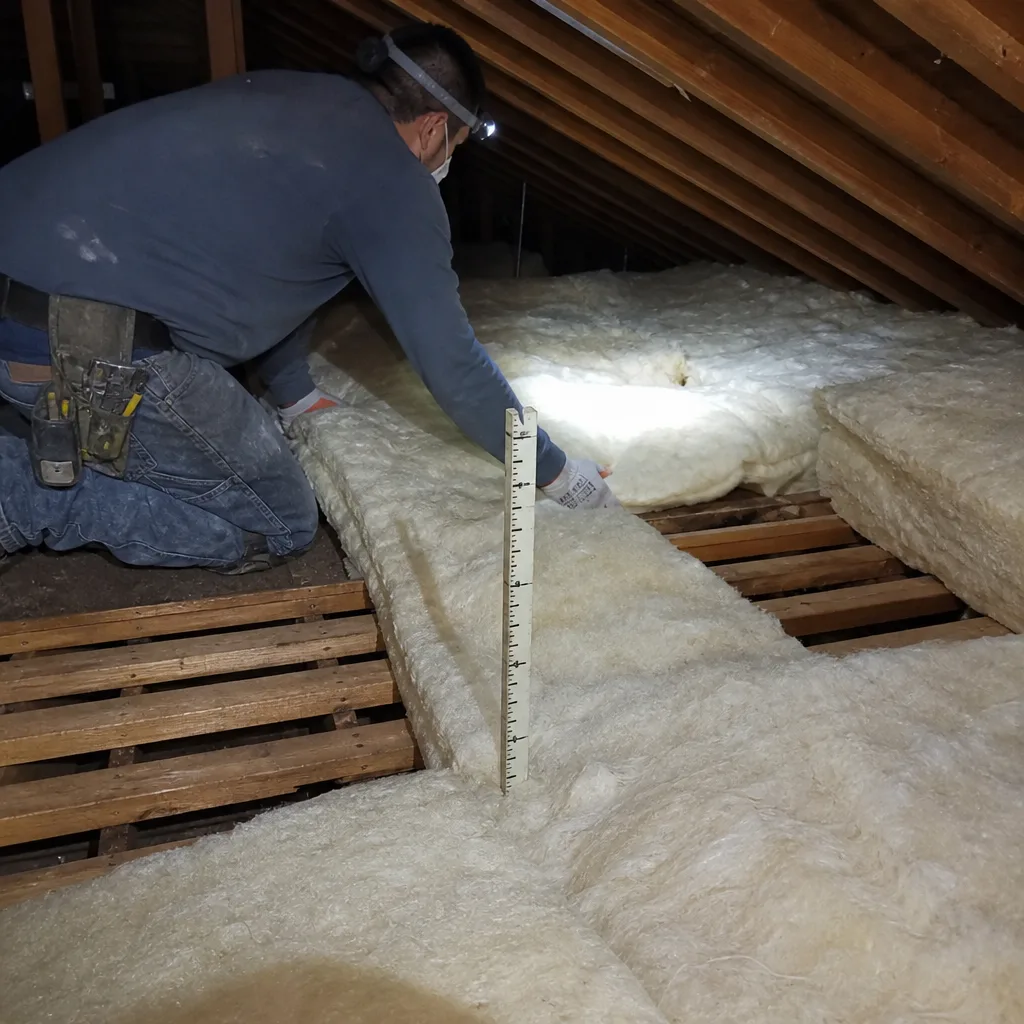
Grand Terrace homeowners call us because insulation is the only trade we do. That focus matters when you’re dealing with the specific failure patterns we see here: compressed batts on hillside lots, rodent-tunneled fiberglass, and west-facing roof planes that turn attics into ovens. Our lead, Ruben Castellano, has walked hundreds of attics across the 92313 zip code and can tell you within minutes whether your insulation is actually doing anything. He’ll show you photos from your own attic, not a stock image.
We cover the entire city: the older ranch neighborhoods off Barton Road, the streets climbing toward Blue Mountain, and the newer builds near the 215. Response time to Grand Terrace from our Van Nuys base is typically one to two business days for estimates. We bring material options with us so you can compare batt versus blown-in versus radiant barrier on the spot. That’s how an insulation specialist works.
Attic Ventilation in Grand Terrace
Attic ventilation in Grand Terrace is the first thing we check before adding any insulation, because a sealed-up attic here can hit 140°F by mid-afternoon in July and keep radiating heat into the house until 10 p.m. Proper ventilation means balanced intake at the soffits and exhaust at or near the ridge, sized for the attic’s square footage. In low-pitch and flat-roof homes, which are common in Grand Terrace, this often means adding box vents or a powered attic fan because natural ridge venting isn’t always possible. A typical attic ventilation job in Grand Terrace runs $350 to $900 depending on vent count and whether we’re cutting new openings.
Soffit and Ridge Vent Retrofit
Most Grand Terrace homes built before 1980 have either undersized vents or soffits buried under old blown-in insulation. We clear the soffit bays, install baffles to keep insulation from blocking airflow, and confirm the exhaust side moves enough cubic feet per minute. It’s unglamorous work, but without it your new insulation is fighting a losing battle against trapped heat.
Powered Ventilation for Flat and Low-Pitch Roofs
Flat-roof homes on Grand Terrace streets often can’t use passive ridge venting. That’s where a thermostatic attic fan makes sense. We install units sized to the actual attic volume and wire them with a humidistat so they don’t run unnecessarily in mild weather. A powered fan install here typically runs $450 to $850, including the electrical connection.
Radiant Barrier in Grand Terrace
Radiant barrier in Grand Terrace is not an add-on, it’s the single highest-impact upgrade for homes with west-facing roof planes that take direct afternoon sun from about 2 p.m. until sundown. A radiant barrier is a reflective foil installed under the roof deck that blocks up to 97% of radiant heat from ever entering the attic. In Grand Terrace, where summer attic temps routinely exceed 140°F, we consider it a prerequisite before adding significant insulation. Radiant barrier installation on a standard Grand Terrace attic runs $1,200 to $2,800 depending on roof area and accessibility.
Stapled Foil Under the Roof Deck
Our standard method for most Grand Terrace ranch homes is stapling a double-sided foil radiant barrier to the underside of the rafters, leaving an air gap that lets the reflective surface work. This works well in attics with accessible rafter bays and no existing decking on the underside of the roof. It’s straightforward and effective.
Radiant Barrier Over Existing Insulation
For attics in Grand Terrace where rafter access is tight or the roof underside is already finished, we can lay perforated radiant barrier foil directly over the top of existing insulation on the attic floor. This reflects heat back up before it ever reaches the insulation, though it doesn’t reduce the attic air temperature as much as the under-deck method. Cost is lower and it works as a stopgap while we address other issues.
Trusted Brands We Service in Grand Terrace
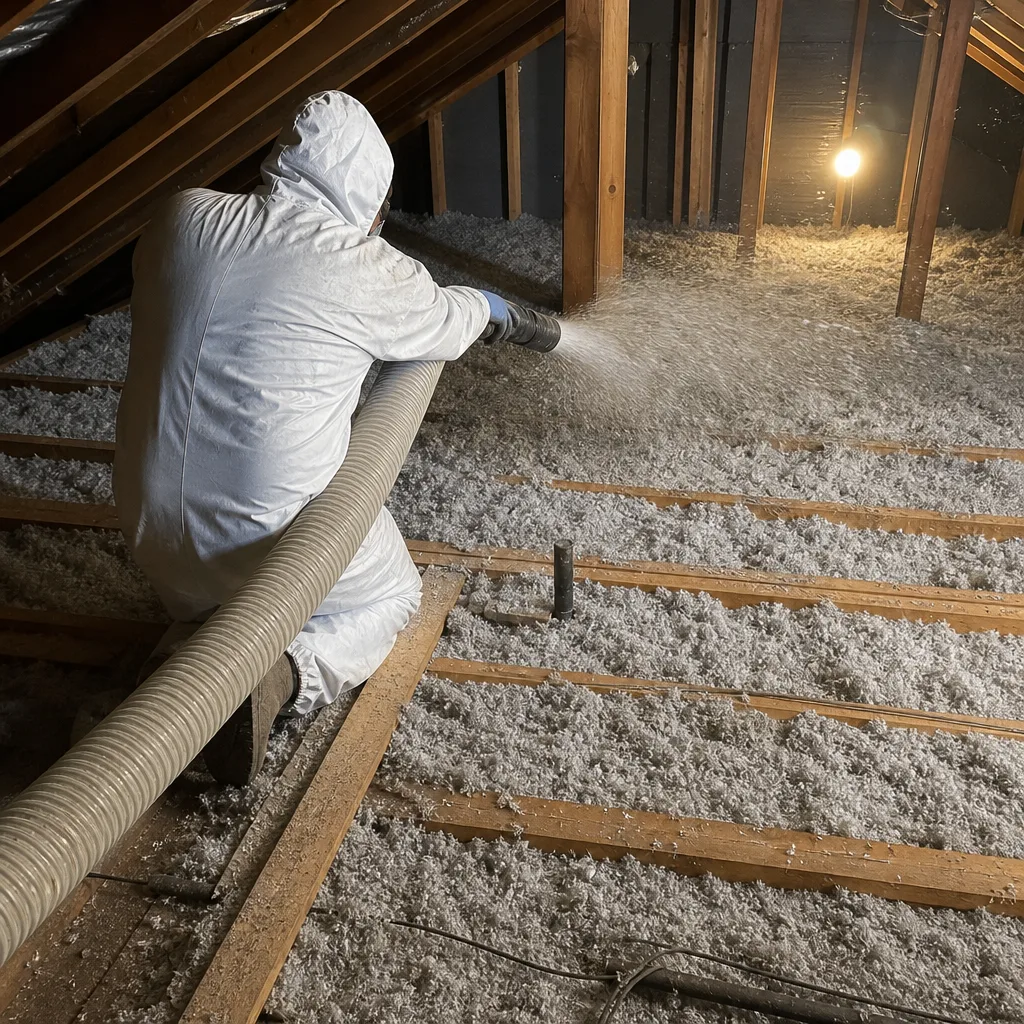
We install attic insulation in Grand Terrace using materials from Owens Corning, Johns Manville, and Rockwool, and we stock these products locally so turnaround stays fast. We carry Owens Corning because its blown-in fiberglass holds its loft better than cheaper alternatives after years of expansion and contraction. We carry Rockwool because mineral wool resists moisture and fire in ways standard fiberglass can’t, which matters on hillside lots where wind-driven moisture finds its way in. Because we’re brand-agnostic, we’ll tell you honestly when a specific product is right and when a cheaper option will do the same job. Insulation is our entire business, and carrying eight manufacturers means we don’t push one product line on every Grand Terrace home we see.
Common Attic Insulation Problems We See in Grand Terrace Homes
- Compressed R-11 batts from the original build. The 1960s and 1970s ranch homes that make up most of Grand Terrace’s housing stock were insulated to R-11, which is roughly a third of what modern code recommends. Decades of heat and moisture have compressed those batts further, leaving top plates and knee walls effectively bare.
- Wind-driven grit displacement on hillside streets. Homes climbing toward Blue Mountain get consistent afternoon winds that push dust and grit through soffit vents and into the attic. That grit settles into loose-fill insulation and batt edges, displacing the material and creating channels where hot air moves freely.
- Rodent-tunneled insulation near canyon-adjacent lots. Hillside lots in Grand Terrace see more rodent pressure than lower-lying areas. Rats and mice tunnel through fiberglass batts and nest in loose-fill, destroying the insulating value and leaving droppings throughout. We find this on a large share of our Grand Terrace jobs.
- West-facing roof planes acting as heat batteries. A Grand Terrace home with a west-facing roof plane absorbs hours of direct late-afternoon sun. Without a radiant barrier, the attic becomes a heat storage unit that releases into the house all evening, no matter how much insulation sits on the attic floor.
Pricing for Attic Insulation in Grand Terrace, CA
Attic insulation in Grand Terrace runs $1,800 to $6,500 for a full single-story home, depending on attic size, insulation type, and whether we’re also doing air-sealing or a radiant barrier. Here’s a breakdown. Blown-in fiberglass to reach R-38 on a typical 1,200-square-foot Grand Terrace attic runs $1,400 to $2,400. Attic batt replacement runs $1,600 to $2,800. Adding a radiant barrier runs $1,200 to $2,800. An insulation top-up over existing material runs $900 to $1,500. The largest cost driver is attic accessibility: low-pitch roofs and converted garages make tight spots hard to reach, and that labor adds up. Every Grand Terrace estimate is free, and we give you a written price before we start. Call (855) 382-3451 for an exact number on your attic.
We Also Serve Cities Near Grand Terrace
In addition to our Attic Insulation work throughout Grand Terrace, we regularly serve homeowners in Highgrove, Colton, Loma Linda, and Rubidoux. The housing stock and climate across these cities are similar to Grand Terrace, which means the same failure patterns and the same solutions apply. If you’re in one of these communities, call us and we’ll schedule a visit.
Serving Grand Terrace, CA — Our Local Coverage Area
We’re based in the Grand Terrace area and know this community well. Use the map below to see our service coverage — if you’re nearby, we can almost certainly help.
FAQs About Attic Insulation in Grand Terrace
Because the attic heat source is above the insulation, not below it. On hillside streets near Blue Mountain, west-facing roof planes absorb direct afternoon sun and heat the attic air itself to 140°F or more. More floor insulation slows heat moving down from the attic into your rooms, but it does nothing to reduce the heat entering the attic in the first place. A radiant barrier under the roof deck reflects that heat before it ever gets into the attic space. We recommend homes here address the radiant barrier first, then add or replace insulation. Call (855) 382-3451 and we’ll check your roof orientation and tell you if it’s worth it for your specific home.
In most cases, no, and doing it anyway would be a mistake. Grand Terrace ranch homes built in the 1960s and 1970s typically have original R-11 batts that are compressed, rodent-damaged, and in some spots completely missing. Blowing new insulation over the top buries these problems without fixing them. Air leaks at the top plates, around light fixtures, and in converted-garage transitions would remain, and the old material would continue to underperform. We remove the degraded batts, air-seal, then blow in fresh insulation to the right R-value for Grand Terrace. Want us to inspect your attic first? Call (855) 382-3451 and we’ll do a full assessment before you spend anything.
We recommend R-38 as the minimum for Grand Terrace attics, with R-49 preferred for homes with large west-facing roof planes or rooms that stay hot into the evening. The U.S. Department of Energy’s Inland Empire climate zone calls for R-38 in attics, but the combination of 100°F-plus daytime temps and hillside exposure on some Grand Terrace lots makes R-49 a better long-term investment on those homes. We’ll calculate the right number for your specific house based on roof orientation, attic depth, and whether a radiant barrier is in place. For an exact recommendation and a free estimate, call (855) 382-3451.
We use a combination of soffit vent clearance, baffle installation, and powered attic fans when passive ridge venting isn’t possible. Grand Terrace has a fair number of low-pitch and flat-roof homes where the roof structure doesn’t allow the kind of ridge vent used on steeper roofs. In those cases, we calculate the attic’s cubic footage, install properly sized box vents or a thermostatic powered fan, and verify the intake side is moving enough air. Ventilation is not optional here: a poorly vented attic in Grand Terrace gets so hot that it voids the cooling benefit of your insulation and shortens your roof’s life. Call (855) 382-3451 and we’ll check your vent math.
We install Owens Corning and Johns Manville fiberglass, Rockwool mineral wool, and GreenFiber recycled cellulose, among others. The brand depends on what the attic actually needs. Owens Corning blown-in holds its loft well in the temperature swings we see in Grand Terrace. Rockwool makes sense on hillside lots where moisture or fire resistance is a concern. We don’t push whatever is in the warehouse. We stock multiple brands so the recommendation fits your attic. Want to know which one suits your home? Call (855) 382-3451 for a free estimate and we’ll walk you through it.
Written by Ruben Castellano, Owner at Thermal Insulation Co, serving Grand Terrace and the Inland Empire since day one.