Fast, Reliable Attic Insulation Across Glen Avon
Attic insulation in Glen Avon typically runs $1,800 – $4,200 for a full attic upgrade on a standard ranch home, and we complete most jobs in a single day. The heat here isn’t a seasonal nuisance; it’s the primary driver behind every insulation decision in the 92509 ZIP code. Our crews know Glen Avon’s housing stock, its roof pitches, and the specific ways unfinished attics bake under the Inland Empire sun. If you’re in Glen Avon and tired of rooms that never cool down, call (855) 382-3451 for a free estimate. We’ll tell you what’s actually going on in your attic before we quote anything.
Why Thermal Insulation Co Is Glen Avon’s Preferred Attic Insulation Company
We’re a dedicated insulation contractor, led by Ruben Castellano, and attic work is our core trade, not a side service. That focus matters in Glen Avon, where the dominant job isn’t new construction. It’s remediation: opening up a 1962 ranch attic, finding 2 inches of dusty settled fiberglass, and rebuilding the thermal barrier from scratch. Homeowners in Glen Avon keep calling us because we carry eight brands across three installation methods, and we match the material to the house. That’s a real advantage when you’re dealing with a 1950s stucco ranch that needs air sealing, not just fluff.
We also know the practical reality of Glen Avon’s west-facing walls. On a July afternoon, those walls absorb heat for six straight hours. A correct attic insulation job, paired with radiant barrier on the south and west roof deck, changes how the whole house feels by evening. Our team has done enough attics here, from Jurupa Avenue to the older streets east of Mission Boulevard, to know what’s behind the drywall and above the ceiling joists. We come prepared for settled batts, old wiring, and the occasional rodent nest under the insulation.
Attic Ventilation in Glen Avon
Attic Ventilation is the overlooked half of insulation in Glen Avon, because a low-pitch roof with minimal soffit vents turns the attic into an oven that holds heat long after sunset. Homes here routinely see attic temperatures above 140°F in August, and that trapped heat pushes down through the ceiling, making the living space fight a losing battle. The job involves assessing existing soffit, gable, and ridge venting, calculating the attic’s net free vent area, and installing baffles or additional vents where airflow is blocked. Glen Avon homeowners need this when their attic insulation tests fine but upstairs rooms still run 8-12 degrees hotter than the rest of the house.
Baffle Installation and Airflow Correction
Older ranch homes here often have soffit vents that were covered over during a re-roof at some point. We install baffles at the eaves to keep blown-in insulation from clogging the soffit channels, then verify the path from soffit to ridge is clear. In Glen Avon’s climate, this isn’t optional polish; it’s what keeps your new insulation from becoming a damp, compressed mat within three summers. A standard baffle install and vent correction on a 1,200-square-foot ranch attic runs $350 – $650.
When Ventilation Upgrade Should Precede Insulation
If we open a hatch and the air is stagnant at 9 a.m., ventilation gets fixed before we add any material. Adding R-38 to a poorly vented attic is like putting an oven mitt around a running oven; the heat still radiates into the home. In Glen Avon, where roof pitches are low and ridge venting is often absent, we recommend active ventilation or at least corrected passive soffit-to-ridge flow on roughly a third of the attics we enter.
Radiant Barrier in Glen Avon
Radiant Barrier is the highest-impact upgrade for Glen Avon’s flat, unshaded ranch roofs, where the sun beats directly onto composition shingles from June through October. This is not insulation in the traditional sense; it’s a reflective foil surface installed under the roof deck that reflects radiant heat away from the attic space. In Glen Avon, where attic temperatures can spike 40 – 50°F above outdoor air, a radiant barrier reduces heat transfer into the attic dramatically. Homeowners with west-facing master bedrooms or those who notice ceiling surfaces hot to the touch at 5 p.m. are the strongest candidates.
Proper Installation and the Air Gap Requirement
A radiant barrier works only with a 3/4-inch or larger air gap facing the reflective surface. Installed flat against the roof deck or draped over dusty old insulation, its reflectivity collapses. Our crews in Glen Avon use a single-foil or double-foil product stapled to the underside of the roof rafters, leaving that essential gap. We consistently see 20 – 30°F reductions in peak attic temperature in properly installed jobs. Radiant barrier installation here runs $900 – $1,800 for a typical 1,100 – 1,500-square-foot ranch attic.
Pairing Radiant Barrier With Insulation Upgrades
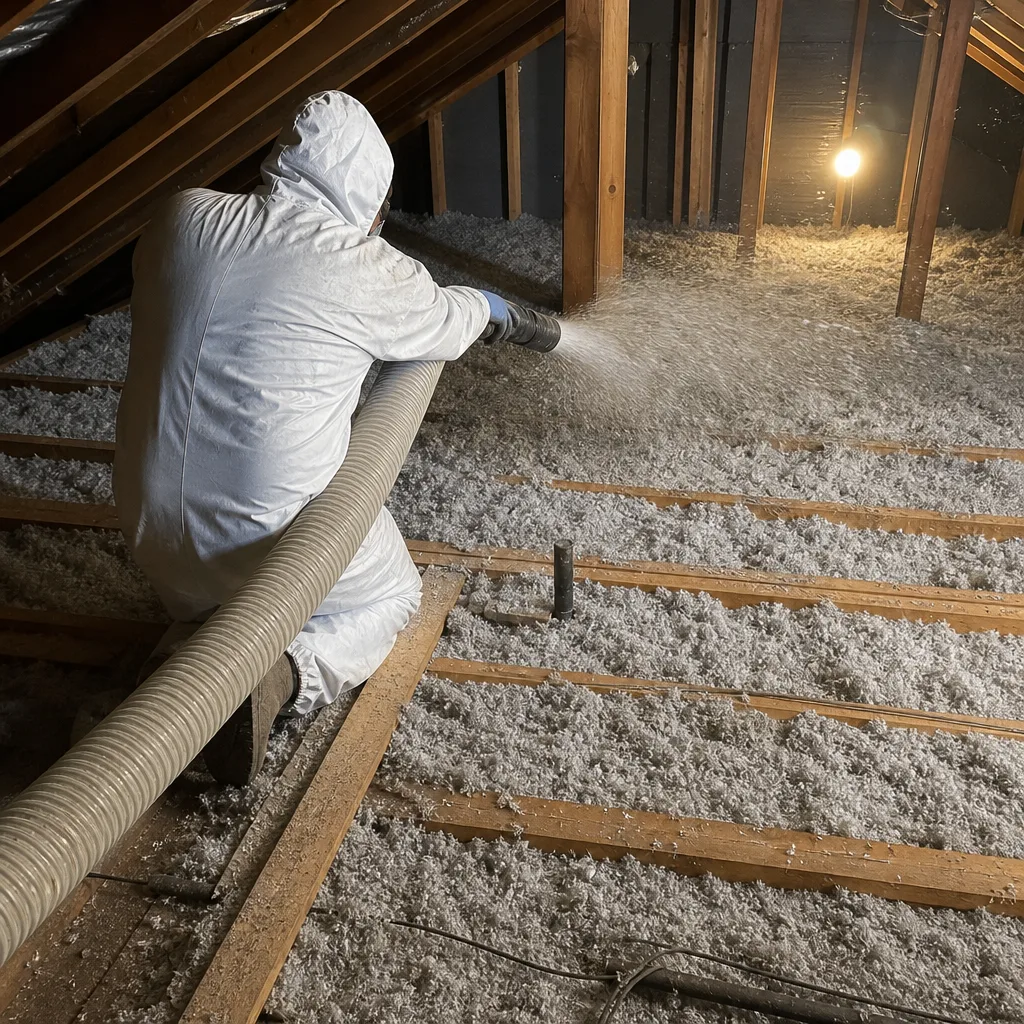
The best outcomes in Glen Avon happen when radiant barrier goes in alongside an insulation upgrade, not as a standalone. The barrier keeps the attic cooler, which lets the insulation do its job without heat soak, and the insulation keeps conditioned air from leaking out of the house. On older stucco ranches, we often recommend both in the same day: barrier first, then air sealing, then blown-in fiberglass.
Trusted Brands We Service in Glen Avon
We carry Owens Corning, Johns Manville, Demilec, and GreenFiber, among others, because no single product line fits every Glen Avon attic. Owens Corning fiberglass is our most common blown-in spec for older ranches; it’s predictable, fire-resistant, and performs well in dry heat. Johns Manville batts suit newer infill homes with standard joist spacing. Demilec’s closed-cell spray foam handles the rare Glen Avon attic where air sealing is the primary objective, and GreenFiber cellulose gives sustainability-minded homeowners a recycled-content option. We keep materials stocked for the Glen Avon market, so once the attic assessment is done, there’s no multi-week wait for product.
Common Attic Insulation Problems We See in Glen Avon Homes
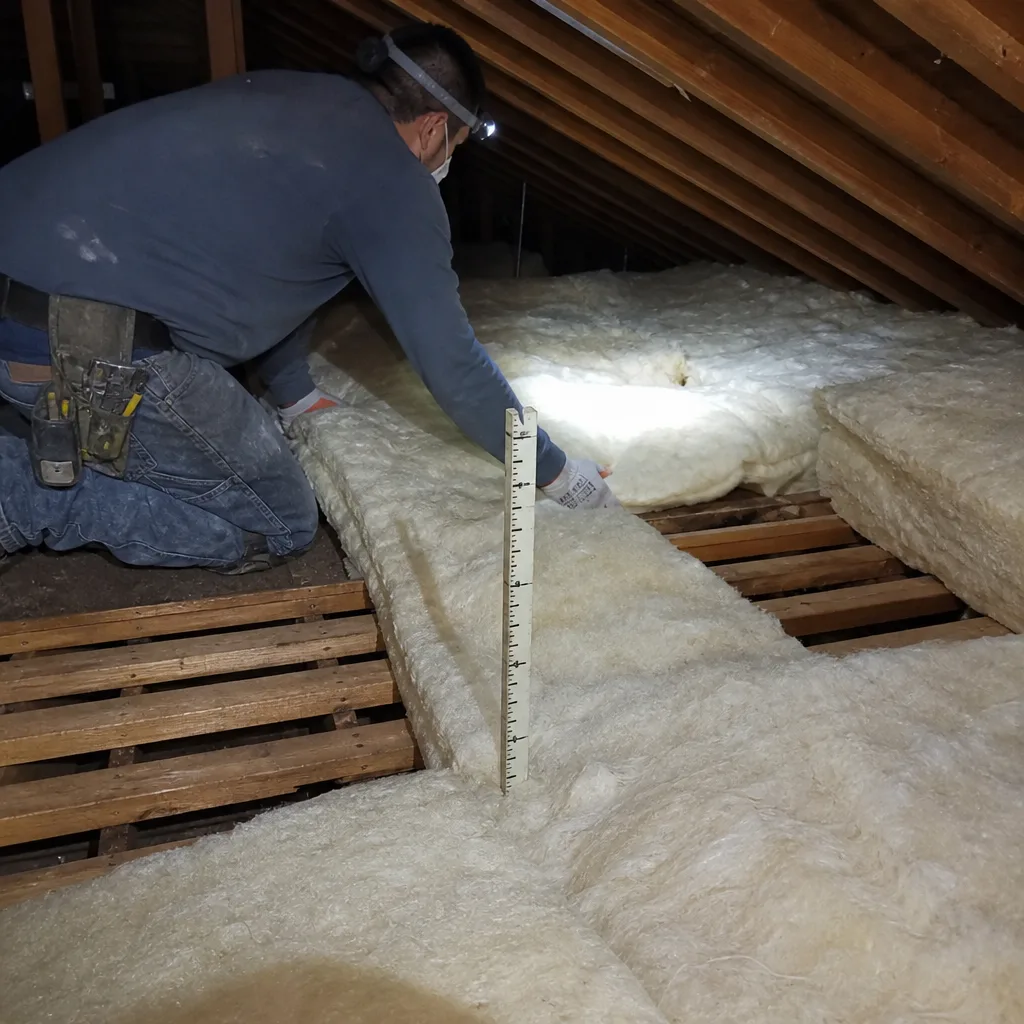
- Settled and compressed fiberglass from original construction. Homes built between the 1950s and 1980s in Glen Avon typically have 6 – 9 inches of original batts that have flattened to 2 – 3 inches. That’s R-11 to R-13 at best, and the material often gaps at joist ends and around attic hatches, leaving heat pathways directly into the living space.
- Low-pitch roofs with inadequate ventilation. The classic Glen Avon ranch has a 3:12 or 4:12 roof with minimal ridge venting. Trapped heat above 140°F bakes the insulation from above, accelerating degradation and making the rooms below feel like the AC is simply not working.
- Ineffective or improperly installed radiant barrier. We find foil barrier laid directly over dusty insulation or stapled without an air gap on a surprising number of Glen Avon homes. In that condition, it reflects almost nothing and provides a false sense of improvement while the attic still hits 130°F daily.
- Air leaks at top plates, can lights, and attic hatches. Older Glen Avon construction rarely received any air sealing. Conditioned air escapes through these penetrations, and in a house with a hot attic, that leak path becomes a heat pump pulling 130°F air into the ceiling cavities. Insulation alone won’t stop it; sealing comes first.
Pricing for Attic Insulation in Glen Avon, CA
We Also Serve Cities Near Glen Avon
Beyond Glen Avon, our crews cover the surrounding Jurupa Valley communities and neighboring cities. We regularly work in Pedley, Sunnyslope, Rubidoux, and Riverside, where the housing stock and summer heat create similar attic conditions. If you’re outside Glen Avon proper, see our Attic Insulation in Glen Avon page for service-area details or call for schedule availability. The same crew that handles Glen Avon jobs covers each of these cities.
Serving Glen Avon, CA — Our Local Coverage Area
We’re based in the Glen Avon area and know this community well. Use the map below to see our service coverage — if you’re nearby, we can almost certainly help.
FAQs About Attic Insulation in Glen Avon
How do I know if my Glen Avon ranch home’s attic insulation is original or failing?
If your home was built before the mid-1980s and the attic still has batt insulation with a paper or foil face, it’s almost certainly original and performing at a fraction of its labeled R-value. The telltale signs in Glen Avon are visible settling: batts compressed to 2 – 3 inches, gaps at joists, and a dusty, brittle texture. Rooms that run 10 – 15°F hotter than the thermostat setting in summer are another reliable signal. Call (855) 382-3451 and we’ll inspect it free.
Why is radiant barrier especially important for west-facing walls and roofs in Glen Avon?
West-facing roofs and walls in Glen Avon absorb solar radiation all afternoon, peaking between 3 p.m. and 6 p.m., which is exactly when families are coming home and expecting the house to be comfortable. A radiant barrier under the roof deck reflects much of that heat before it enters the attic, and the same principle applies to the wall cavities if the home has a south or west exposure. Without it, your attic insulation is fighting a losing battle against direct radiation during Glen Avon’s hottest months.
What’s the best attic insulation for older stucco ranch homes in Glen Avon?
For most 1950s – 80s stucco ranch homes here, blown-in fiberglass to R-38 is the most practical and cost-effective choice. It fills irregular joist bays, covers gaps that original batts left behind, and performs reliably in Glen Avon’s dry heat. Open-cell spray foam makes sense when air sealing is the priority or the attic has complex geometry, but for the typical ranch, blown-in fiberglass plus air sealing and a radiant barrier delivers the best comfort-per-dollar outcome. We’ll explain the tradeoffs before you decide.
Can you upgrade attic insulation in a Glen Avon home without removing the original batts?
Yes, and it’s a common option here. We can blow fiberglass or cellulose directly over existing batts if the old material is dry, pest-free, and not moldy. The new material fills gaps and raises the total R-value. But we won’t do this if the original batts are wet, infested, or compressed to dust, because layering over damaged material locks the problem into the attic. Our crew recently worked on a 1962 ranch near Jurupa Avenue where the original batts had degraded too far; we removed them, sealed the top plates, and blew in Owens Corning fiberglass to R-38, adding a radiant barrier on the south roof deck. The homeowner’s west bedrooms stayed noticeably cooler and their summer bill dropped about 20%.
How does attic ventilation affect insulation performance in Glen Avon’s hot climate?
Poor ventilation turns good insulation into a heat sponge. In Glen Avon’s hot climate, an attic without adequate soffit-to-ridge airflow traps heat above 140°F, and that heat radiates downward through the ceiling regardless of the insulation’s R-value. Proper ventilation keeps attic air moving, reduces heat soak into the insulation, and extends the life of the material. Which is why we assess and correct venting before recommending any insulation plan here. Call (855) 382-3451 for a free attic inspection, and we’ll map the whole system: venting, air sealing, insulation, and barrier.
Written by Ruben Castellano, Owner at Thermal Insulation Co, serving Glen Avon and the surrounding Jurupa Valley communities.