
Fast, Reliable Attic Insulation Across Colton
Attic insulation in Colton usually costs between $1,800 and $4,600 depending on method, attic size, and whether old material needs removal first. Most Colton homes need cooling-load-focused work: the attic is where Inland Empire heat builds up and radiates down into living space. We serve all of 92324 and typically reach Colton jobs within 24 to 48 hours of your call. Our crews know the difference between a simple blow-in on a post-2000 infill house and a full removal job on a mid-century tract home near Colton Avenue, where Cajon Pass dust has buried old batts. Call (855) 382-3451 for a free estimate and we’ll tell you which method actually makes sense for your attic.
Why Thermal Insulation Co Is Colton’s Preferred Attic Insulation Company
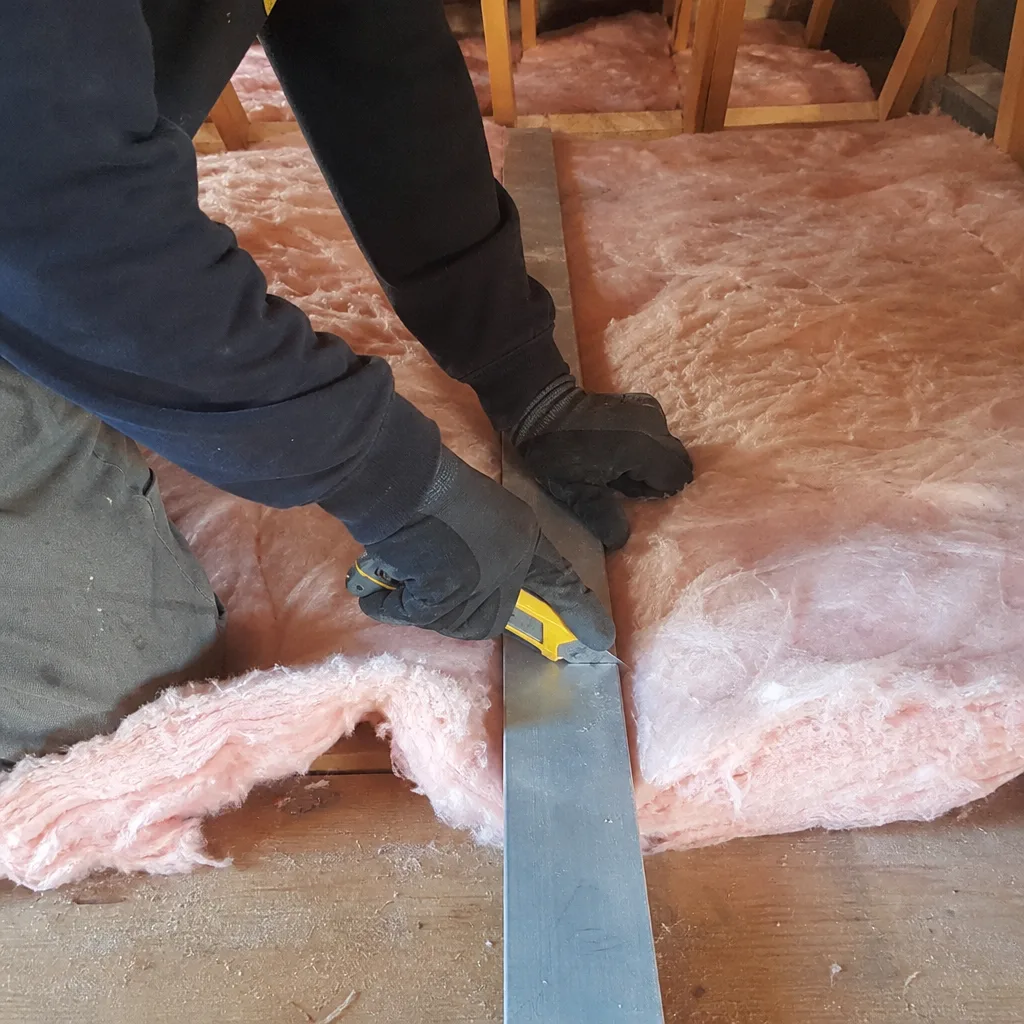
Insulation is not a side service for us. It’s the entire trade. Thermal Insulation Co carries eight material brands: Owens Corning, Johns Manville, Knauf, Rockwool, CertainTeed, Icynene, Demilec, and GreenFiber. Most single-trade contractors stock one or two lines. That limits what they can honestly recommend. We stock competing brands across categories, so the recommendation matches your attic conditions, not our inventory. Colton homeowners regularly tell us they’d had two or three other quotes that all pushed the same product. That doesn’t happen here.
Ruben Castellano leads our crews, and he’s built the company around one principle: the right insulation for the home, not the right home for the insulation. Our Attic Insulation team handles batt work, blown-in loose-fill, and spray foam under the same roof. For Colton specifically, that range matters. A newer infill home off La Cadena Drive might need open-cell foam for a tight attic cavity. A 1960s tract house near the historic core might need full debris removal, air-sealing, and blown-in GreenFiber. Same ZIP code, completely different job.
Insulation Contractors in Colton
Insulation Contractors in Colton have to deal with one thing most other cities don’t: the Cajon Pass dust load. Wind-driven particulate settles into older attics, coats the existing insulation, and traps heat against the ceiling plane. A contractor who simply blows new insulation over the top is burying the problem, not fixing it. The dust layer acts as a thermal bridge that defeats the new R-value, especially when summer attic temperatures climb past 140°F. That’s why we inspect before we quote. Some Colton attics need a top-off. Others need full removal, air-sealing, and fresh blown-in material.
Attic Insulation Top-Up
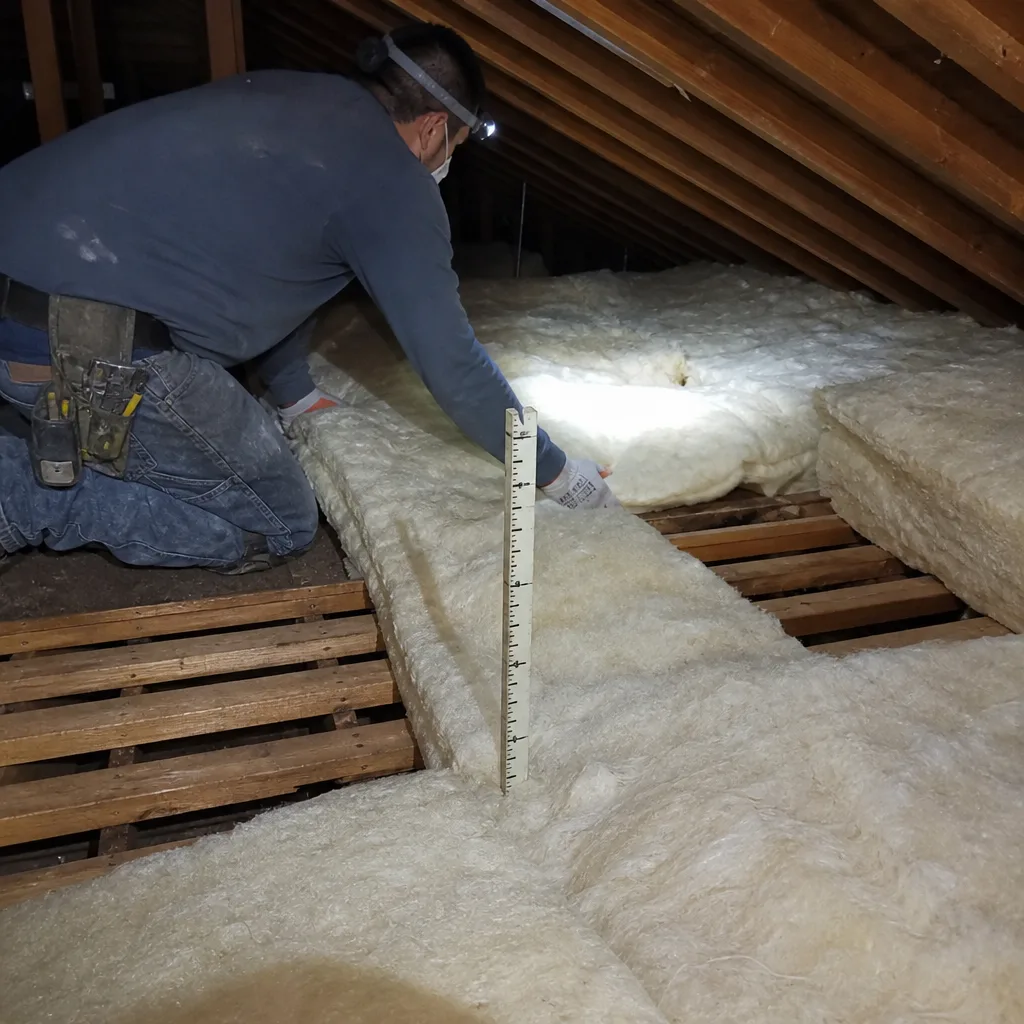
Colton homes built between the 1950s and 1990s often have original batts that have compressed to R-11 or less. The fix is blowing additional loose-fill over the existing layer, typically 6 to 10 inches of GreenFiber or fiberglass. In Colton, a standard top-up on a 1,200-square-foot attic runs $900 to $1,700. But only after we check for dust contamination. On the east side of town near Reche Canyon, attics are cleaner and top-ups work well.
Attic Insulation Replacement
When batts have collapsed off the joists, been soaked by a roof leak, or buried in fine Cajon Pass dust, topping off doesn’t work. Replacement means vacuuming out the old material, air-sealing the ceiling plane, and installing new insulation to target depth. A full replacement in Colton runs $2,500 to $4,600 for a typical single-story home. Near the historic downtown off Colton Avenue this is the most common job we do, because those under-vented attics bake the old material until it’s useless.
Attic Ventilation in Colton
Attic Ventilation in Colton is not a nice-to-have. It’s the difference between an attic that exhausts 140°F air and one that radiates that heat straight into your ceiling drywall. Older Colton homes, especially the mid-century stock around the historic core, were built with minimal roof venting. In a climate with summer highs over 100°F, that means the attic turns into an oven every afternoon. The insulation above your ceiling can’t do its job if the space above it never cools down. We add soffit vents, ridge vents, or gable-end ventilation before or alongside insulation work, depending on what the roofline allows.
Attic Baffles and Ventilation Prep
Soffit baffles keep loose-fill insulation from blocking airflow at the eaves. On Colton homes with low-slope roofs and shallow eave overhangs, baffles are frequently missing or never installed. That’s a problem, because blown-in insulation can pile against the roof deck and choke off the only intake air the attic gets. We install baffles in every bay before blowing, then verify the exhaust path works. This step costs $2 to $5 per baffle in most Colton homes and prevents the single most common ventilation failure we see.
Trusted Brands We Service in Colton
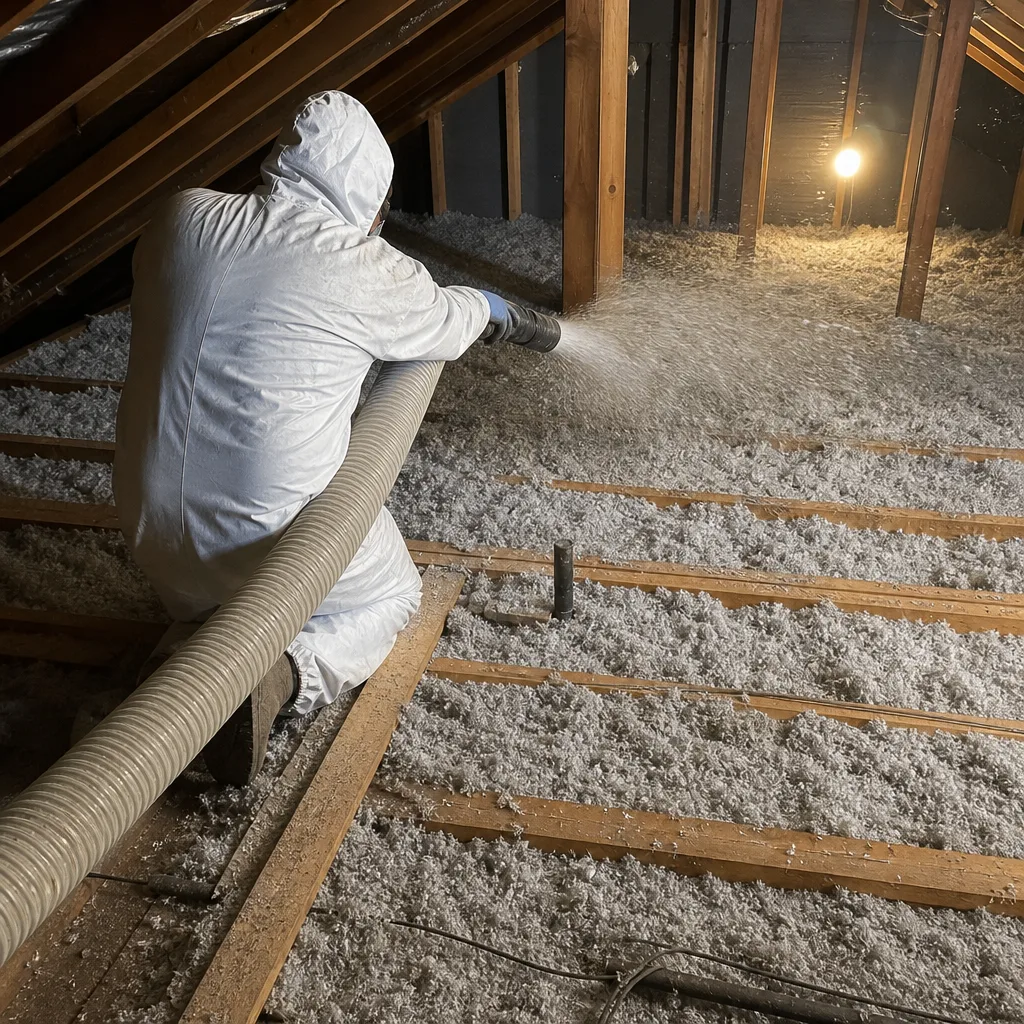
We’re authorized to install products from eight nationally recognized insulation manufacturers. For Colton, three come up more than any others. GreenFiber cellulose handles high-heat attics well and gives homeowners with sustainability priorities a recycled-content option: it’s 85% post-consumer paper fiber. Owens Corning fiberglass remains a solid, code-compliant choice for top-offs where the existing material is clean. And for attics that need air-sealing plus insulation in one pass, Demilec closed-cell spray foam does both. We carry these because they solve specific problems in Colton’s housing stock, not because we’re locked into a single rep’s catalog. Colton customers get materials matched to their attic conditions, with no brand loyalty driving the recommendation.
Common Attic Insulation Problems We See in Colton Homes
- Cajon Pass dust contamination. Fine wind-driven dust settles through vent openings and coats old insulation, particularly in neighborhoods along the 215 and 10 freeway corridors. The dust traps heat and hides gaps, so the attic never performs even when the R-value on paper looks adequate.
- Collapsed, dislodged batts in mid-century attics. Homes built from the 1950s through the 1980s often have original fiberglass batts that have sagged off the joists. Under-vented attics accelerate the breakdown, and by the time we open them up, there’s almost no functional insulation left.
- Missing air-sealing on ceiling planes. Modest tract homes from the pre-2000 era commonly have unsealed top plates, wired penetrations, and attic hatches. Blown-in insulation can’t stop conditioned air from escaping through these bypasses, which is why cooling bills stay high even after a top-off.
- Blocked or nonexistent soffit venting. On tight Colton lots with low roofs and shallow eaves, soffit vents were often skipped by the original builder. Without intake air, the attic can’t exhaust heat, and the insulation above the ceiling absorbs the full thermal load all day.
Pricing for Attic Insulation in Colton, CA
A typical Colton attic top-up runs $900 to $1,700. Full replacement with debris removal and air-sealing runs $2,500 to $4,600. Attic baffle and ventilation prep adds $2 to $5 per baffle bay. Spray foam jobs in Colton, typically open-cell foam for accessible attics or closed-cell for tight cavities and moisture-prone areas, start around $3,200 and go up from there depending on square footage and depth. The size of your attic, how much old material needs removal, and whether we’re adding ventilation all move the number. We give upfront pricing after an on-site inspection, which is free. Call (855) 382-3451 and we’ll have a real number for you within a day or two of looking at the space.
We Also Serve Cities Near Colton
Thermal Insulation Co works throughout the Inland Empire corridor. We regularly handle attic insulation jobs in Grand Terrace, Highgrove, Loma Linda, and Rubidoux, each with its own housing patterns and attic access constraints. If you’re just outside Colton in one of these neighboring communities, call (855) 382-3451 and we’ll schedule the same free inspection and upfront estimate we offer across Colton.
Serving Colton, CA — Our Local Coverage Area
We’re based in the Colton area and know this community well. Use the map below to see our service coverage — if you’re nearby, we can almost certainly help.
FAQs About Attic Insulation in Colton
Most attics near Colton Avenue and the historic downtown core need removal, not a simple top-off. Those homes are typically mid-century builds with under-vented attics, and decades of Cajon Pass dust has settled into the old batts. Topping off buries the dust and the collapsed material, and the new insulation never reaches its rated R-value. A removal job costs more upfront, but you’re not paying to insulate over a thermal problem. Call (855) 382-3451 and we’ll inspect before we recommend anything.
Because Colton’s problem is attic radiant heat, not wall-driven heat loss. Summer highs over 100°F push attic temperatures past 140°F, and that heat radiates down through the ceiling. Wall insulation does almost nothing to address that. Ventilation plus attic insulation attacks the actual source. In Colton, we prioritize soffit and ridge venting on almost every job before or alongside the insulation work.
For Colton’s cooling-dominant climate, R-38 to R-49 is the right target range for most attics. That translates to roughly 10 to 14 inches of blown-in cellulose or 14 to 18 inches of blown fiberglass, depending on material. The deeper end of that range makes sense for homes that run air conditioning heavily from May through October. Call (855) 382-3451 for an exact depth recommendation for your roof and attic configuration.
Yes. A radiant barrier installed on the roof deck reflects a large share of radiant heat before it ever reaches the insulation layer, and blown-in insulation handles the residual conductive heat. Combined, they’re the most effective attic assembly for Colton’s climate. The radiant barrier works best with an air gap, so installation method matters. Our crews can tell you whether your roofline supports it after one look at the space.
We run vacuum extraction equipment through a 6-inch hose, which fits standard attic hatches and tight access points common on Colton’s denser lots and alley-loaded homes. The debris is bagged as it’s extracted, so the living space stays clean. For homes with no interior hatch, we can access the attic through a gable vent or cut a temporary access point and patch it cleanly afterward. Call (855) 382-3451 and we’ll walk through access logistics before the crew arrives.
Written by Ruben Castellano, Owner at Thermal Insulation Co, serving Colton and the Inland Empire.