
Fast, Reliable Attic Insulation Across Artesia
Attic insulation in Artesia usually runs $1.40 – $3.20 per square foot for blown-in cellulose or fiberglass, and most jobs are finished in one day. That’s the honest range for this city’s housing stock: mostly 1950s-to-1970s stucco tract homes with shallow vented attics and original insulation that’s long past its useful life. We work in Artesia every week, so we know the neighborhoods, the attic layouts, and the failure patterns that come with 50-to-70-year-old Southern California construction. If your upstairs rooms bake in summer and never hold heat in winter, call us at (855) 382-3451 for a free attic assessment. We’ll tell you exactly what’s going on up there and what it’ll cost to fix.
Why Thermal Insulation Co Is Artesia’s Preferred Attic Insulation Company
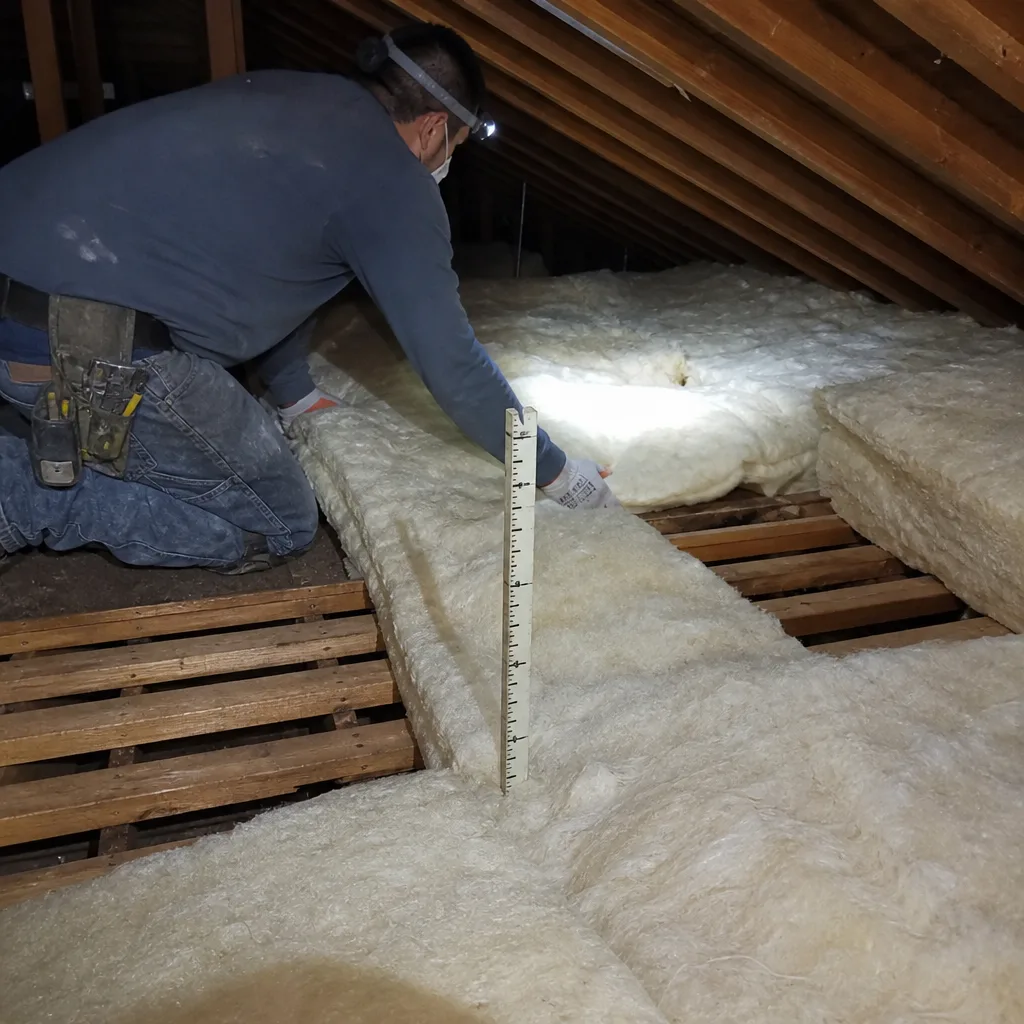
We’re an insulation contractor. That’s the whole trade. We don’t do roofing, windows, or HVAC on the side. Every attic we assess in Artesia gets looked at through one lens: how the thermal envelope of this specific house performs, and which method fixes it. For the 1960s stucco ranches off Pioneer Boulevard and the split-levels near Artesia Park, that almost always means air-sealing first, then upgrading to R-38 or R-49 blown-in coverage.
Ruben Castellano leads our crew, and he’s been in enough Artesia attics to know what works here. The mid-century homes in this city have specific problems: original 2-inch batts compressed flat, single gable vents serving entire attics, and knee walls in rear additions that were never insulated at all. We solve those problems with the right material, not whatever happens to be on the truck. That’s why Artesia homeowners call us back when they buy a second property or add a detached garage.
Our response time to Artesia is same-week for most estimates and one-to-two days for installs once material is confirmed. We cover both ZIP codes in the city, 90701 and 90702, and we’re familiar with the block-by-block variations from the Artesia Boulevard corridor south to the Cerritos border.
Radiant Barrier in Artesia
Radiant Barrier in Artesia is a foil-faced material installed on the underside of roof rafters to reflect radiant heat before it can radiate into the attic. In this city, where summer attic temperatures routinely push past 140°F, a perforated radiant barrier can drop attic air temperature by 20 to 30 degrees. Homeowners near the Artesia Boulevard corridor usually ask for it after their air conditioner runs nonstop from June through September and the upstairs still won’t cool below 80.
The Vent Issue Most Contractors Skip
Artesia’s older stucco homes often have low-pitch attics with intake vents that were undersized even in 1960 and are now choked with dust or painted over. Installing a radiant barrier on those roofs without adding intake ventilation traps heat above the barrier. We run a vent-area calculation on every Artesia radiant barrier quote. If the math doesn’t balance, we add low-profile intake vents before the barrier goes up. Skipping that step is exactly how attics end up hotter after the install than before.
What a Radiant Barrier Costs Here
A radiant barrier install in Artesia typically runs $1,200 – $2,600 for a standard 1,200-to-1,800 square foot attic. If the roof pitch is very low or access means working around ductwork from a furnace retrofit, you’ll be on the higher end. The foil itself isn’t the expensive part. The labor is, because Artesia’s shallow attics mean crawling, not walking.
Attic Cleaning Services in Artesia
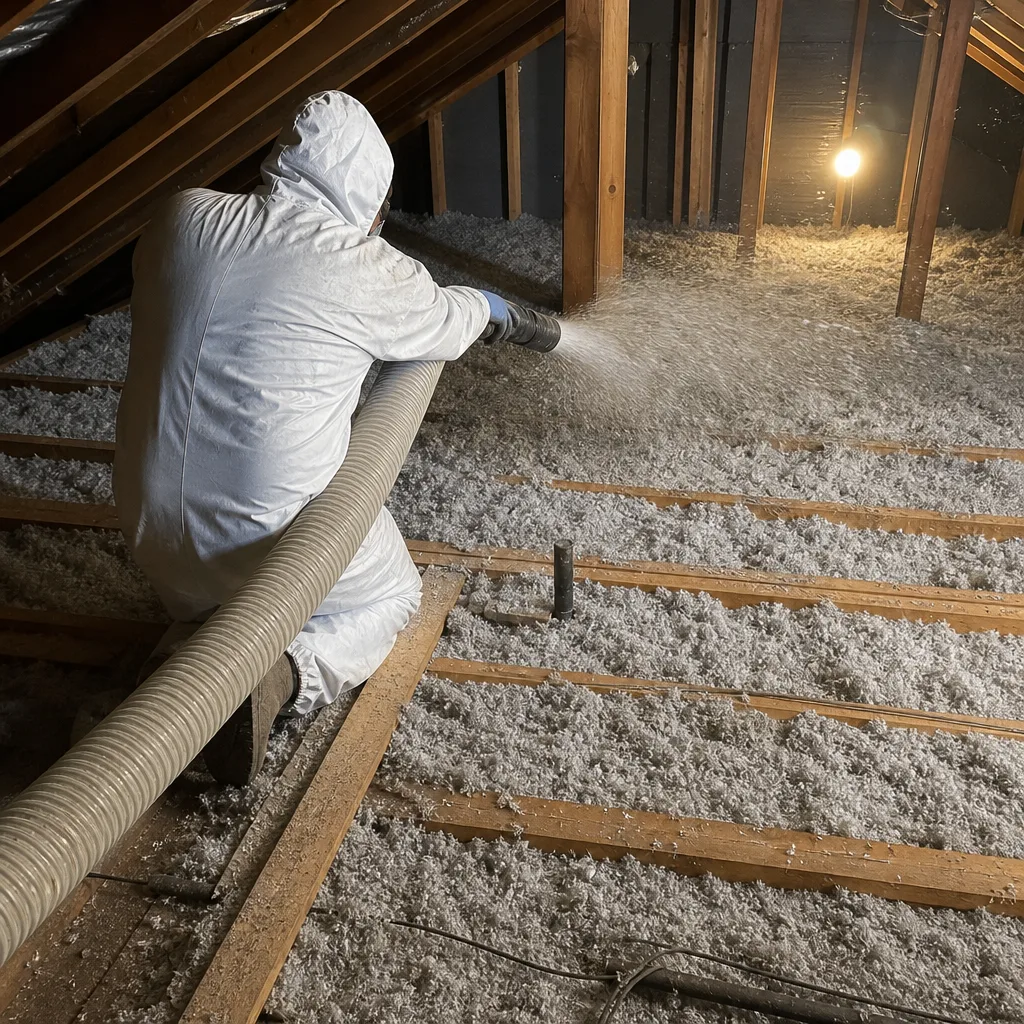
Attic Cleaning Services in Artesia start at $500 – $900 for a standard single-family home with a 1,000-to-1,500 square foot attic. Cleaning is usually the first step before any insulation upgrade, and it’s not optional in this city. Artesia’s streets are lined with mature trees, and decades of Santa Ana winds blow dust, dirt, and fine debris through every attic vent. On a 1962 stucco ranch off Artesia Boulevard, our crew found original 2-inch fiberglass batts compressed to less than an inch and a single gable vent serving a 1,400 square foot attic. We removed the old batts, vacuumed the decking, installed a perforated radiant barrier on the rafters, and blew in GreenFiber cellulose to R-38 after adding four low-profile O’Hagin vents to balance intake and exhaust. The homeowner reported a 12°F drop in upstairs bedroom temperature the following week.
Why Cleaning Before Insulating Matters
New insulation over a dirty attic seals in what’s already up there. Rodent droppings, old pest nesting, decades of fine dust, and broken-down batt fibers all get trapped under fresh blown-in material. In Artesia, where houses have been through fifty-plus summers of open windows and active roof vents, the attic floor is rarely clean. A proper cleaning removes the contaminants and lets us see the top plates and recessed light housings that need air-sealing before insulation goes in.
When Artesia Homeowners Schedule Cleaning
We see the most cleaning requests right before a blown-in insulation job, after a roof replacement showers the attic with shingle debris, or when a homeowner finally goes up to check and finds what generations of birds left behind. It’s also required before any Attic Insulation replacement if the existing material is compressed, water-stained, or pest-damaged.
What happens when you call
- 1
A real person answersNo phone trees — you reach a local pro.
- 2
You get an upfront price rangeHonest numbers before anyone is dispatched.
- 3
A background-checked tech heads outLicensed & insured, dispatched right away.
- 4
You approve before work beginsNothing starts until you say go.
Trusted Brands We Service in Artesia
We carry Owens Corning fiberglass because it’s consistent, Johns Manville because their blown-in coverage numbers hold up in shallow attics, and GreenFiber cellulose because Artesia homeowners with sustainability priorities ask for recycled content. When you’re deciding between materials, we’ll tell you which brand fits the application, not which one we’re trying to move. For a 1950s Artesia attic with 18 inches of eave clearance, we might recommend GreenFiber blown-in for its density and air-sealing behavior. For a detached garage with exposed rafter bays, Owens Corning batts make more sense. The recommendation follows the house.
Common Attic Insulation Problems We See in Artesia Homes
- Cellulose blown over old batts without air-sealing: This is the most common retrofit shortcut in Artesia. Air leaks through top plates and recessed lights bypass the insulation entirely, so the new R-value never delivers. We seal every penetration before blowing in new material.
- Radiant barrier without added intake ventilation: Artesia’s low-pitch roofs and Santa Ana heat create a real risk. A barrier installed over a starved intake vent traps heat and can push attic temperatures above 140°F. We calculate vent area on every job.
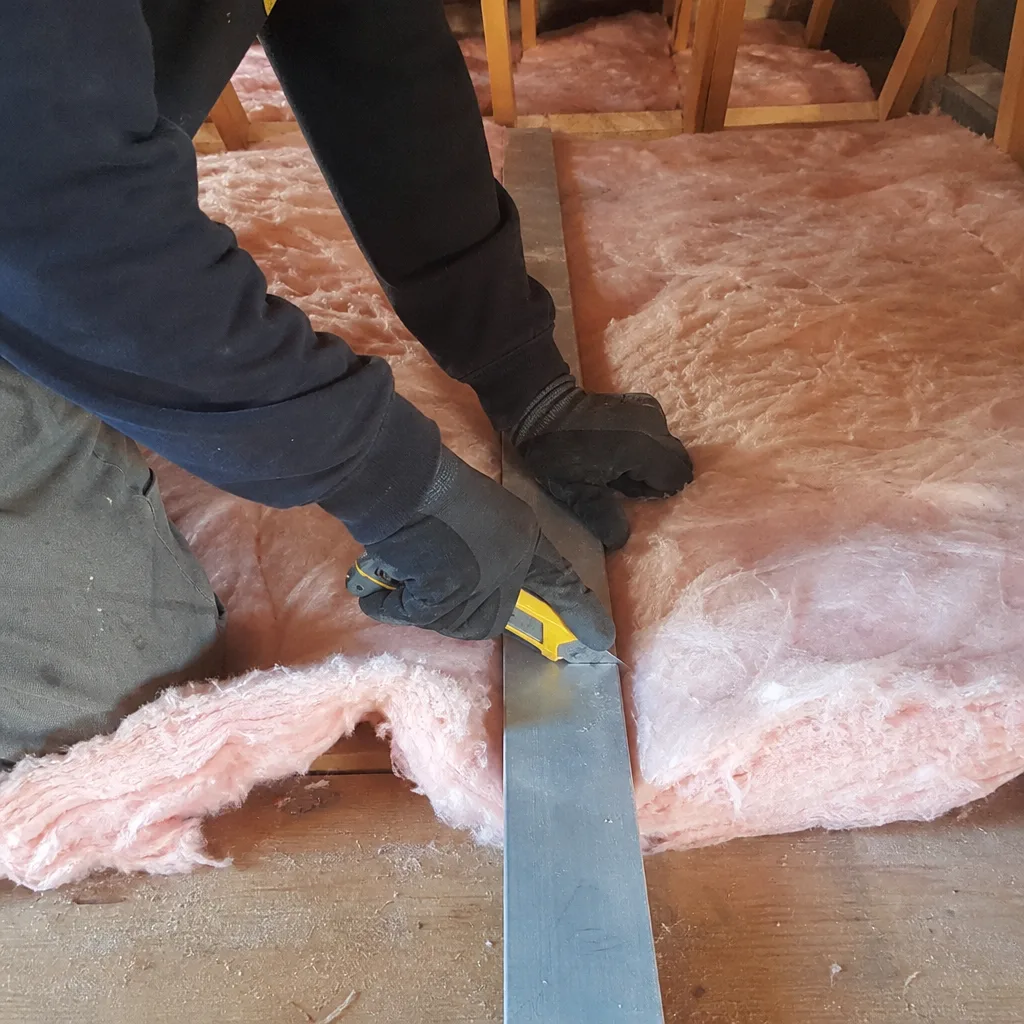
- Fiberglass batts jammed into knee-wall cavities: Rear additions and detached garages in Artesia often have knee walls that were never insulated properly. Compressed batts lose most of their R-value. Gaps around the edges make it worse. We either fit batts correctly or switch to a method that actually fills the cavity.
- Old batts compressed to nothing: In many Artesia attics, the original 2-inch fiberglass has been walked on, crushed under stored boxes, and degraded by heat to under an inch. It’s doing effectively nothing. Replacement is the fix, and it usually pays for itself in the first two or three summers.
Pricing for Attic Insulation in Artesia, CA
For a typical 1,200 square foot Artesia attic, blown-in cellulose or fiberglass to R-38 runs $1,700 – $3,400. Attic batt replacement for the same size runs $1,900 – $3,800, with the higher end covering tighter attics where every batt has to be hand-cut around ductwork and framing. An insulation top-up over existing material runs $1,100 – $2,000 if the current layer is dry and pest-free. Attic cleaning adds $500 – $900. Radiant barrier, as covered above, runs $1,200 – $2,600. The variables that move your quote: attic access clearance, depth of existing insulation, whether air-sealing is included, and whether baffle installation is needed at the eaves. Call (855) 382-3451 and we’ll give you a written quote after a free attic inspection. No estimate games. You’ll know the number before we leave.
We Also Serve Cities Near Artesia
Beyond Artesia, we run crews into Cerritos, La Palma, Hawaiian Gardens, and Norwalk every week. If you’re in one of those cities and your attic needs attention, the same crew and the same pricing apply. Call (855) 382-3451 and mention where you’re located; we’ll schedule the estimate around our next run through your area.
Serving Artesia, CA — Our Local Coverage Area
We’re based in the Artesia area and know this community well. Use the map below to see our service coverage — if you’re nearby, we can almost certainly help.
FAQs About Attic Insulation in Artesia
Yes. Eighteen inches is workable for blown-in insulation installed from the attic interior with a hose, and for low-profile eave baffles that maintain intake airflow. We run these jobs regularly in Artesia’s older tract homes. The key is choosing material that doesn’t require deep cavity access. Blown-in cellulose or fiberglass goes in fine. Batt installation in an 18-inch eave is much harder, so we steer those homes toward blown-in for practical reasons. Call (855) 382-3451 and we’ll assess your specific attic before recommending anything.
It makes ventilation math non-negotiable. Santa Ana events push hot, dry air against roofs for days at a time, and a radiant barrier reflects heat back toward the roof deck. If intake vents are undersized or blocked, that reflected heat has nowhere to go and attic temperatures climb. That’s why we don’t quote a radiant barrier in Artesia without first checking vent area. The barrier works, and it works well, but only when the attic can actually exhaust the heat it reflects.
Yes, and most of them have none. Detached garages and rear additions in Artesia were frequently built without any insulation, and the knee-wall cavities around their attic spaces are often open to the outside. Insulating just the main house attic leaves those spaces as heat reservoirs. We treat each structure as its own job: assess the existing envelope, decide between batts, blown-in, or spray foam based on cavity depth and access, and insulate to R-38 where clearance allows.
We install Owens Corning, Johns Manville, Knauf, and CertainTeed fiberglass; Rockwool mineral wool; GreenFiber cellulose; and Icynene and Demilec spray foam. For Artesia’s shallow, low-pitch attics, we most often recommend GreenFiber cellulose for the main attic and Owens Corning or Johns Manville for areas where batts make more sense. The brand is selected based on your attic’s depth, moisture conditions, and R-value target, not inventory.
Cleaning comes first, before any new material goes in. It removes old compressed batts, decades of dust, pest debris, and anything else that would be sealed under the new insulation. It also exposes the attic floor so we can air-seal top plates, wire penetrations, and recessed light housings. In Artesia’s older homes, skipping cleaning means sealing a dirty attic under a fresh layer of insulation. We price cleaning and insulation together so you get one number for the whole job. Call (855) 382-3451 for a free estimate.
Written by Ruben Castellano, Owner at Thermal Insulation Co, serving Artesia and the surrounding LA Basin.